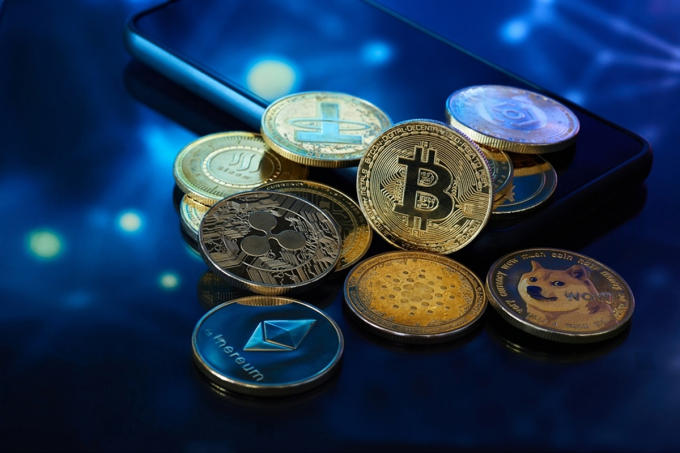
Ethereum has gained approximately 8% over the past month, while XRP has moved lower during the same period, reflecting diverging investor sentiment across two of the cryptocurrency market’s largest digital assets. The contrasting performance highlights how institutional capital continues to differentiate between blockchain ecosystems based on adoption, network activity, and long-term utility rather than simply market capitalization.
The divergence comes amid improving sentiment across digital assets, supported by continued institutional participation, expanding exchange-traded products, and growing interest in tokenized real-world assets. For professional investors, the comparison between Ethereum and XRP illustrates the importance of evaluating blockchain fundamentals alongside macroeconomic conditions and regulatory developments.
Ethereum Extends Momentum While XRP Faces Selling Pressure
Ethereum advanced roughly 8% during the month, benefiting from renewed investor confidence in decentralized finance, tokenization initiatives, and growing institutional interest in blockchain infrastructure. The network remains the largest smart contract platform, supporting thousands of decentralized applications and maintaining one of the highest levels of developer activity in the cryptocurrency industry.
In contrast, XRP experienced modest declines as investors remained cautious despite continued progress within Ripple’s payments ecosystem. Although XRP remains among the largest cryptocurrencies by market capitalization, its recent price performance has lagged several major digital assets as market participants await stronger catalysts capable of driving sustained demand.
The difference in performance reflects broader capital rotation within the cryptocurrency market, where investors have increasingly favored blockchain platforms with expanding decentralized finance ecosystems and growing institutional adoption.
Fundamental Drivers Continue to Differentiate the Two Networks
Ethereum’s investment case remains closely linked to its expanding role in decentralized finance, stablecoin settlements, tokenized real-world assets, and blockchain-based financial infrastructure. The network continues to process billions of dollars in on-chain transactions while serving as the foundation for a significant share of decentralized applications.
XRP, meanwhile, remains primarily focused on cross-border payments and enterprise financial solutions through Ripple’s ecosystem. The network continues to pursue partnerships within the global payments industry while benefiting from improving regulatory clarity following recent legal developments in the United States.
For institutional investors, both ecosystems present distinct value propositions. Ethereum offers exposure to a broad blockchain application ecosystem, while XRP’s investment narrative remains centered on payment efficiency and financial institution adoption.
Investor Sentiment Reflects Different Risk and Growth Profiles
The recent divergence in price performance demonstrates how institutional investors increasingly evaluate cryptocurrencies based on measurable adoption metrics rather than market narratives alone. Ethereum has attracted growing attention from asset managers because of its expanding role within tokenization, decentralized finance, and digital asset infrastructure.
At the same time, XRP continues to benefit from a loyal investor base and ongoing development within Ripple’s broader ecosystem. However, market participants remain focused on whether transaction growth, enterprise adoption, and stablecoin integration will translate into stronger long-term demand for the native token.
Professional investors are also paying closer attention to macroeconomic conditions, including monetary policy, liquidity trends, and regulatory developments, as these factors increasingly influence capital allocation across the cryptocurrency market.
Looking ahead, Ethereum and XRP are likely to remain central components of institutional cryptocurrency portfolios, although each is driven by different long-term catalysts. Ethereum’s continued expansion across decentralized finance and tokenization could support broader ecosystem growth, while XRP’s future performance may depend on further adoption of Ripple’s payment infrastructure and improvements in global regulatory clarity. As digital assets mature, investors are expected to place greater emphasis on network utility, institutional participation, and sustainable ecosystem development rather than short-term price movements alone.
Comparison, examination, and analysis between investment houses
Leave your details, and an expert from our team will get back to you as soon as possible