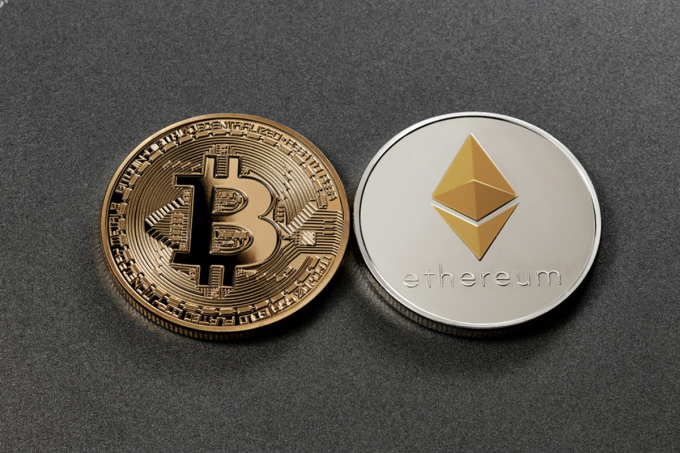
MARA Holdings Inc. (NASDAQ: MARA) came under renewed pressure after its shares fell approximately 5.2% as a broader Bitcoin pullback weighed on crypto-linked equities. The decline highlights a central issue for investors: despite MARA’s growing ambitions in AI infrastructure and high-performance computing, its market performance remains closely tied to Bitcoin prices and the macroeconomic forces shaping the cryptocurrency market.
With inflation concerns and uncertainty surrounding interest rates continuing to influence risk appetite, the latest weakness illustrates how difficult it remains for Bitcoin miners to fully escape the market’s broader macro cycle. For MARA, the key question is whether its diversification strategy can eventually provide a meaningful counterweight to the volatility of its core mining business.
Bitcoin Still Drives MARA’s Market Narrative
The latest share-price decline reinforces the reality that MARA remains fundamentally exposed to Bitcoin. Even as the company expands its operational footprint, changes in Bitcoin’s price directly affect mining economics, treasury valuations, investor sentiment and expectations surrounding future cash generation.
MARA’s scale remains significant. The company holds more than 50,000 BTC, giving it one of the largest Bitcoin treasuries among publicly traded companies. That strategy can provide substantial upside when Bitcoin appreciates, but it also creates considerable balance-sheet sensitivity during periods of cryptocurrency weakness.
The broader macro backdrop matters as much as crypto-specific developments. Higher interest-rate expectations can pressure risk assets by increasing discount rates and reducing investor appetite for speculative or capital-intensive businesses. For Bitcoin miners such as MARA, that environment can create a double challenge: weaker cryptocurrency prices alongside continued pressure on the valuation of companies requiring substantial infrastructure investment.
The AI Infrastructure Strategy Is Becoming More Important
The recent selloff does not necessarily invalidate MARA’s longer-term diversification strategy, but it increases the importance of execution. The company’s investment case increasingly depends on its ability to transform portions of its existing energy and infrastructure footprint into higher-value AI and high-performance computing capacity.
A major development came in February 2026, when MARA announced an alliance involving Starwood Capital and Starwood Digital Ventures. The partnership aims to develop up to 1 gigawatt of near-term digital infrastructure capacity, with a potential pathway toward 2.5 gigawatts.
For investors, the strategic logic is clear: Bitcoin mining sites already require large amounts of power, specialized infrastructure and sophisticated operational capabilities. If MARA can successfully adapt those assets for AI and enterprise computing workloads, it could develop revenue streams that are less directly dependent on Bitcoin’s daily price movements.
Diversification Does Not Yet Remove the Core Risks
However, the AI story should not obscure MARA’s current business reality. Bitcoin mining remains the company’s central economic engine, and the capital intensity of both mining and data-center development remains substantial.
A prolonged decline in Bitcoin could make MARA’s treasury strategy and capital expenditure plans more difficult to sustain. Regulatory changes affecting cryptocurrency mining, shifts in energy policy and competition for power capacity could also affect profitability and project economics.
Valuation expectations further demonstrate the uncertainty surrounding the business. One narrative projects MARA generating approximately $838.2 million in revenue by 2029 and reaching $101.5 million in earnings, supporting an estimated fair value of $18.13 per share. More pessimistic assumptions envision revenue declining sharply, potentially reaching only $370.9 million by 2029.
What Crypto Investors Should Watch Next
The latest 5.2% decline has not fundamentally changed MARA’s strategic opportunity, but it has reinforced the execution risks surrounding the company’s transition. The next major test will be whether MARA can demonstrate measurable progress in converting its energy-backed infrastructure into commercially valuable AI and computing capacity while maintaining financial discipline during periods of Bitcoin volatility.
For sophisticated crypto investors, MARA increasingly represents a hybrid proposition: a large-scale Bitcoin miner with a substantial BTC treasury attempting to evolve into a broader digital infrastructure operator. Bitcoin’s direction will likely remain the dominant short-term driver, but successful AI infrastructure execution could determine whether the company’s long-term valuation becomes less dependent on the cryptocurrency cycle alone.
Comparison, examination, and analysis between investment houses
Leave your details, and an expert from our team will get back to you as soon as possible