Key Points:
- Canada’s banking regulator has confirmed that tokenized deposits remain traditional bank deposits, regardless of whether blockchain or another digital ledger is used to represent them.
- The technology-neutral approach gives federally regulated financial institutions greater clarity to explore blockchain-based deposits without waiting for a separate legal framework specifically for tokenized bank money.
- The clarification does not reduce regulatory oversight, with banks remaining subject to existing capital, technology, cybersecurity and third-party risk requirements.
Canada’s banking regulator has cleared an important regulatory question surrounding tokenized bank deposits, stating that the use of blockchain does not by itself transform a conventional deposit into a new class of financial product. The clarification could give federally regulated institutions more room to develop digital deposit infrastructure while keeping those products within the existing banking framework.
OSFI Takes a Technology-Neutral Approach
The Office of the Superintendent of Financial Institutions, or OSFI, said on September 10 that the underlying technology does not determine the legal nature of a financial product or service. Instead, regulators focus on what the product represents and how it functions, meaning a tokenized deposit remains legally equivalent to a traditional deposit when it represents the same underlying bank claim.
The distinction is significant for banks evaluating distributed-ledger technology. Rather than requiring institutions to establish a separate regulatory category for every blockchain-based banking product, OSFI’s approach allows the existing legal framework to remain the reference point while financial institutions experiment with new delivery mechanisms.
Tokenized Deposits Remain Different From Stablecoins
The regulatory clarification also reinforces the distinction between tokenized bank deposits and non-bank stablecoins. A tokenized deposit represents a claim on a regulated financial institution, while a stablecoin issued by a non-bank entity operates under a different legal and economic structure.
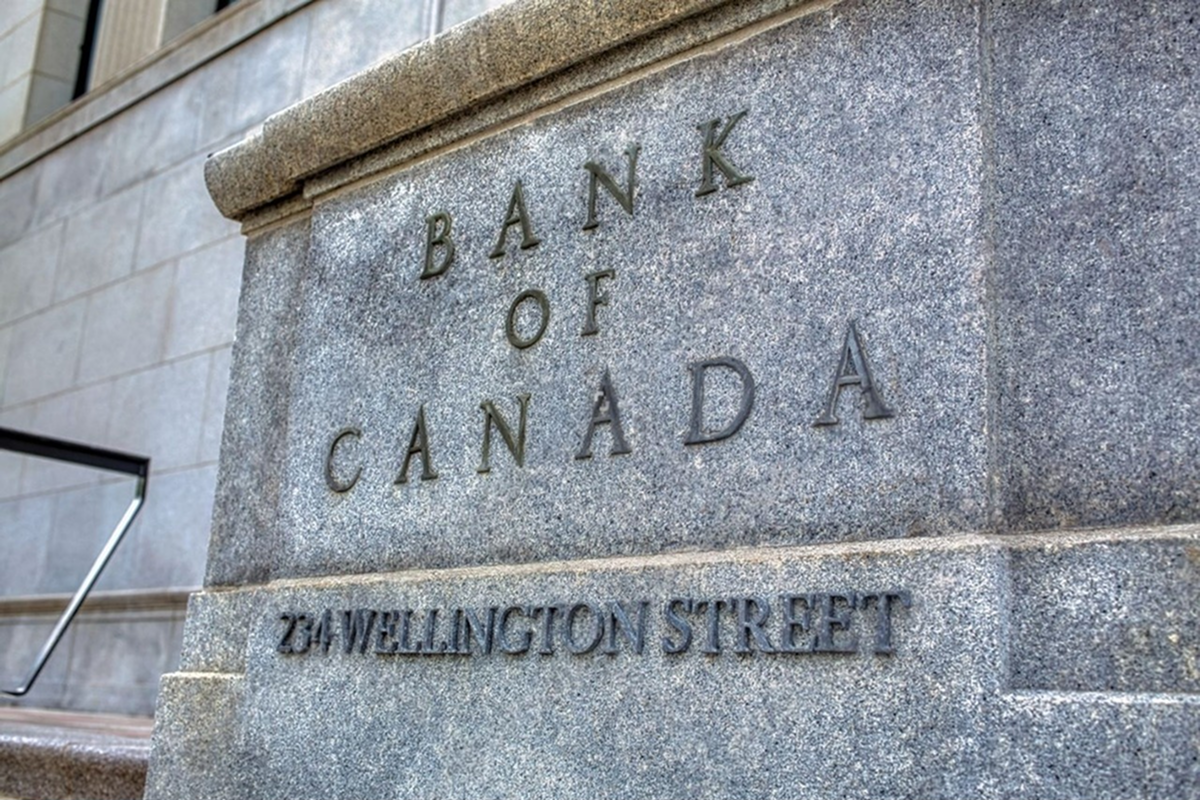
The Bank of Canada has described tokenization as representing traditional assets and ownership records on a digital ledger. Its research identifies potential benefits including faster settlement and lower counterparty and settlement risks, while also emphasizing that system design, governance and interoperability can introduce new operational risks.
That distinction could become increasingly important as banks compete with stablecoin issuers for a role in digital payments and programmable money. Tokenized deposits could allow commercial banks to preserve the underlying banking relationship while using blockchain infrastructure for transfer and settlement.
Regulatory Clarity Does Not Remove Bank Oversight
OSFI’s statement should not be interpreted as a regulatory exemption. Federally regulated financial institutions remain responsible for ensuring that innovative products and services comply with applicable laws and supervisory requirements. OSFI specifically pointed to its B-13 Technology and Cyber Risk Management and B-10 Third-Party Risk Management guidelines. Banks are also expected to engage their OSFI lead supervisors before launching novel products or services.
This creates a technology-neutral but still highly supervised framework. Banks can explore tokenized deposits, but they must demonstrate that the underlying systems meet existing standards for resilience, cybersecurity, third-party exposure and risk management.
Canada’s Broader Tokenization Strategy Takes Shape
The OSFI clarification arrives alongside broader Canadian experimentation with tokenized financial infrastructure. In May, the Bank of Canada joined Project Agorá, an international initiative testing tokenized commercial-bank deposits alongside wholesale central-bank money for cross-border payments.
Canada has also conducted Project Samara, a real-world experiment involving a tokenized bond issued by Export Development Canada and settled using wholesale central bank deposits. The project found that distributed-ledger settlement was technically feasible but also identified additional complexity, governance, liquidity and operational considerations.
For crypto investors and financial institutions, the significance of OSFI’s position extends beyond Canada. It demonstrates how regulators can accommodate tokenized financial infrastructure without creating entirely separate rulebooks. The next stage will depend on whether banks convert regulatory clarity into commercially viable products and whether tokenized deposits can deliver measurable improvements in settlement, payments and capital-market efficiency while maintaining the safeguards of conventional banking.
Comparison, examination, and analysis between investment houses
Leave your details, and an expert from our team will get back to you as soon as possible