Key Points:
- The Clarity Act is approaching a pivotal Senate vote on September 15, with lawmakers attempting to establish clearer boundaries between the SEC and CFTC for digital assets.
- The latest draft incorporates 126 substantive changes requested by Democrats, including expanded ethics provisions and measures addressing stablecoins, DeFi and financial stability.
- The legislation needs 60 Senate votes to overcome a potential filibuster, making Democratic support essential despite Republicans holding 53 seats.
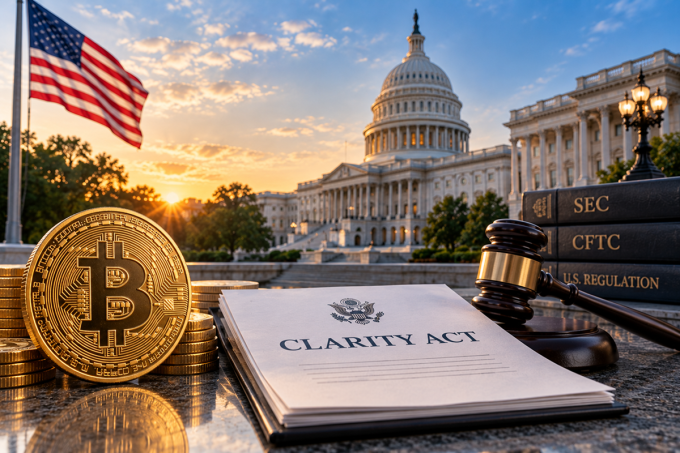
The Digital Asset Market Clarity Act is entering one of its most consequential stages as the U.S. Senate prepares for a procedural vote that could determine whether comprehensive crypto market-structure legislation advances. The latest Republican draft includes major concessions sought by Democrats, increasing the possibility of bipartisan support while leaving unresolved questions over ethics, stablecoins and regulatory authority.
What the Clarity Act Would Change for Crypto Markets
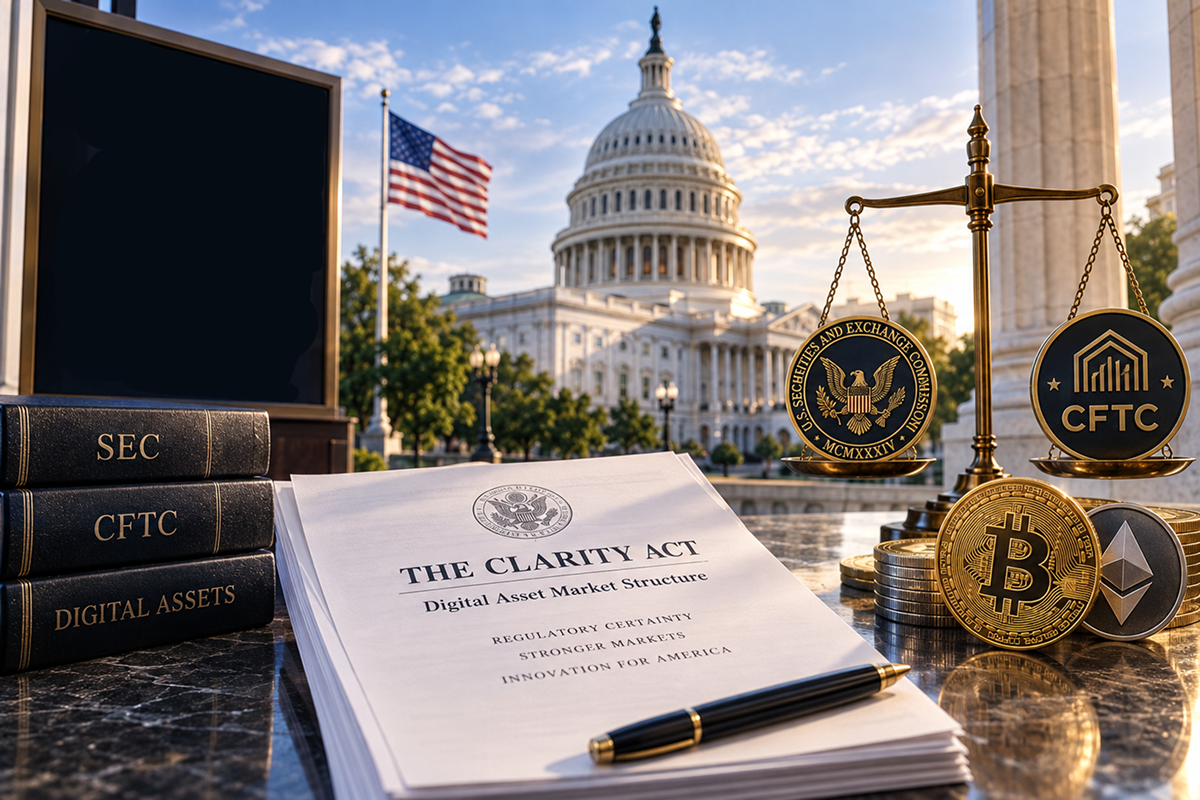
The Clarity Act is designed to establish a federal framework for digital assets after years of uncertainty over whether particular cryptocurrencies and activities fall primarily under the Securities and Exchange Commission or the Commodity Futures Trading Commission. The legislation would create clearer classifications for digital commodities and establish registration and compliance requirements for market participants.
That distinction matters for exchanges, brokers, token issuers and institutional investors because regulatory classification can determine which agency has jurisdiction and what disclosure, custody and market-conduct requirements apply. The Senate Banking Committee has described the legislation as a framework intended to provide clearer rules while strengthening consumer protection and combating illicit finance.
635-Page Draft Attempts to Bridge Democratic and Republican Demands
The latest version represents a substantial revision of the legislation. Senate Republicans said the final draft incorporates 126 substantive changes requested by Democrats, including provisions concerning ethics, decentralized finance and protections for the banking system. President Donald Trump has also accepted key ethics restrictions designed to address concerns over conflicts involving public officials and crypto-related interests.
The revised text also addresses when certain non-decentralized DeFi protocols would need to register with the CFTC and comply with Bank Secrecy Act requirements. It further clarifies the ability of credit unions to conduct digital-asset activities.
These changes demonstrate that the bill has moved beyond a simple SEC-CFTC jurisdictional debate. Stablecoin competition with bank deposits, financial stability and government ethics have become important parts of the legislative negotiations.
The Senate Vote Is the Immediate Test
Republicans control 53 Senate seats, leaving the legislation short of the 60 votes required to overcome a potential filibuster. At least seven Democrats would therefore need to support the procedural motion if all 53 Republicans vote in favor.
The arithmetic makes bipartisan negotiations decisive. Prediction-market pricing and political reporting have fluctuated sharply as the revised text emerged, illustrating how uncertain the legislative outcome remains. The Senate is scheduled to vote Tuesday, September 15, with the procedural result determining whether the bill can proceed toward broader floor consideration.
Why the Outcome Matters for Institutional Crypto Markets
For institutional investors, the potential impact extends beyond individual token classifications. A clearer division of responsibilities between the SEC and CFTC could reduce regulatory uncertainty for exchanges, asset managers, custodians and financial institutions developing digital-asset products.
However, passage would not immediately resolve every regulatory question. Implementation, agency rulemaking and enforcement would still determine how the framework operates in practice. The bill’s treatment of stablecoins and DeFi could also influence how capital flows between traditional financial institutions and blockchain-based platforms.
The September 15 vote is therefore an important market-structure checkpoint rather than a final resolution. Investors and institutions will be watching whether the latest concessions secure the 60 votes required to advance the bill, while also assessing how its final provisions could affect exchanges, stablecoin issuers, DeFi platforms and institutional digital-asset infrastructure. If the legislation advances, the next focus will shift toward implementation and the division of authority between U.S. regulators.
Comparison, examination, and analysis between investment houses
Leave your details, and an expert from our team will get back to you as soon as possible