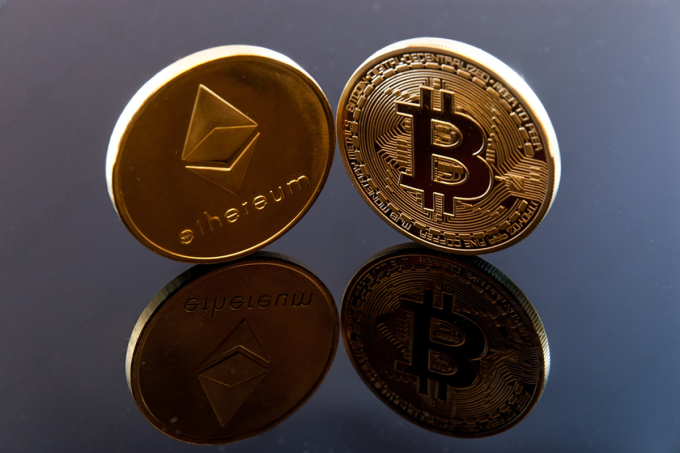
Key Points:
- Bitcoin recovered toward the $80,000 level as investors looked beyond the Federal Reserve rate hike and the Senate’s failure to advance the CLARITY Act.
- The broader crypto market capitalization climbed to approximately $2.66 trillion, supported by gains in Bitcoin, Ethereum and major altcoins.
- Alternative cryptocurrencies outperformed over the past month, with Ethereum, Solana and Binance Coin gaining 35%, 41% and 25%, respectively, as capital rotated beyond Bitcoin.
Bitcoin returned to the $80,000 level on Friday as cryptocurrency markets demonstrated resilience following two major policy setbacks: the Federal Reserve’s interest-rate increase and the failure of the CLARITY Act to advance in the U.S. Senate. The rebound suggests investors are shifting focus from short-term regulatory uncertainty toward institutional demand, market structure developments and broader digital-asset adoption.
Bitcoin Reclaims a Key Psychological Level
Bitcoin led the market recovery, reaching a two-week high as derivatives positioning, ETF activity and short covering supported the move higher. The cryptocurrency opened Friday at $76,350.68 and climbed to approximately $77,991.09 by 7:25 a.m. ET, according to the supplied market data.
The recovery came despite a more restrictive monetary backdrop. The Federal Reserve raised interest rates by 25 basis points earlier in the week, bringing the benchmark rate range to 3.75%–4%. Higher rates typically create pressure on risk assets by increasing the attractiveness of traditional fixed-income investments, but crypto markets absorbed the move with limited downside.
Sean Farrell, head of digital assets at Fundstrat, noted that crypto had absorbed a significant hawkish repricing without substantial damage. The market response indicates that investors may have already adjusted expectations for tighter monetary policy before the Fed decision.
ETF Flows and Derivatives Support the Rally
The move above $80,000 was supported by technical factors, including demand from derivatives traders and renewed institutional participation. Bitget Wallet research analyst Lacie Zhang said that U.S. spot Bitcoin ETF inflows and short covering helped push Bitcoin through the psychologically important price level.
The importance of ETF demand has increased as institutional vehicles become a larger part of cryptocurrency market structure. Spot Bitcoin ETFs provide regulated exposure for traditional investors and can influence market liquidity through direct purchases and redemptions of Bitcoin.
However, the rally remains dependent on sustained demand rather than short-term positioning alone. Market participants will continue monitoring ETF flows, trading volumes and whether institutional interest expands beyond Bitcoin.
Altcoins Join the Recovery as Capital Rotates
While Bitcoin drove the initial rebound, several major altcoins recorded stronger performance over a broader period. According to Yahoo Finance AlphaSpace data, Ethereum gained 35%, Solana gained 41%, and Binance Coin gained 25% over the past month.
The broader rotation pushed total cryptocurrency market capitalization to approximately $2.66 trillion, according to CoinMarketCap. Investors also increased exposure to tokenized versions of traditional assets, including digital representations of Nvidia, Tesla and S&P 500-related products.
The shift suggests that market participants are not only focusing on Bitcoin as a store-of-value asset but are also exploring blockchain-based financial infrastructure, tokenization and alternative digital-asset ecosystems.
Regulation Remains a Key Market Variable
The recovery followed the failure of the CLARITY Act, legislation intended to establish clearer regulatory responsibilities between the Securities and Exchange Commission and Commodity Futures Trading Commission. The setback initially created uncertainty, but the SEC’s subsequent five-year conditional exemption for certain tokenized securities trading provided another regulatory development for investors to assess.
For crypto markets, the combination of regulatory progress through agencies and continued institutional adoption remains central to the long-term investment narrative. The industry continues to seek clearer rules while expanding infrastructure around tokenized assets, exchanges and blockchain-based financial products.
Bitcoin’s return toward $80,000 demonstrates that markets can recover from policy-related volatility when liquidity conditions and institutional participation remain supportive. Going forward, investors will focus on ETF flows, Federal Reserve policy expectations, regulatory developments and whether the broader altcoin recovery develops into a sustained market rotation rather than a short-term rebound.
Comparison, examination, and analysis between investment houses
Leave your details, and an expert from our team will get back to you as soon as possible