Key Points:
- The CLARITY Act failed to advance in the U.S. Senate, leaving the crypto industry without the comprehensive legal framework it had pursued for years.
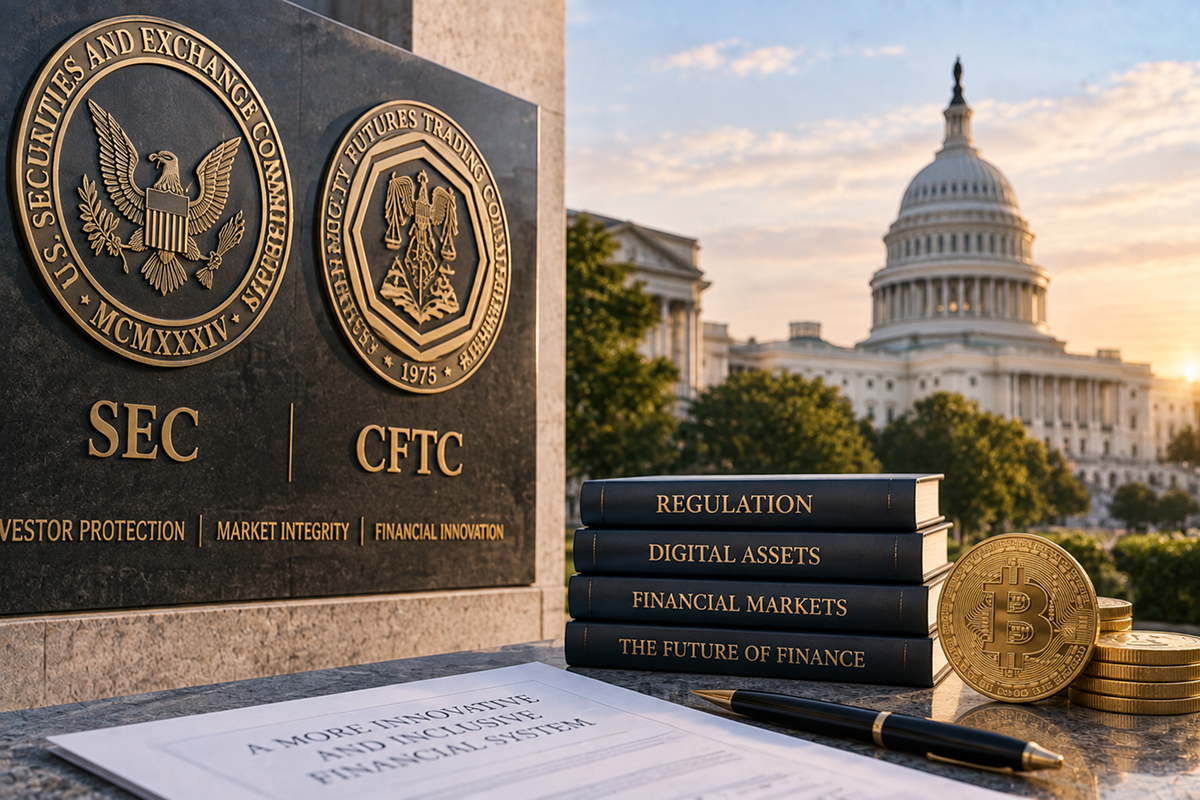
- The Securities and Exchange Commission and Commodity Futures Trading Commission are now moving forward with regulatory initiatives using their existing authority.
- Investors are watching whether agency-driven rules can provide long-term certainty or remain vulnerable to future policy changes.
The collapse of the CLARITY Act has shifted the direction of U.S. cryptocurrency regulation from congressional legislation toward agency-led rulemaking. The bill was designed to establish a long-term market structure for digital assets, but its failure has pushed regulators and industry participants to evaluate whether existing authorities can provide a workable alternative.
The development comes as the cryptocurrency market continues to expand through institutional products, tokenized assets and blockchain-based financial infrastructure. For investors, the central question is whether regulatory clarity can emerge without a dedicated federal law governing digital assets.
CLARITY Act Failure Leaves Regulatory Framework Unresolved
The CLARITY Act represented one of the most significant attempts to define the responsibilities of the SEC and CFTC in cryptocurrency markets. The legislation aimed to establish clearer rules for exchanges, brokers and digital-asset companies by determining which assets would fall under securities regulation and which would be overseen through commodities frameworks.
The Senate procedural vote failed to reach the required threshold, preventing the bill from moving forward. The setback means cryptocurrency companies operating in the United States continue to face a regulatory environment shaped largely by agency interpretation, enforcement decisions and individual rulemaking processes.
While the failure does not eliminate future legislative efforts, the immediate result is a transition toward regulatory alternatives that can be implemented without congressional approval.
SEC and CFTC Expand Their Roles After Legislative Setback
Following the vote, both the SEC and CFTC indicated that they would continue developing crypto-related rules under their existing statutory authority. The SEC has moved toward initiatives involving tokenized securities, market access and digital-asset compliance, while the CFTC has explored rules affecting crypto trading platforms and market structure.
Agency-based regulation may allow faster implementation compared with the legislative process, but it also creates questions regarding durability. Rules created through regulatory authority can potentially change when leadership changes or when future administrations adopt different approaches.
For institutional investors, the distinction is important. A comprehensive law could provide a more stable foundation for long-term planning, while agency rules may require companies to continuously adjust their compliance strategies.
Tokenization and Institutional Adoption Continue Despite Uncertainty
The regulatory debate is occurring as traditional financial institutions continue exploring blockchain applications. Tokenized securities, digital funds and blockchain-based settlement systems have become areas of increasing interest among banks, asset managers and technology providers.
The SEC’s recent actions involving tokenized markets demonstrate that regulatory development is continuing even without the CLARITY Act. These measures could influence how financial institutions approach blockchain adoption by defining what activities may be permitted under existing rules.
However, uncertainty remains around broader market structure issues, including exchange oversight, decentralized finance platforms and the classification of different digital assets.
Investors Watch Whether Agency Rules Can Replace Legislation
The next phase of U.S. crypto regulation will likely depend on whether SEC and CFTC initiatives create enough consistency for companies and investors. The industry has spent years seeking clearer rules, arguing that predictable regulation is necessary for innovation and institutional participation.
At the same time, policymakers continue debating issues surrounding consumer protection, market integrity and government oversight. The failure of the CLARITY Act does not end the regulatory discussion but changes the path through which the framework may develop.
Investors will continue monitoring agency announcements, future legislative attempts and the growth of tokenized financial markets. The key challenge will be determining whether regulatory actions provide a lasting structure for digital assets or remain temporary substitutes until Congress revisits comprehensive crypto legislation.
Comparison, examination, and analysis between investment houses
Leave your details, and an expert from our team will get back to you as soon as possible