Key Takeaways
- Ondo Finance has introduced in-kind conversion, allowing approved institutions to exchange existing stocks and ETFs directly for tokenized versions without using cash.
- The new infrastructure connects traditional securities held through Alpaca with onchain liquidity, potentially reducing financing costs and settlement friction.
- The move comes as tokenized equities expand rapidly, with active tokenized equity market capitalization reaching approximately $4 billion in 2026.
Ondo Finance has expanded its tokenization infrastructure by allowing approved institutions to convert existing stocks and exchange-traded funds directly into corresponding tokenized assets. The development arrives as blockchain-based securities gain regulatory and institutional momentum, with the US securities regulator recently introducing a five-year exemption framework for qualifying tokenized stock markets.
From Cash Funding to Direct Share Conversion
The new in-kind mechanism allows eligible institutions to transfer shares held through Alpaca into Ondo and receive corresponding Ondo Stocks tokens onchain. The process also works in reverse, enabling token holders to redeem their tokens for the underlying securities. Previously, institutions using Ondo’s cash-funded model needed to provide cash separately even when they already owned the underlying shares.
The change matters because it can reduce capital duplication and timing mismatches between traditional securities and tokenized positions. Ondo says the mechanism is designed to support deeper liquidity and tighter spreads by allowing existing institutional inventories to become onchain market liquidity.
Tokenized Equities Move Beyond Issuance
The timing reflects a broader acceleration in real-world asset markets. Tokenized equities had reached roughly $4 billion in active market capitalization by early September, up 314% from the start of 2026, while monthly trading volume increased from about $237 million in January to $7.9 billion in August.
Ondo has also become a major participant in the broader tokenization market, with approximately $3.63 billion in distributed assets across 441 products. That scale puts greater emphasis on market infrastructure rather than simply creating additional tokenized products. Converting existing securities directly into tokens addresses one of the key bottlenecks: supplying sufficient inventory for secondary-market activity.
Regulation and Institutional Adoption
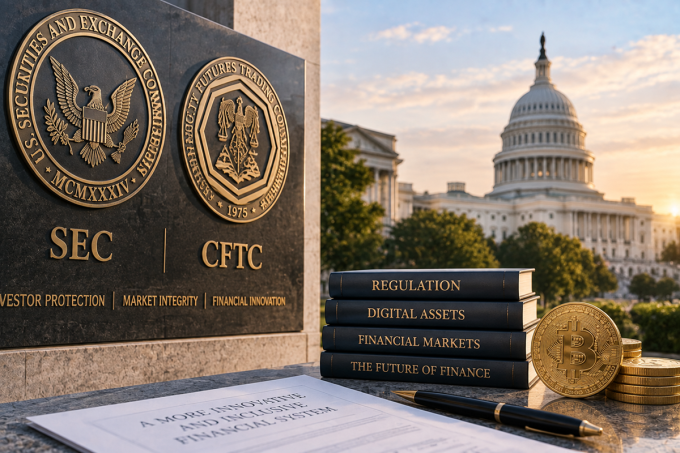
The regulatory environment is also moving toward greater integration between blockchain markets and traditional securities. The SEC recently introduced a five-year exemption for qualifying tokenized-stock trading platforms, while requiring tokenized securities covered by the framework to preserve traditional shareholder rights and imposing conditions around issuer notification.
For institutions, the combination of regulatory development and operational infrastructure could make tokenization more relevant to portfolio management, collateral and settlement. Bitcoin was trading around $85,600 on September 22, with a market capitalization of roughly $1.7 trillion, illustrating the scale of the broader digital-asset ecosystem into which tokenized securities are increasingly being integrated.
Strategic Outlook for Onchain Capital Markets
Ondo’s in-kind conversion model shifts tokenization closer to the plumbing of institutional markets. The key test will be whether direct share-to-token conversion produces sustained secondary-market liquidity, lower transaction friction and broader institutional participation rather than simply increasing the number of assets available onchain. As tokenized equities move toward larger trading volumes, the ability to efficiently connect existing securities inventories with blockchain liquidity could become an increasingly important component of digital capital-market infrastructure.
Comparison, examination, and analysis between investment houses
Leave your details, and an expert from our team will get back to you as soon as possible