Key Points:
- Circle and Tether froze approximately $318,000 in USDC and USDT linked to wallets connected to the Bitget exploit.
- The majority of stolen assets remain in Ethereum, valued at approximately $169.5 million, where issuer-level freezing mechanisms are unavailable.
- The incident renews discussions around blockchain security, stablecoin controls and the balance between decentralization and regulatory compliance.
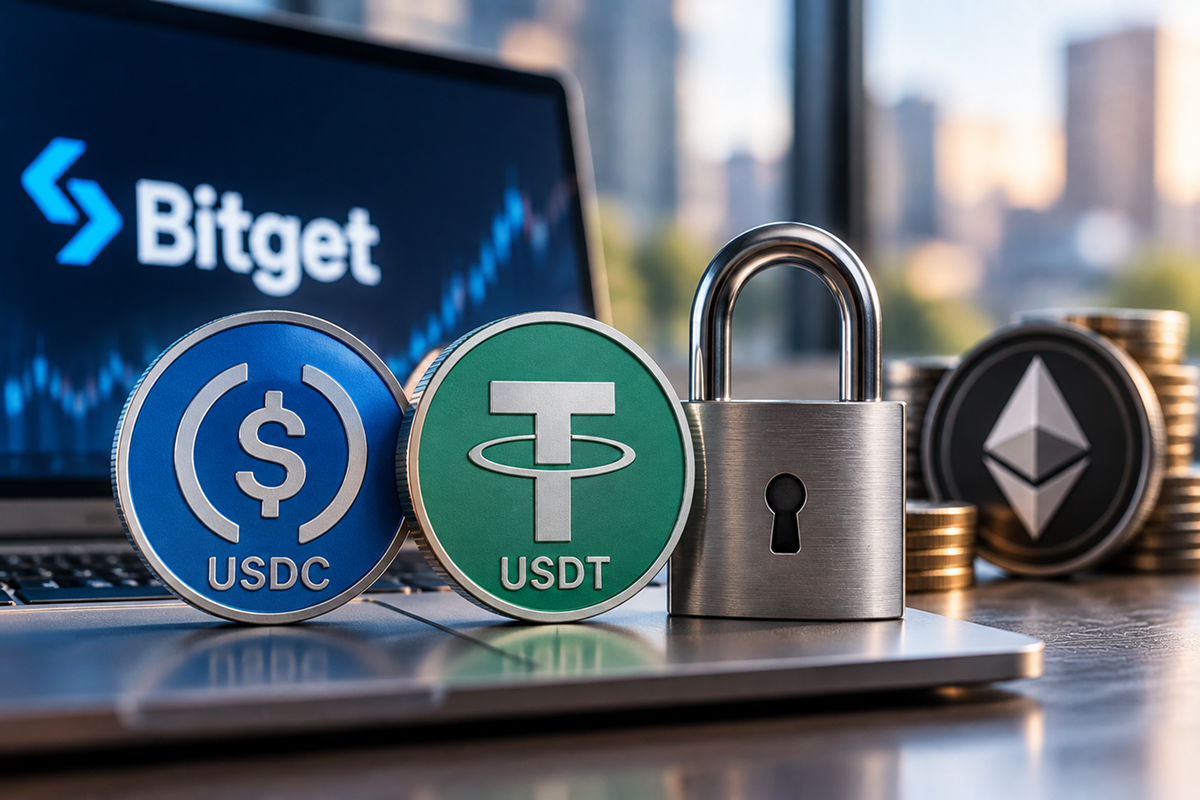
The response from major stablecoin issuers following the Bitget crypto heist highlights the evolving role of centralized controls within digital asset markets. Circle and Tether moved to blacklist a hacker-controlled wallet holding approximately $318,000 in USDT and USDC, demonstrating how stablecoin infrastructure providers can intervene during security incidents.
However, the action also exposed a key distinction within crypto ecosystems: while issuer-backed stablecoins can be frozen, decentralized assets such as Ethereum cannot be directly controlled by token issuers. The majority of stolen funds remain in ETH, creating a broader debate about security, transparency and the future design of digital asset infrastructure.
Stablecoin Issuers Act After Bitget Exploit
Following the Bitget-related attack, Circle and Tether identified and froze stablecoin holdings connected to the suspected hacker wallet. According to blockchain tracking data, the frozen assets represented only a small portion of the overall stolen funds, totaling roughly $318,000 in combined USDT and USDC.
The ability to freeze stablecoins comes from their centralized issuance models. Companies such as Circle and Tether maintain administrative controls that allow them to restrict specific addresses when linked to illicit activity, legal requests or major security events.
For institutional investors, this capability represents one of the reasons regulated stablecoins continue to attract interest as payment and settlement tools. However, critics argue that these controls introduce centralized elements into an industry originally designed around permissionless transactions.
Ethereum Holdings Highlight Limits of Recovery Efforts
While stablecoin assets were frozen, most of the stolen funds remain concentrated in Ethereum. The hacker wallet reportedly held approximately 63,384 ETH worth around $169.5 million, according to market data included in the analysis.
Unlike USDT and USDC, Ethereum does not have a central issuer capable of freezing individual addresses. This difference illustrates the contrasting security models between programmable blockchain assets and issuer-managed digital currencies.
The situation demonstrates both the strengths and limitations of decentralized networks. Ethereum provides transaction neutrality and resistance to centralized intervention, but recovering stolen assets often depends on exchanges, analytics firms and law enforcement cooperation rather than direct blockchain controls.
Security Concerns Remain Central to Crypto Adoption
The Bitget incident comes as the cryptocurrency industry continues expanding toward institutional adoption, with security infrastructure becoming a major focus for investors and financial firms. Large-scale hacks remain one of the primary risks affecting confidence in digital asset markets.
Blockchain analytics companies and exchanges increasingly monitor suspicious activity using transaction tracking tools. However, the effectiveness of these systems varies depending on the type of asset involved. The chart shows that frozen stablecoins represented only a fraction of the remaining wallet balances, emphasizing the challenges of recovering decentralized assets.
For investors, the event reinforces the importance of understanding different asset structures. Stablecoins, native cryptocurrencies and tokenized assets may operate on the same networks but carry different levels of control, transparency and recovery options.
Crypto Industry Watches Balance Between Control and Decentralization
The Bitget wallet incident highlights a continuing discussion within digital finance: how to combine security measures with the decentralized principles that define blockchain technology. Stablecoin issuers demonstrated their ability to respond quickly, while Ethereum’s design maintained its permissionless structure.
Going forward, investors and institutions will continue monitoring how exchanges, blockchain networks and regulators develop security frameworks. The challenge will be creating systems that protect users and financial infrastructure while maintaining the technological characteristics that drive blockchain adoption.
Comparison, examination, and analysis between investment houses
Leave your details, and an expert from our team will get back to you as soon as possible