


Bitcoin’s price action is once again drawing comparisons to prior market cycles, with a combination of timing, structure and sentiment reviving debate over whether the four-year cycle remains intact heading into 2026.
Despite structural changes to the market including the rise of spot exchange-traded funds (ETFs), corporate treasury accumulation and deeper institutional participation recent price behavior suggests that bitcoin may still be moving in a rhythm familiar to long-time observers.
At the center of the discussion is Bitcoin, which is trading well below its October 2025 peak near $126,000 after a year that defied many bullish expectations.
A cycle many thought was broken
There are strong arguments for why the traditional four-year cycle should no longer apply. U.S. spot bitcoin ETFs absorbed roughly $57 billion in net inflows, providing a persistent institutional bid. At the same time, corporate buyers — most notably Strategy — emerged as near-continuous accumulators, while long-term holders distributed coins at record levels above $100,000.
Against that backdrop, 2025 was expected by many to deliver a classic blow-off top. Instead, bitcoin peaked in October and spent much of the year drifting lower, finishing as a down year despite unprecedented market infrastructure and access.
That divergence led to a popular narrative: the cycle was broken.
Why the four-year rhythm still matters
The counterargument is increasingly hard to ignore. Bitcoin’s October 2025 high arrived roughly 18 months after the April 2024 halving — almost exactly in line with prior cycles, where major peaks have historically occurred 12 to 18 months after the block subsidy is cut in half.
Even more striking is the symmetry at the lows. Bitcoin’s local bottom in the current drawdown occurred on Nov. 21, 2025, at $80,524. The previous cycle’s low during the FTX collapse printed on Nov. 21, 2022, at $15,460 — the exact same calendar date.
While likely coincidental, the alignment reinforces the perception that market psychology, rather than pure mechanics, still governs bitcoin’s larger swings.
January’s outsized role in turning points
January has repeatedly acted as a pivot month in recent cycles, adding weight to the current setup.
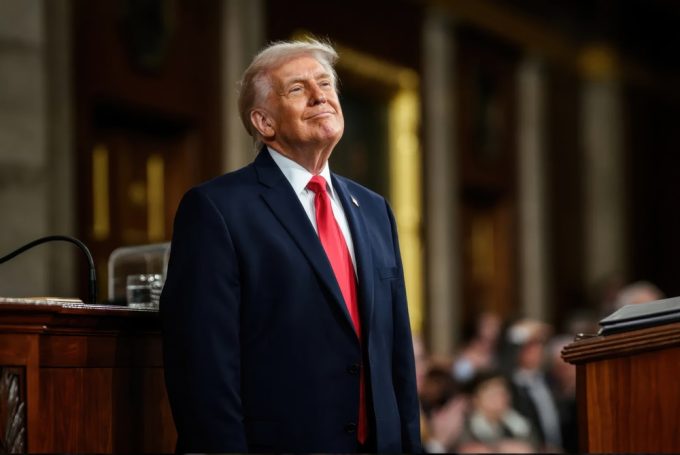
In January 2023, bitcoin marked a local top just below $25,000 before retracing sharply during the Silicon Valley Bank crisis. January 2024 coincided with the launch of U.S. spot bitcoin ETFs — a widely anticipated event that ultimately preceded bitcoin’s low for the year near $40,000. January 2025, aligned with the inauguration of U.S. President Donald Trump, saw another local top around $110,000.
Each instance reinforced January’s role as a moment when expectations collide with reality — often producing sharp reversals rather than trend confirmation.
January 2026: another inflection point?
Attention is now turning to January 2026, with a U.S. crypto market structure bill scheduled for a markup hearing on Jan. 15. Historically, major regulatory milestones have tended to act as “sell the news” or capitulation events rather than clean breakouts.
From a strategic perspective, bitcoin enters this moment with sentiment still fragile, price well below prior highs, and leverage substantially reduced compared with earlier in the cycle. That combination has, in past cycles, been more consistent with basing behavior than with major tops.
Still, the risk cuts both ways. If January again proves to be a turning point, it could just as easily mark the exhaustion of a relief rally as the foundation of a longer-term recovery.
Watching the rhyme, not the reason
Whether the four-year cycle ultimately holds is less about strict repetition and more about behavioral consistency. Identical calendar-date lows, halving-aligned peaks and recurring January inflection points all point to one conclusion: bitcoin’s market may be evolving, but it still rhymes.
For traders and investors, January 2026 is shaping up less as a confirmation moment — and more as a test of whether history is quietly repeating itself once again.
Comparison, examination, and analysis between investment houses
Leave your details, and an expert from our team will get back to you as soon as possible








Leave a comment