


Crypto markets navigated a mixed news cycle today as a major smart-contract exploit underscored persistent security risks, US lawmakers moved to clarify regulatory protections for blockchain developers, and a politically connected DeFi project expanded into onchain lending. Together, the developments reflect a market still balancing innovation and risk while responding to a shifting regulatory environment.
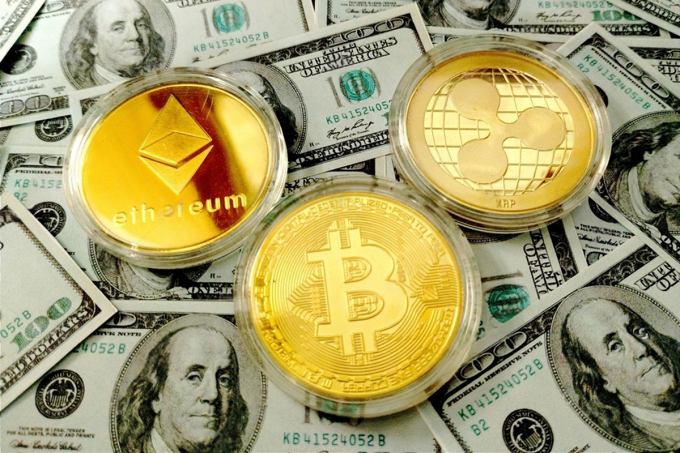
Bitcoin traded around $92,000–$93,000 during the session, while Ether hovered near $3,140, signaling relative price stability even as protocol-level and policy-driven headlines shaped investor sentiment.
Protocol Security in Focus After $26 Million Truebit Exploit
Security concerns resurfaced after offline computation protocol Truebit suffered a $26 million exploit that caused its native TRU token to collapse by approximately 99%. Blockchain security firm SlowMist traced the incident to a smart-contract overflow bug that allowed an attacker to mint large quantities of tokens at near-zero cost.
According to the post-mortem, the vulnerability stemmed from a lack of overflow protection in an integer addition operation within the protocol’s Purchase contract. Compiled using Solidity version 0.6.10—released before automatic overflow checks were standard—calculations exceeding the maximum value of uint256 silently wrapped around to a near-zero figure. As a result, the attacker was able to bypass payment logic and drain reserves with minimal capital.
The exploit highlights a recurring issue in crypto markets: legacy codebases remain exposed to modern attack vectors, even in long-standing projects. For investors, the incident reinforces the growing premium placed on formal verification, frequent audits, and conservative smart-contract design, particularly as capital returns to decentralized finance.
Regulation: Lawmakers Move to Protect Blockchain Developers
In Washington, US Senators Cynthia Lummis and Ron Wyden introduced the Blockchain Regulatory Certainty Act (BRCA), a standalone bill aimed at exempting blockchain developers and infrastructure providers from money transmitter regulations when they do not directly custody user funds.
The proposal seeks to draw a clearer line between software development and financial intermediation, addressing long-standing industry concerns that ambiguous rules could expose developers to criminal liability. The issue gained urgency following high-profile cases involving Tornado Cash developers, which many in the industry view as a chilling precedent.
Lummis said the legislation is designed to prevent innovation from being driven offshore by regulatory uncertainty and conflicting state-level rules. From a market perspective, clearer guardrails could reduce legal risk for builders, potentially encouraging renewed venture investment and protocol development in the United States.
Onchain Credit Expands as World Liberty Enters Lending
Meanwhile, World Liberty Financial—a DeFi project linked to the family of US President Donald Trump—launched a crypto lending platform called World Liberty Markets, marking a significant expansion into onchain credit. The platform is built around USD1, the project’s US dollar–backed stablecoin, which reportedly has a circulating supply of roughly $3.4 billion.
Users can lend and borrow against collateral including Ether, tokenized Bitcoin, and major stablecoins such as USDC and USDT. According to Bloomberg, the project plans to expand accepted collateral to include tokenized real-world assets, signaling an ambition to bridge traditional finance and DeFi infrastructure.
The launch comes as World Liberty pursues a national trust bank charter with the US Office of the Comptroller of the Currency, a move that could enhance the credibility and adoption of its stablecoin for treasury and cross-border payment use cases.
Market Psychology and the Bigger Picture
Today’s developments illustrate the dual narrative shaping crypto markets in 2026: accelerating institutionalization alongside unresolved technical and governance risks. While regulatory clarity and product expansion are improving confidence, exploits like Truebit’s remind investors that protocol-level due diligence remains critical.
Looking ahead, the interaction between improved regulation, capital inflows into structured products, and continued experimentation in DeFi will likely define market direction. Opportunities may expand for projects that combine robust security with regulatory alignment, while those failing on either front face increasing scrutiny from both investors and policymakers.
Comparison, examination, and analysis between investment houses
Leave your details, and an expert from our team will get back to you as soon as possible








Leave a comment