


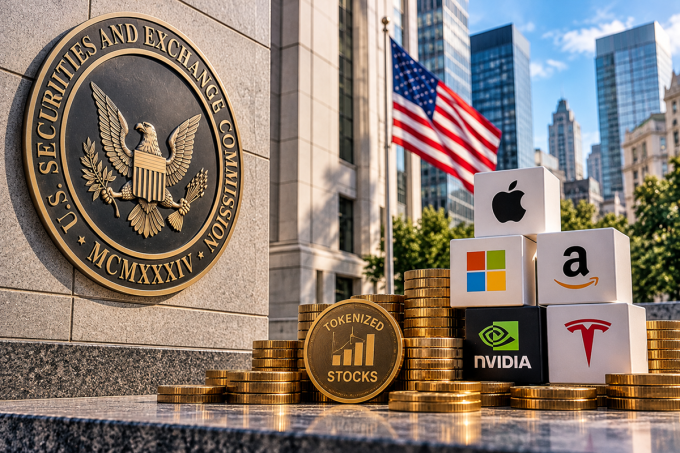
Major financial institutions are accelerating efforts to launch tokenized stocks, aiming to bring traditional equities onto blockchain-based trading platforms. Despite growing infrastructure and regulatory experimentation, however, many institutional investors remain cautious about actively trading these digital representations of public equities.
The development highlights a broader tension within the crypto-finance ecosystem: while tokenization of real-world assets (RWAs) has emerged as one of blockchain’s most promising narratives, adoption among large asset managers and institutional traders remains slower than anticipated.
Market Momentum for Tokenized Equities
Over the past year, several financial firms and crypto exchanges have launched initiatives tied to tokenized equities, which allow shares of publicly listed companies to be represented as blockchain-based tokens. Platforms promoting these products argue that tokenization can enable 24/7 trading, fractional ownership, and faster settlement compared with traditional stock markets.
The broader tokenized asset market has grown rapidly, with estimates placing the value of tokenized real-world assets above $11 billion in 2026. Tokenized U.S. Treasuries, for example, now represent a large portion of that market, while tokenized equities remain a smaller but expanding segment.
Despite the technological promise, daily trading volumes for tokenized stocks remain relatively modest compared with traditional equity markets, where the New York Stock Exchange and Nasdaq frequently see combined volumes exceeding $300 billion per day.
Regulatory and Infrastructure Challenges
One of the primary barriers to adoption is the complex regulatory framework surrounding digital securities. Tokenized stocks must comply with existing securities laws, custody requirements, and cross-border trading regulations, which can limit where and how these assets are offered.
Institutional investors also rely heavily on established market infrastructure such as central clearing systems, regulated custodians, and prime brokerage services. While blockchain platforms offer potential efficiency gains, many institutions prefer waiting until these services mature within tokenized ecosystems.
- $11B+ estimated tokenized real-world asset market
- $300B+ daily trading volume in traditional U.S. equity markets
- 24/7 trading capability often cited as a key advantage of tokenized equities
These structural factors contribute to a cautious approach among institutional market participants.
Investor Sentiment and Strategic Considerations
For many institutions, the appeal of tokenization lies in potential long-term efficiencies rather than immediate trading opportunities. Asset managers are particularly interested in how blockchain could reduce settlement times, operational costs, and counterparty risk.
However, institutional traders also prioritize deep liquidity, regulatory clarity, and standardized market infrastructure. Without these elements, tokenized equities may struggle to compete with established exchanges that already provide highly efficient trading environments.
Some market observers believe tokenized stocks may initially gain traction in international markets or among retail-focused platforms before institutional investors become active participants.
Looking ahead, the evolution of tokenized equities will likely depend on regulatory progress, improvements in blockchain-based trading infrastructure, and greater institutional familiarity with digital asset settlement systems. If these developments converge, tokenized stocks could eventually play a larger role in global capital markets, but widespread institutional adoption may take longer than early advocates anticipated.
Comparison, examination, and analysis between investment houses
Leave your details, and an expert from our team will get back to you as soon as possible









Leave a comment