

Key Points:
- Pakistan ranks as the world’s third-largest crypto market by retail activity, according to officials.
- More than 100 million unbanked citizens make digital assets a financial inclusion tool rather than a speculative luxury.
- The government is advancing plans for a regulated framework, a state bitcoin reserve, and energy-linked mining — but with structured oversight.
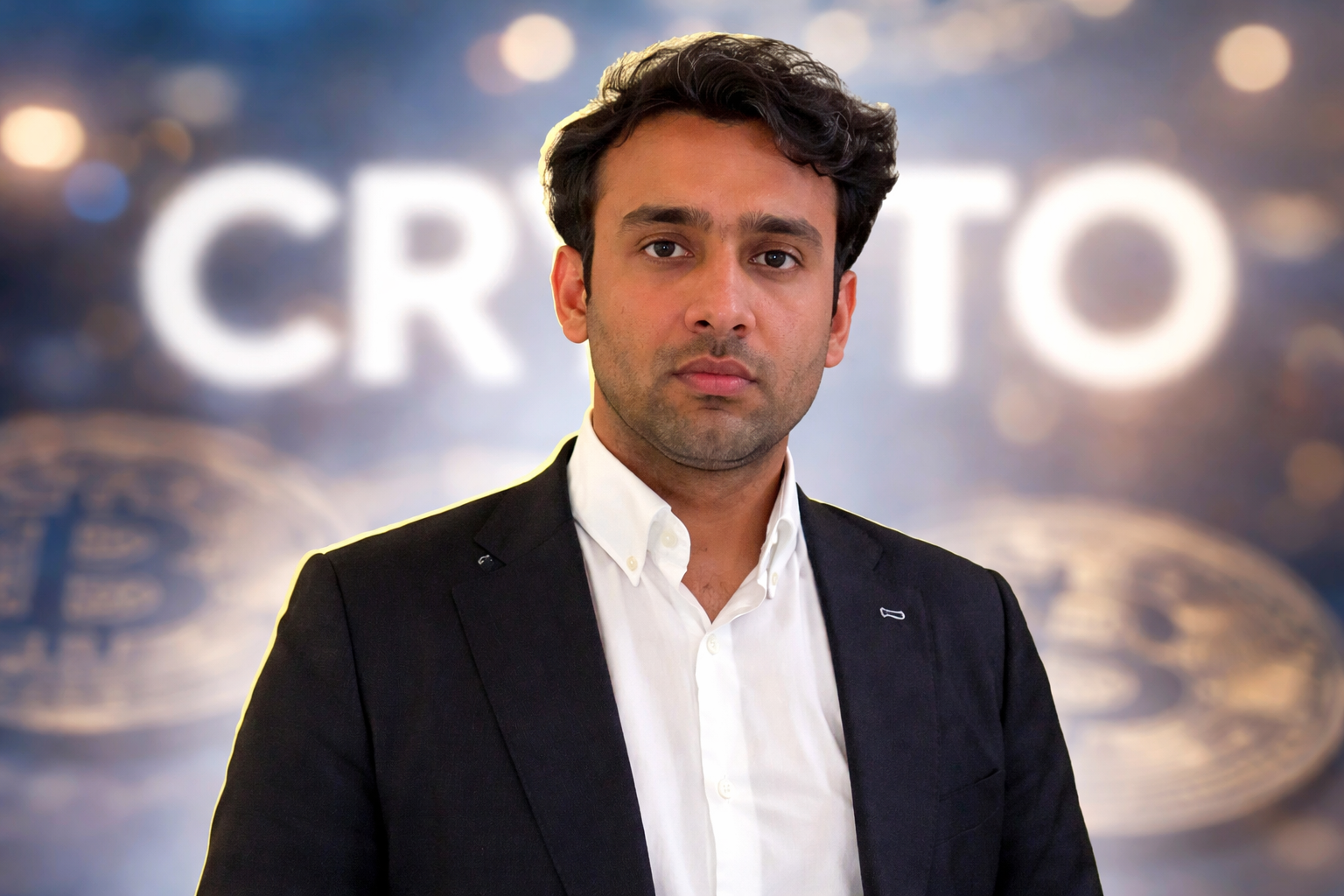
Pakistan’s embrace of cryptocurrency is not ideological — it is structural. That was the message from Bilal Bin Saqib, chairman of Pakistan’s Virtual Assets Regulatory Authority (PVARA), speaking at Consensus Hong Kong 2026. For Islamabad, crypto is not a speculative experiment but a response to economic reality.
“In 2025, Pakistan realized that approximately 40 million citizens were already trading digital assets with zero rules, zero protection, and zero benefit flowing back to the state,” Bin Saqib said. “The market existed, but the regulations didn’t.”
Rather than suppress activity, authorities opted to formalize it — transitioning from what he described as a gray market to a governed one.
A Young, Unbanked Economy Meets Digital Assets
Pakistan, with a population of roughly 250 million, is one of the youngest countries demographically, with about 70% of citizens under the age of 30. According to Bin Saqib, this digitally native generation has driven retail crypto adoption to levels that now place Pakistan third globally in retail crypto activity, ahead of economies such as Germany and Japan.
The adoption story, however, is rooted less in speculation than in structural financial exclusion.
“We have over 100 million unbanked citizens, people who have no saving tools, no investment tools, no way to break out of their economic class,” Bin Saqib said. “Crypto and blockchain are not a luxury for Pakistan. It’s a ladder for the masses.”
In that framing, digital assets function as parallel financial rails — offering access to savings, cross-border remittances, and global markets in a country where traditional banking penetration remains limited.
Building Guardrails Around a De Facto Market
The establishment of PVARA reflects a broader regulatory pivot. Rather than attempting to shut down crypto trading — which would have been difficult given the scale — authorities chose to bring it under supervision.
The strategy mirrors trends across emerging markets, where retail-driven adoption often precedes regulatory frameworks. By formalizing oversight, Pakistan aims to channel economic benefits back into the state while protecting consumers.
Bin Saqib stressed that regulation is not about stifling innovation but about providing structure. Without guardrails, he argued, the country risks leaving both investors and national interests exposed.
A Strategic Bitcoin Reserve and Energy Play
Pakistan’s ambitions extend beyond regulation. At Bitcoin Las Vegas last year, Bin Saqib announced plans to explore a strategic bitcoin reserve and support domestic mining initiatives.
He emphasized at Consensus that such announcements are not speculative gestures.
“When you are dealing with something as strategic as the Bitcoin reserve or the national energy allocation, speed without structure can be dangerous,” he said.
The first step involves identifying digital assets already held by the state and migrating them into a formal custody framework. This, he said, establishes transparency and accountability while treating digital assets as part of sovereign wealth rather than speculative holdings.
On mining, Pakistan is assessing surplus electricity sites and evaluating the economics of deploying mining operations and AI compute centers. The government is engaging global miners and AI infrastructure operators under what Bin Saqib described as a “responsible partnership model.”
Converting Energy Into Infrastructure
The mining initiative is not being framed solely as a crypto project. Instead, it forms part of a broader strategy to optimize unused energy capacity and expand national digital infrastructure.
“Bitcoin mining and AI data centers are mechanisms for converting unused energy into productive capacity,” Bin Saqib said.
For a country balancing energy constraints and economic development goals, that dual-use approach — pairing blockchain mining with AI compute — could transform stranded electricity into exportable digital output.
Strategic Outlook
Pakistan’s crypto strategy reflects a distinctive emerging-market logic. Rather than debating whether digital assets should exist, policymakers are confronting the fact that millions of citizens are already participating.
The challenge now is execution. Regulatory clarity, custody frameworks, and energy economics will determine whether crypto becomes a sustainable growth engine or remains a volatile parallel market.
If structured effectively, Pakistan’s approach could serve as a template for other emerging economies where crypto adoption has outpaced policy — turning decentralized finance into a tool of national development rather than speculative excess.
Comparison, examination, and analysis between investment houses
Leave your details, and an expert from our team will get back to you as soon as possible













Start sharing, start earning—become our affiliate today!