Key Points:
- Democratic victories in the U.S. midterm elections have raised concerns about tighter restrictions on data centre construction, adding another challenge for an AI infrastructure sector already facing significant market pressure.
- Texas represents approximately 27% of planned U.S. data centre power capacity, making the election outcome and proposals for a construction moratorium particularly relevant to investors.
- Elon Musk and Chamath Palihapitiya have renewed attention on the space economy, as private investment in space hardware reached approximately $17 billion in 2025.
The outlook for artificial intelligence infrastructure companies is facing renewed uncertainty as political developments in the United States add to concerns about capital expenditure, financing requirements, and future returns. Democratic victories in the November 3 midterm elections, including a projected victory in Texas, have raised questions about whether stricter restrictions on data centre construction could affect the industry’s expansion plans.
The developments come as several publicly traded AI infrastructure companies remain substantially below their recent highs. Against this backdrop, Elon Musk’s suggestion that data centres could eventually operate in space has introduced another dimension to the debate over where the next generation of computing infrastructure may be developed.
Election Results Increase Regulatory Uncertainty for Data Centre Developers
The Democratic Party’s victories in both chambers of Congress have intensified investor concerns about the regulatory environment surrounding large-scale AI infrastructure projects. The projected victory of Democrat Gina Hinojosa in Texas has attracted particular attention because she supports a moratorium on AI data centres, according to the reporting cited by CoinDesk.
Texas is a strategically important market for the sector. Wells Fargo estimates that the state accounts for approximately 27% of planned U.S. data centre power capacity. Any restrictions affecting construction could therefore have implications for developers, infrastructure providers, and companies financing the expansion of computing capacity.
The immediate market reaction reflected these concerns. CoreWeave shares declined approximately 3.3% in early trading, while Applied Digital fell around 3% and IREN dropped approximately 4.3% ahead of Wednesday’s market open.
For investors, the issue extends beyond political positioning. Data centre development requires substantial commitments to land, electricity, equipment, financing, and long-term infrastructure planning. Greater uncertainty around construction approvals could complicate project timelines and increase the difficulty of evaluating future cash flows.
AI Infrastructure Stocks Remain Under Significant Pressure
The election-related concerns are emerging during an already difficult period for companies exposed to the expansion of AI computing infrastructure. According to CoinDesk, shares of CoreWeave, Cipher Digital, IREN, and Nebius have declined approximately 50% to 60% from their summer highs.
The weakness reflects broader investor questions about the sustainability of infrastructure spending, the borrowing required to finance expansion, and whether future returns will justify the scale of capital being committed.
This distinction is increasingly important as demand for artificial intelligence computing continues to drive infrastructure investment. Strong demand alone does not guarantee attractive financial performance for infrastructure operators. Companies must also manage financing costs, utilization levels, construction schedules, and the commercial terms of their customer agreements.
Nevertheless, the broader equity market showed some resilience during the session. Invesco QQQ technology futures recovered from earlier losses and were up approximately 0.3% in premarket trading. Bitcoin also traded above $78,000, gaining more than 1% over the preceding 24 hours, illustrating that market movements were not uniformly negative across technology and digital asset markets.
Musk and Palihapitiya Turn Attention Toward the Space Economy
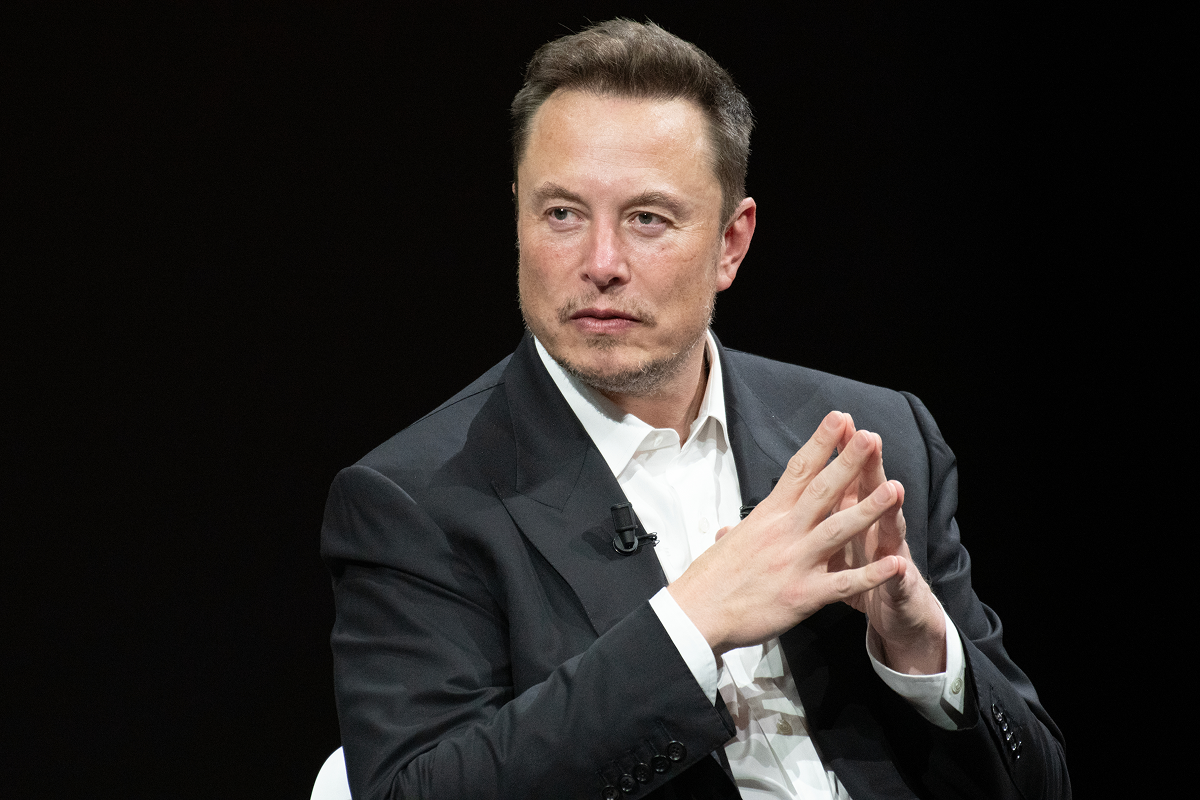
As concerns surrounding terrestrial data centre development increased, Elon Musk and investor Chamath Palihapitiya used social media to highlight opportunities in the space economy.
Following the Republican election losses, Musk wrote on X: “Data centers in space looking pretty appealing right now.” His comment drew attention to the possibility of placing computing infrastructure beyond Earth, although it did not establish a specific development plan or commercial commitment.
Palihapitiya’s investment thesis offered a broader perspective on the sector’s expansion. His research indicated that private investment in space hardware reached approximately $17 billion in 2025, compared with around $500 million in 2012. The figures illustrate the substantial increase in private capital directed toward space-related infrastructure over the period.
However, the emerging space economy also remains connected to government spending and public-sector demand. This creates a different investment profile from conventional technology infrastructure, where commercial demand, financing conditions, and private-sector contracts are central considerations.
SpaceX, which completed its initial public offering in June, was itself down approximately 4% in Wednesday’s premarket trading. The movement highlights that growing interest in the space economy does not necessarily translate into immediate gains for companies operating in the sector.
Infrastructure Investors Face a Changing Risk Landscape
The developments reveal two connected challenges for investors. Traditional AI infrastructure companies must demonstrate that their spending and borrowing can generate sustainable returns, while political uncertainty could introduce additional obstacles to project development. At the same time, the space economy is attracting capital and attention, but its commercial opportunities remain subject to execution, funding, and government-related dependencies.
Looking ahead, investors will monitor potential policy developments affecting data centre construction, particularly in Texas, alongside the financial performance and capital requirements of major AI infrastructure operators. Musk’s comments may also encourage further discussion about space-based computing, but the investment case will ultimately depend on technological feasibility and commercially viable deployment. For now, the central question is whether the AI infrastructure sector can sustain its expansion while adapting to a more demanding political and financial environment.
Comparison, examination, and analysis between investment houses
Leave your details, and an expert from our team will get back to you as soon as possible