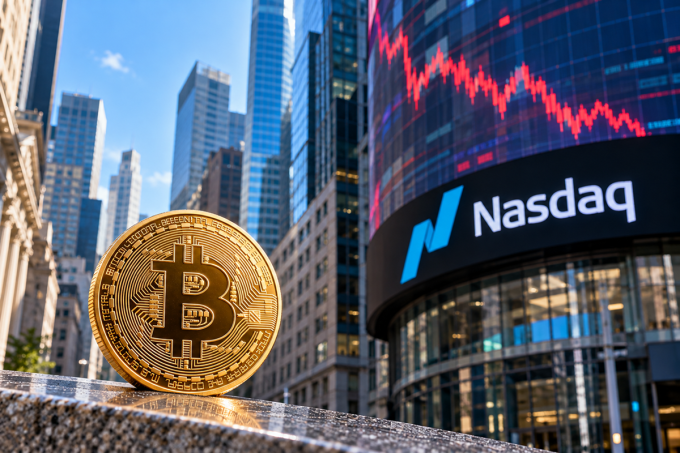
Bitcoin rebounded above the $60,000 threshold after a violent selloff triggered approximately $1.6 billion in liquidations across cryptocurrency derivatives markets. The recovery follows one of the largest leverage-driven corrections of the year, highlighting both the resilience and volatility that continue to define digital asset markets.
The rebound comes as institutional investors evaluate whether the recent decline represents a healthy deleveraging event or signals broader weakness in risk assets. With macroeconomic uncertainty, evolving regulatory frameworks, and shifting capital flows influencing sentiment, the latest price action underscores the increasingly sophisticated dynamics driving the cryptocurrency ecosystem.
Liquidation Cascade Accelerated the Market Decline
The recent correction was fueled largely by the unwinding of highly leveraged positions rather than a single fundamental catalyst. As bitcoin broke below several technical support levels, automatic liquidations across futures and perpetual contracts intensified selling pressure, resulting in approximately $1.6 billion worth of forced position closures across the crypto market.
Liquidation events often create a cascading effect. When leveraged traders fail to meet margin requirements, exchanges automatically close positions, generating additional market sell orders that push prices lower and trigger further liquidations. This self-reinforcing mechanism can produce rapid price swings that exceed what underlying fundamentals alone would justify.
For institutional investors, the episode demonstrates the growing influence of derivatives markets on cryptocurrency price discovery. While leverage enhances liquidity during stable periods, it can significantly amplify volatility during periods of market stress.
Recovery Above $60,000 Suggests Buyers Remain Active
Following the liquidation-driven selloff, bitcoin managed to recover above the psychologically important $60,000 level. The rebound indicates that buyers emerged as valuations became more attractive following the sharp correction, preventing further deterioration in market sentiment.
Technical analysts often view recoveries above major support levels as indicators that long-term demand remains present despite short-term volatility. However, sustained stabilization typically requires improving liquidity conditions, stronger trading volumes, and reduced leverage throughout the derivatives market.
Institutional participants are likely to monitor whether the recovery develops into a broader trend or simply represents temporary relief following excessive forced selling. Market resilience after significant deleveraging events can provide important insights into underlying investor confidence.
Macro Conditions Continue to Shape Crypto Performance
Beyond derivatives activity, broader macroeconomic factors remain influential drivers of cryptocurrency prices. Investors continue evaluating inflation trends, interest-rate expectations, monetary policy decisions, and global economic growth prospects when determining allocations to risk-sensitive assets.
As digital assets become increasingly integrated into institutional portfolios, bitcoin has demonstrated stronger correlations with broader financial markets than in earlier market cycles. Consequently, shifts in global liquidity conditions and investor risk appetite frequently influence cryptocurrency valuations alongside blockchain-specific developments.
At the same time, continued growth in institutional infrastructure—including spot ETFs, digital custody services, tokenization initiatives, and regulated investment products—provides structural support for the long-term evolution of the asset class despite short-term volatility.
Investor Psychology Enters a New Phase After Deleveraging
Market corrections of this magnitude often produce significant changes in investor behavior. Following large liquidation events, speculative traders frequently reduce leverage and adopt more conservative positioning, while long-term investors reassess valuations based on strategic rather than emotional considerations.
Behavioral finance suggests that periods of extreme pessimism can sometimes establish conditions for market stabilization, although they do not guarantee an immediate recovery. Professional investors therefore monitor sentiment indicators alongside derivatives positioning, trading volume, and institutional fund flows when evaluating market direction.
Looking ahead, investors will focus on whether bitcoin can maintain its position above $60,000 while derivatives markets normalize and liquidity conditions improve. Additional attention will remain on ETF flows, macroeconomic developments, and regulatory initiatives that may influence institutional participation. The recent rebound demonstrates that significant buying interest continues to exist after major corrections, but sustained recovery will likely depend on stronger market fundamentals rather than short-term technical factors alone. For sophisticated crypto investors, the latest episode reinforces the importance of understanding how leverage, liquidity, and investor psychology interact to shape digital asset markets.
Comparison, examination, and analysis between investment houses
Leave your details, and an expert from our team will get back to you as soon as possible