

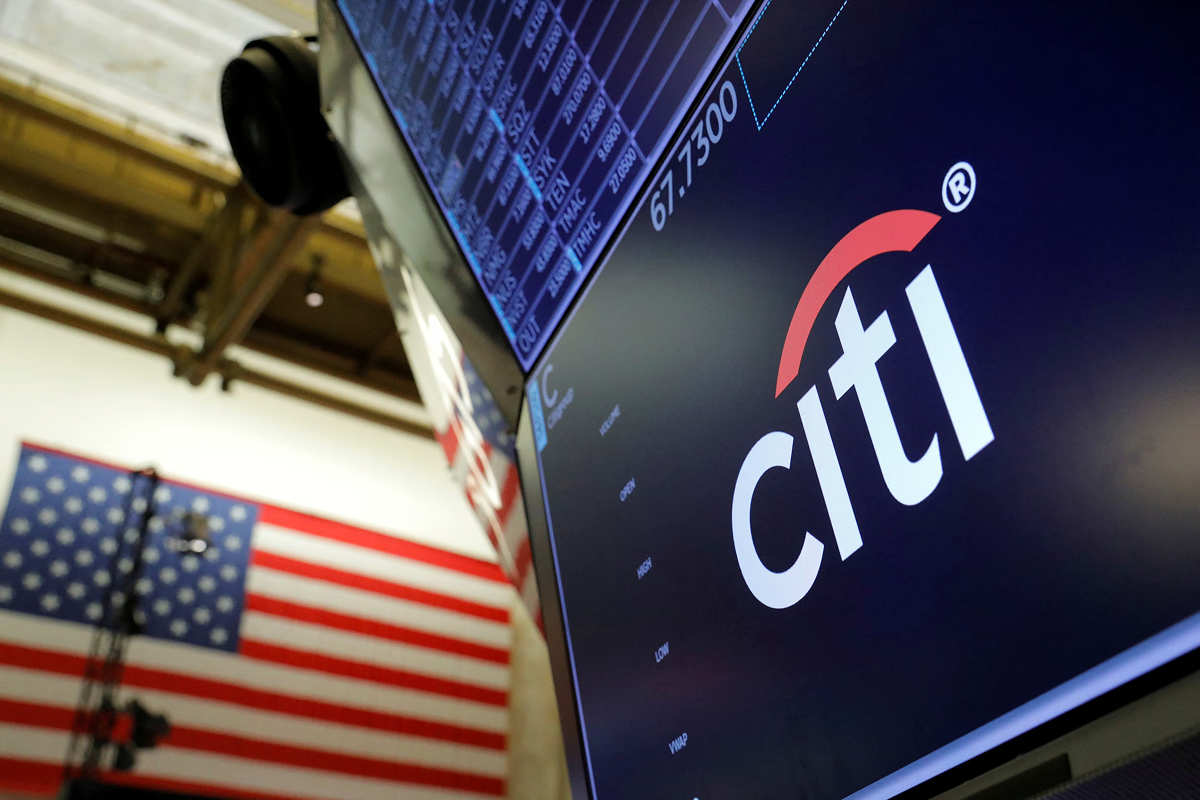
Bitcoin’s sharp pullback into year-end trading has renewed volatility across digital asset markets, but Citi analysts remain constructive on crypto-related equities, arguing that structural adoption trends continue to outweigh short-term price weakness. The stance highlights a growing divergence between spot crypto performance and publicly listed companies tied to the sector’s infrastructure and services.
Market Reaction: Bitcoin Weakness Versus Equity Resilience
Bitcoin has fallen roughly 20%–25% from recent highs into late-year trading, briefly dipping below key technical levels as liquidity thins and profit-taking accelerates. The broader crypto market followed suit, with total market capitalization declining by an estimated 15% over the same period.
By contrast, several major crypto-linked stocks have held up comparatively well. Shares of listed miners, exchanges, and infrastructure providers have seen mixed but generally less severe drawdowns, with some names still posting double-digit gains on a year-to-date basis. Citi notes that equity investors are increasingly valuing cash flow visibility, scale, and regulatory positioning rather than treating these companies as pure proxies for bitcoin’s spot price.
Business Models and Regulatory Tailwinds
Citi’s constructive view centers on the evolution of crypto companies from speculative vehicles into diversified financial and technology platforms. Large exchanges now generate revenue from custody, derivatives, and institutional services, while miners have expanded into high-performance computing and energy optimization.
Regulatory clarity also plays a role. In the U.S., clearer frameworks around custody, disclosures, and exchange oversight have reduced existential risk for publicly traded firms. Analysts estimate that companies operating under established compliance regimes trade at valuation discounts of 30%–40% compared with fintech peers, suggesting room for multiple expansion if regulatory uncertainty continues to ease.
Investor Sentiment and Strategic Positioning
From a behavioral standpoint, institutional investors appear more willing to express long-term crypto exposure through equities rather than tokens during periods of heightened volatility. Equity positions offer governance rights, audited financials, and inclusion in traditional portfolios, attributes that resonate with pension funds and asset managers managing risk budgets.
Citi highlights that institutional trading volumes tied to crypto equities have remained stable even as spot bitcoin volumes declined into year-end. This divergence suggests that investors are differentiating between cyclical price swings and secular adoption trends, particularly as tokenization, stablecoin payments, and on-chain settlement gain traction.
Looking ahead, Citi cautions that crypto stocks are unlikely to be immune if bitcoin experiences another sharp leg lower, especially below psychologically important levels. However, the bank argues that balance sheet strength, recurring revenues, and exposure to non-spot crypto activity position leading firms to outperform over a full market cycle. For sophisticated investors, the coming quarters may test whether crypto equities can continue to decouple from digital asset prices—or whether correlation ultimately reasserts itself under sustained market stress.
Comparison, examination, and analysis between investment houses
Leave your details, and an expert from our team will get back to you as soon as possible












https://shorturl.fm/w8xPB
Gotta say, jili56 is pretty solid. Been playing for a bit and I’m enjoying the variety of games. Check it out if you’re bored! Explore here: jili56
Alright, winpkrlogin seems interesting. Logging in and ready to roll! Can’t wait to see what kind of games they offer. Start playing winpkrlogin