Key Points:
- The CLARITY Act failed to advance in the U.S. Senate on Sept. 15, leaving comprehensive congressional market-structure legislation unresolved.
- The SEC introduced a five-year Innovation Exemption for qualifying platforms to trade certain tokenized U.S.-listed stocks onchain, while the CFTC advanced its own crypto-market rulemaking.
- For institutional investors and advisors, the emerging framework offers near-term regulatory pathways but leaves a distinction between regulatory permission and long-term legislative certainty.
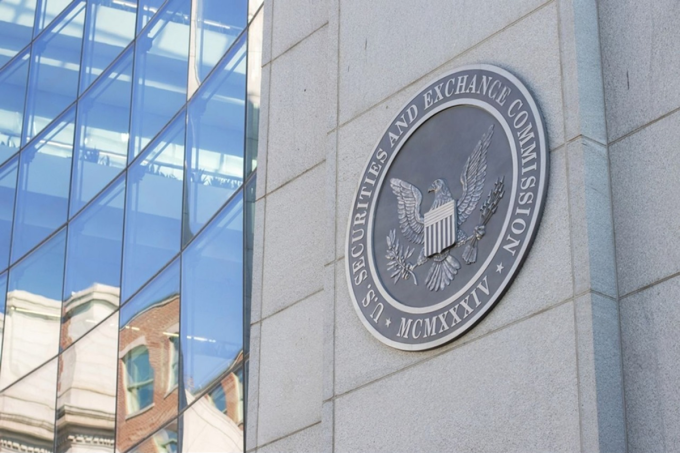
The failure of the U.S. Senate to advance the CLARITY Act did not stop regulators from developing a framework for digital assets. Instead, the SEC and CFTC have moved forward under existing authority, creating immediate pathways for tokenized securities, crypto-market infrastructure and certain derivatives-related services while Congress remains divided over comprehensive legislation.
Regulators Fill Part of the Legislative Gap
The CLARITY Act was intended to establish a broad market-structure framework covering digital assets and the businesses operating around them, including exchanges, brokers, issuers and intermediaries. The Senate procedural vote on Sept. 15 failed to reach the 60 votes required to advance the legislation, leaving the regulatory framework dependent more heavily on agency action.
Two days later, the SEC issued an Innovation Exemption creating a five-year pathway for qualifying platforms to offer onchain trading of certain tokenized U.S.-listed stocks without registering as traditional securities exchanges. The exemption is narrower than the proposed legislation and functions as a defined regulatory test rather than a comprehensive market-structure law.
Tokenized Securities Enter a Controlled Testing Phase
The SEC framework establishes several conditions that matter for professional investors. Trading is limited to identity-verified participants, margin is not permitted, and activity is capped at a small fraction of each stock’s conventional trading volume. The exemption can also be modified or shortened by the SEC.
The structure therefore provides a pathway for tokenized-equity markets to develop while limiting their initial scale. For advisors and institutions, the key issue is not simply whether a stock is represented by a token, but what legal rights the token conveys. Under the SEC’s framework, qualifying tokens must carry the same dividends, voting rights and liquidation claims as the underlying shares. Other products may instead provide synthetic exposure to price returns without shareholder rights.
CFTC Advances Crypto Market Infrastructure
The CFTC has taken a parallel approach. After the Senate vote, the agency submitted a new crypto-market proposal to the White House Office of Management and Budget for review. The proposal’s specific assets, exchange requirements and restrictions had not been disclosed, and it would still require subsequent regulatory steps, including a CFTC vote and public comment.
The agency also issued no-action relief for certain passive software providers connecting users with regulated derivatives markets. Eligible providers can facilitate access and receive transaction-based fees, but cannot hold customer assets, generate trading signals or control order routing. The relief includes risk-disclosure, recordkeeping and marketing requirements.
Regulatory Permission Is Not Legislative Certainty
The emerging framework creates a significant distinction for institutions committing capital to blockchain infrastructure. Regulatory action can establish what companies may do today, but congressional legislation can provide a more durable framework that is less dependent on future agency decisions and administrations.
That distinction becomes particularly important for banks, exchanges and asset managers considering infrastructure investments with multiyear or even decade-long horizons. The SEC has also outlined broader initiatives involving crypto issuance, blockchain-based transfer-agent rules and custody arrangements for investment advisers and regulated funds.
For the crypto market, the next phase will therefore be shaped by the interaction between agency rulemaking and future congressional action. The SEC’s five-year exemption, the CFTC’s developing market rules and the treatment of tokenized assets will provide measurable evidence of how digital-asset infrastructure can operate under existing authority. At the same time, institutions will continue to assess the gap between near-term regulatory access and durable legislative certainty as they determine how deeply to integrate blockchain-based markets into traditional financial infrastructure.
Comparison, examination, and analysis between investment houses
Leave your details, and an expert from our team will get back to you as soon as possible