Key Points:
- Coinbase shares jumped 7.6% to $172.35, extending a sharp rally as renewed political support for the CLARITY Act improved sentiment toward crypto equities.
- CEO Brian Armstrong has said Coinbase would remain viable even if the legislation fails, highlighting the distinction between the company’s operational resilience and the broader industry’s need for regulatory clarity.
- The bill’s progress remains important for institutional adoption because clearer boundaries between the SEC and CFTC could reduce regulatory uncertainty across U.S. digital-asset markets.
Coinbase Global shares rose 7.6% to $172.35 on Thursday, marking the stock’s second consecutive sharp gain after renewed White House pressure for Congress to advance the CLARITY Act. The move underscores how strongly investors are pricing regulatory developments into crypto equities, even as Coinbase CEO Brian Armstrong has argued that the exchange can continue operating effectively without the legislation.
Regulatory Optimism Drives Coinbase Higher
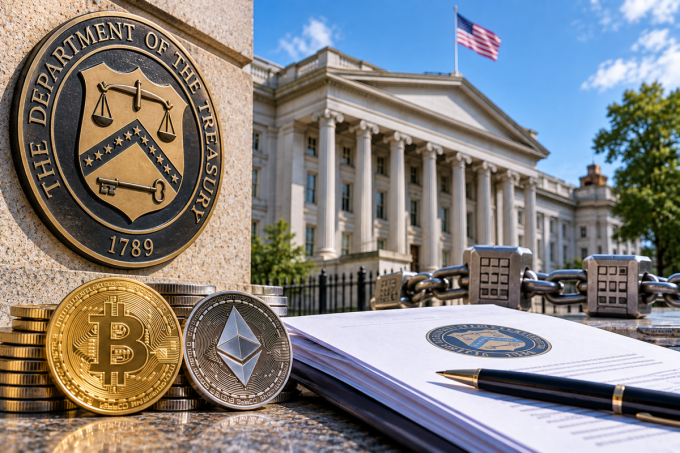
The immediate catalyst was political rather than operational. Following a White House meeting involving crypto executives, the administration urged Congress to advance the CLARITY Act, a market-structure bill designed to establish clearer federal rules governing digital assets and define the respective roles of the Securities and Exchange Commission and the Commodity Futures Trading Commission.
For Coinbase, regulatory clarity could have significant strategic value because the exchange operates across trading, custody, institutional services and other digital-asset activities. A clearer framework could reduce the uncertainty surrounding which products fall under securities or commodities regulation and potentially make the U.S. market more attractive to institutional participants.
The stock’s 7.6% one-day gain illustrates how quickly investors can reprice crypto-related equities when perceived regulatory risk changes. Coinbase shares had already advanced sharply in the previous session, suggesting that expectations surrounding U.S. crypto policy were becoming an increasingly important part of the equity’s near-term valuation.
Why Armstrong Says Coinbase Can Survive Without CLARITY
The apparent contradiction is important. During Coinbase’s second-quarter earnings call, Armstrong said that if the CLARITY Act failed to pass, it would be “business as usual” for the company and that “Coinbase would be fine.” He pointed to the exchange’s existing compliance practices and argued that regulators could still establish clearer rules through agency action.
That position suggests the legislation is not necessarily a binary question of Coinbase’s survival. Instead, the potential benefit is greater predictability across the broader market. Armstrong has also said the SEC and CFTC could develop rules if Congress does not act, although legislation would provide a more comprehensive statutory framework.
The distinction matters to investors. Coinbase may be relatively well positioned to operate under multiple regulatory regimes because of its scale and compliance infrastructure, while smaller exchanges and digital-asset businesses could face greater uncertainty if the legislative process remains stalled.
Institutional Adoption Is the Bigger Policy Question
The CLARITY Act’s significance extends beyond Coinbase’s share price. Clearer regulatory boundaries could influence how banks, asset managers and other financial institutions approach tokenized assets, digital-asset trading and custody in the United States.
Coinbase has increasingly expanded beyond its traditional exchange model, making the regulatory framework relevant to a broader range of revenue streams. For sophisticated investors, the key issue is therefore not simply whether CLARITY passes, but how its final provisions affect the economics of digital-asset businesses and the ability of traditional financial institutions to participate.
The political backdrop remains uncertain. The Senate failed to advance the bill before the August recess, despite extensive negotiations and lobbying from the crypto industry. Armstrong subsequently urged lawmakers to move the legislation forward, arguing that the remaining obstacles were primarily procedural rather than substantive.
What to Watch Next
Coinbase’s latest rally demonstrates that regulatory expectations can have a meaningful effect on crypto-equity valuations even before legislation becomes law. The next catalyst will be whether lawmakers can revive the CLARITY Act after the recess and whether regulators continue moving independently toward clearer digital-asset rules.
For the market, the distinction between legislative clarity and regulatory continuity will remain critical. Coinbase may be capable of operating without CLARITY, as Armstrong has argued, but a durable framework could still influence institutional participation, competitive dynamics and the valuation of crypto businesses across the U.S. market.
Comparison, examination, and analysis between investment houses
Leave your details, and an expert from our team will get back to you as soon as possible