

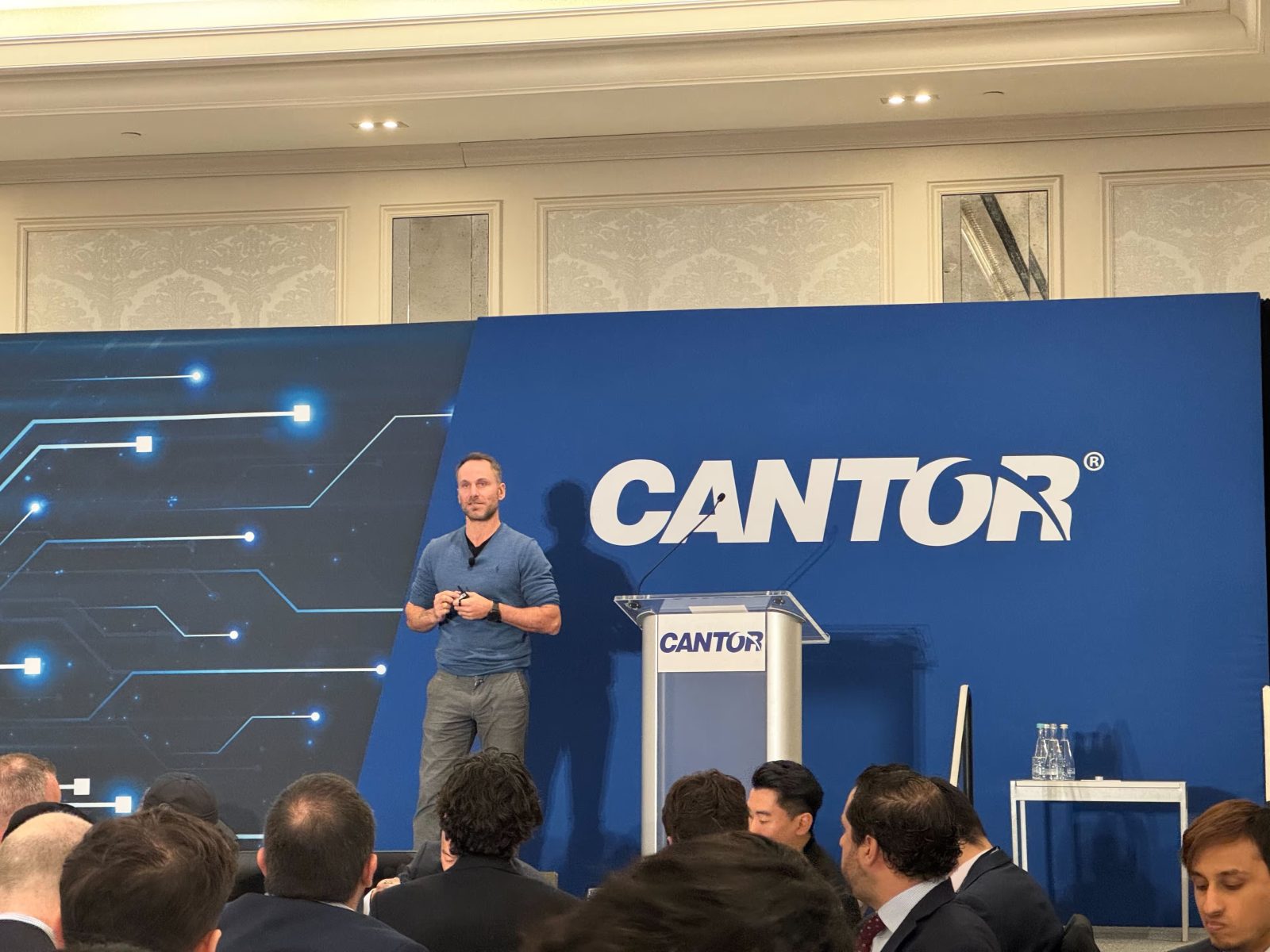
As bitcoin drifts further from its recent highs, Wall Street is beginning to frame the next phase of the crypto market less as a collapse and more as a recalibration. According to a year-end report from Cantor Fitzgerald, the market may be entering the early stages of a new “crypto winter” heading into 2026—one marked by subdued prices but deeper institutional engagement and structural maturation beneath the surface.
Bitcoin, trading near $87,600, is roughly 85 days past its latest peak. Historically, that timing aligns with the onset of extended downturns in the asset’s four-year cycle. Cantor analyst Brett Knoblauch suggests that downside pressure could persist for months, with bitcoin potentially testing the $75,000 level, close to the average breakeven price of bitcoin treasury firm Strategy (MSTR).
Crypto Markets: A Familiar Cycle, Different Dynamics
Unlike prior downturns defined by forced liquidations and high-profile failures, Cantor argues that the next crypto winter is likely to be less disorderly. Institutional investors now play a far larger role in liquidity provision and market structure than retail traders did in previous cycles.
Knoblauch highlights a growing divergence between token prices and underlying onchain activity. While headline prices may stagnate or decline, usage metrics across decentralized finance (DeFi), tokenized assets, and crypto infrastructure continue to trend upward. This disconnect suggests that market prices may be understating longer-term structural progress.
Decentralized exchanges (DEXs) are a key example. Even as overall trading volumes may fall alongside bitcoin’s price in 2026, Cantor expects DEXs—particularly those offering perpetual futures—to gain market share from centralized platforms as execution quality and user experience improve.
Tokenization and Onchain Growth
One of the strongest growth vectors identified in the report is real-world asset (RWA) tokenization. The onchain value of tokenized assets such as U.S. Treasuries, private credit, and equities has tripled over the past year to approximately $18.5 billion. Cantor projects that figure could exceed $50 billion by 2026 as financial institutions increasingly experiment with onchain settlement and programmable assets.
This expansion reflects a broader shift in how institutions view blockchain technology—not as a speculative vehicle, but as a financial rail capable of improving efficiency, transparency, and settlement speed.
Regulation and Institutional Confidence
Regulatory clarity is reinforcing this transition. The passage of the Digital Asset Market Clarity Act (CLARITY) in the U.S. establishes clearer boundaries between securities and commodities and grants the Commodity Futures Trading Commission primary oversight of spot crypto markets once decentralization thresholds are met.
Cantor views the framework as a meaningful reduction in regulatory uncertainty, lowering headline risk and enabling banks and asset managers to participate more directly. Importantly, it also provides decentralized protocols with clearer compliance pathways, addressing a long-standing obstacle to institutional adoption.
Investor Sentiment and Emerging Use Cases
Investor psychology remains fragile. Bitcoin is only about 17% above Strategy’s average cost basis, and a sustained break below that level could trigger broader risk aversion, even if Cantor believes large corporate holders are unlikely to sell. Digital asset trusts have already slowed accumulation as prices soften and premiums compress.
At the same time, new use cases are gaining traction. Onchain prediction markets, particularly in sports betting, have seen volumes surge to $5.9 billion—more than half of DraftKings’ third-quarter handle. Major players including Robinhood, Coinbase, and Gemini are entering the space, signaling growing confidence in blockchain-based market design.
Looking ahead, 2026 may not deliver explosive price appreciation. However, if Cantor’s thesis holds, the cooling cycle could quietly reinforce the industry’s institutional backbone, positioning crypto for a more resilient and sustainable expansion once market sentiment turns.
Comparison, examination, and analysis between investment houses
Leave your details, and an expert from our team will get back to you as soon as possible












Just had a session on ph4444 and won some really good prizes tonight! It’s pretty good & I am happy with my experience, I will try again for sure! Give it a shot!: ph4444