

Key Points:
- The European Union is preparing a new sanctions package that would ban all cryptocurrency transactions with Russia.
- The measures aim to prevent circumvention through Russia-linked crypto platforms and stablecoins, including A7A5.
- Analysts warn that decentralized liquidity pools and global exchanges may limit enforceability of a full crypto blockade.
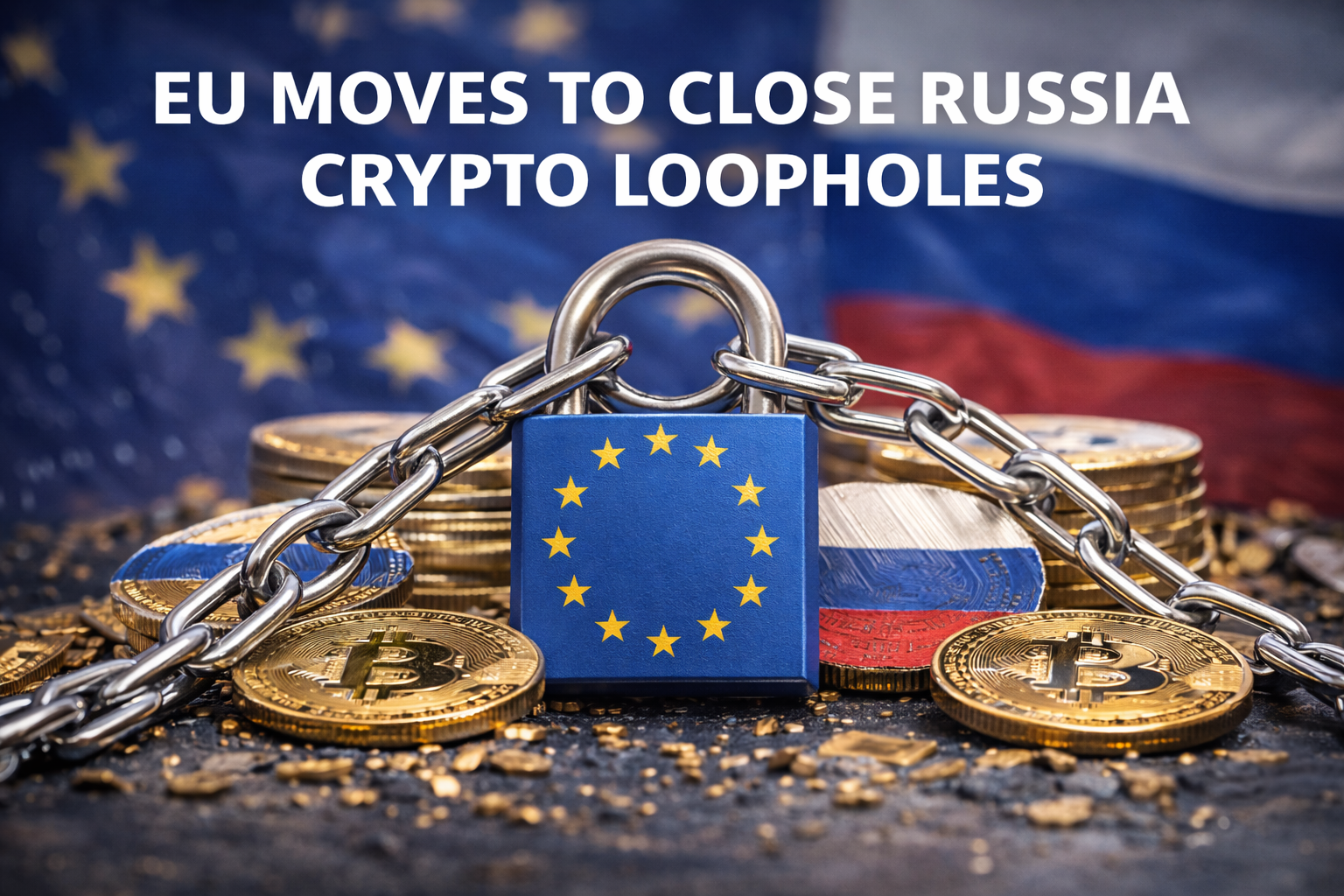
The European Union is finalizing a new round of sanctions designed to close what officials describe as persistent cryptocurrency loopholes used by Russian entities to bypass existing financial restrictions. The proposed measures, expected to form part of the bloc’s 20th sanctions package, would prohibit all cryptocurrency transactions involving Russia, marking the most sweeping digital asset restriction since the war began.
According to reporting by the Financial Times, the European Commission intends to expand beyond targeted listings of specific crypto platforms and instead block engagement with any crypto asset service provider established in Russia. The move signals Brussels’ growing concern that prior entity-based sanctions have allowed alternative platforms to emerge, enabling continued cross-border flows.
A Broader Enforcement Strategy
The initiative reflects a shift from piecemeal enforcement toward structural restrictions. An internal Commission document cited in the report argues that simply sanctioning individual crypto providers leads to the rapid creation of replacement entities. By contrast, the new framework would prohibit EU individuals and companies from engaging with Russian-based crypto platforms entirely.
European Commission President Ursula von der Leyen said last week that the broader sanctions package will also target 20 additional Russian regional banks and several foreign financial institutions suspected of facilitating cross-border transactions.
Among those reportedly under review are banks in Kyrgyzstan, Laos and Tajikistan, according to Reuters. If approved, these institutions would be barred from conducting transactions with EU entities, further tightening financial channels available to Moscow.
Stablecoins in the Crosshairs
The proposed crypto restrictions are expected to scrutinize Russia-linked payments platform A7 and its ruble-pegged stablecoin, A7A5. Despite multiple sanctions rounds, A7A5 emerged in 2025 as one of the fastest-growing non-dollar stablecoins by market capitalization, according to data from CoinMarketCap and DefiLlama.
The operator of A7 has denied facilitating sanctions evasion, calling such allegations politically motivated. However, blockchain analytics firm Global Ledger reported patterns consistent with wash trading that may have inflated the token’s volumes.
The growth of non-dollar stablecoins has drawn increasing regulatory scrutiny globally, as policymakers view them as potential alternative settlement rails outside traditional banking oversight.
Enforcement Challenges in a Decentralized Market
While the EU’s objective is clear, analysts question whether a blanket crypto ban is technically enforceable. Lex Fisun, co-founder and CEO of Global Ledger, argued that decentralized liquidity infrastructure limits the effectiveness of centralized sanctions.
Token holders can swap assets like A7A5 into globally traded stablecoins through automated liquidity pools without interacting directly with centralized intermediaries. Once funds pass through major exchanges and trading hubs, tracing origin becomes significantly more complex.
Fisun suggested that for European exchanges to fully comply with a comprehensive ban, they might need to block flows from large global liquidity centers — a move that could disrupt legitimate trading activity and impair market efficiency.
The challenge highlights a structural tension: sanctions are traditionally enforced through centralized chokepoints, yet decentralized finance operates across borderless, permissionless networks.
Parallel Developments in Russia
The sanctions push coincides with domestic digital asset reforms in Russia. This week, Russian lawmakers passed legislation establishing procedures for freezing and confiscating digital currencies, signaling a tightening of internal oversight even as external restrictions intensify.
The juxtaposition underscores the evolving role of crypto in geopolitical finance. While Western regulators aim to curtail its use as a sanctions-evasion tool, Russia continues to integrate digital assets into its legal framework.
Strategic Outlook
If adopted on Feb. 24 as anticipated, the EU’s new measures would represent its most aggressive attempt yet to restrict crypto-linked financial flows tied to Russia. The effectiveness of the policy will depend on coordination with global exchanges, compliance enforcement, and the technical capacity to track onchain activity.
However, as decentralized infrastructure expands and liquidity fragments across jurisdictions, fully sealing crypto channels may prove more complex than restricting traditional banking rails.
The coming months will test whether regulatory reach can keep pace with technological flexibility in an increasingly digitized financial landscape.
Comparison, examination, and analysis between investment houses
Leave your details, and an expert from our team will get back to you as soon as possible












Get paid for every referral—sign up for our affiliate program now!