

Key Points:
• Cleveland Fed President Beth Hammack said interest rates should remain on hold for several months as inflation risks persist.
• She questioned last week’s softer CPI reading, citing data distortions linked to the government shutdown.
• Diverging views among future Fed voters highlight growing uncertainty for markets, including bitcoin, in 2026.
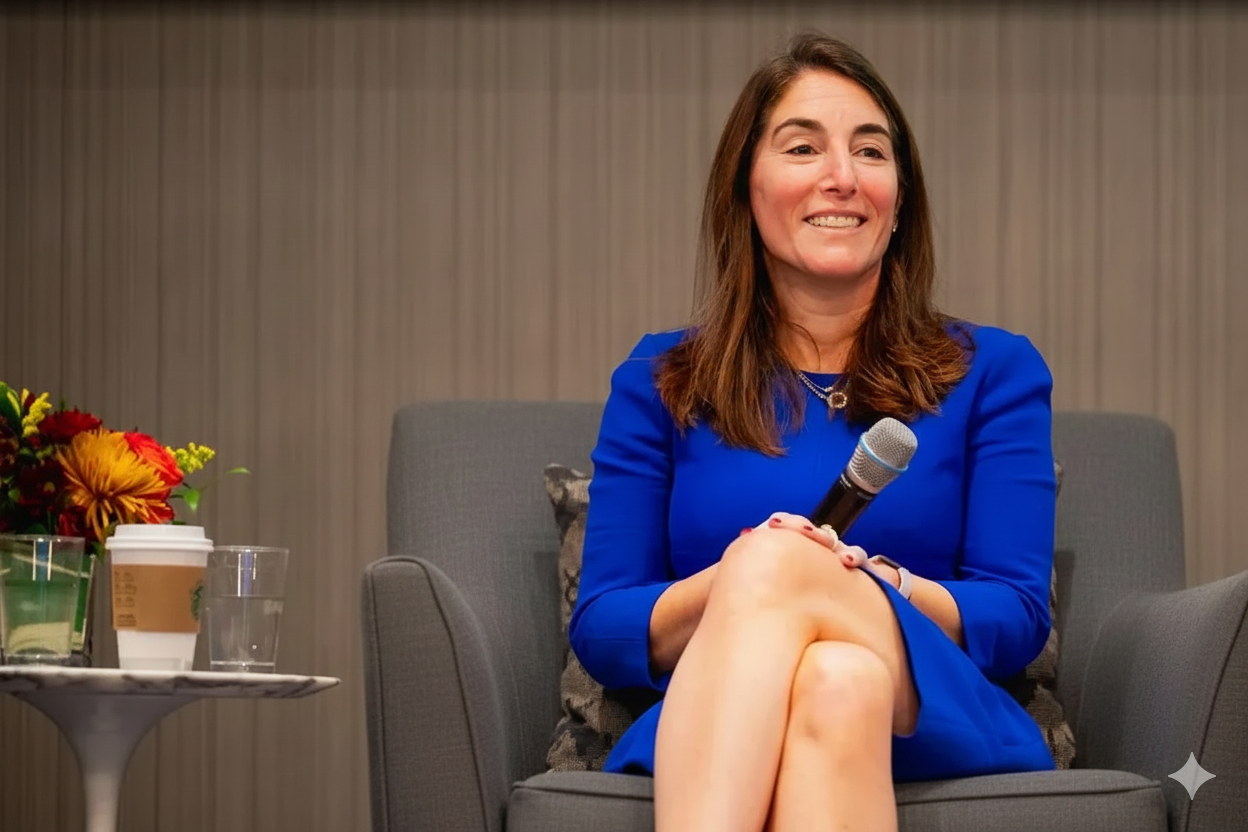
Cleveland Federal Reserve President Beth Hammack signaled a more hawkish stance on U.S. monetary policy, arguing that interest rates should remain unchanged for an extended period and warning investors not to overinterpret recent inflation data. Her comments underscore a widening divide within the Federal Reserve at a time when markets are increasingly sensitive to policy signals.
Hammack, who joined the Fed in 2024 after a career at Goldman Sachs, will become a voting member of the Federal Open Market Committee (FOMC) in 2026. That role will give her a direct voice in setting interest rates, elevating the importance of her views as investors look ahead to the next phase of U.S. monetary policy.
Rates Likely to Stay Higher for Longer
In an interview with the Wall Street Journal, Hammack said her “base case” is that the Fed can keep rates at current levels for several months while policymakers wait for clearer evidence that inflation is returning sustainably to target or that the labor market is weakening more decisively.
Her remarks suggest resistance to near-term rate cuts, even as markets have increasingly priced in easier policy. The benchmark federal funds rate currently sits in a 3.5%–3.75% range following the Fed’s cuts earlier this year.
Hammack’s position reflects a broader concern among some policymakers that inflation progress remains fragile and vulnerable to renewed pressures, particularly as economic growth remains resilient.
Skepticism Over the CPI Surprise
Hammack also poured cold water on last week’s November Consumer Price Index report, which showed headline inflation unexpectedly falling to 2.7% from 3.1%, with a similar decline in core inflation. She said she views the data “with a grain of salt,” pointing to distortions caused by last fall’s government shutdown that may have affected data collection.
According to Hammack, her own estimates put inflation closer to 2.9%–3.0%, roughly in line with economists’ forecasts prior to the release. The implication is that the apparent disinflation may not be as meaningful as markets initially assumed.
That caution contrasts with the optimism that followed the CPI release, when traders briefly increased bets on faster policy easing.
A Clear Split Inside the Fed
Hammack’s comments highlight a sharp contrast with Chris Waller, another influential policymaker and a leading contender to be President Trump’s next Fed chair. Waller recently said the current policy rate remains 50 to 100 basis points above the neutral level, suggesting monetary policy is still restrictive and could be eased.
Hammack, by contrast, argued that the fed funds rate is already “a little bit below” neutral, implying policy may be mildly stimulative. The gap between those views illustrates how fractured the policy debate could become in 2026, when both are expected to play key roles.
Such divergence could make it harder to assemble the seven votes typically needed to pass policy decisions, raising the risk of more frequent dissents and less predictable outcomes.
Implications for Markets and Crypto
Traditionally, easier Fed policy is seen as supportive for risk assets such as equities, commodities and bitcoin. While stocks and metals like gold and silver have surged to or near record highs this year, bitcoin has notably failed to respond in the same way.
Since the Fed’s first rate cut in September, bitcoin has struggled and remains well below its peak, challenging the assumption that looser monetary policy automatically lifts crypto prices. Hammack’s hawkish tilt suggests that policy support may remain limited, reinforcing uncertainty for digital assets heading into 2026.
As the Fed’s internal divisions become more visible, markets may face a more volatile and less predictable policy environment—one where inflation data, labor market signals and individual policymaker influence matter more than ever.
Comparison, examination, and analysis between investment houses
Leave your details, and an expert from our team will get back to you as soon as possible









https://shorturl.fm/cRt4k
Yo, I’ve been messin’ around on 123winvin. It’s alright. Nothing to write home about, but not bad either. Perfect for killin’ some time. Give it a try if you’re looking for something new.
Saw something about fun88ninja. Sounds intriguing. Anyone know what the ninja part is about? Special bonuses? Secret levels? Inquiring minds want to know! Info here: fun88ninja