

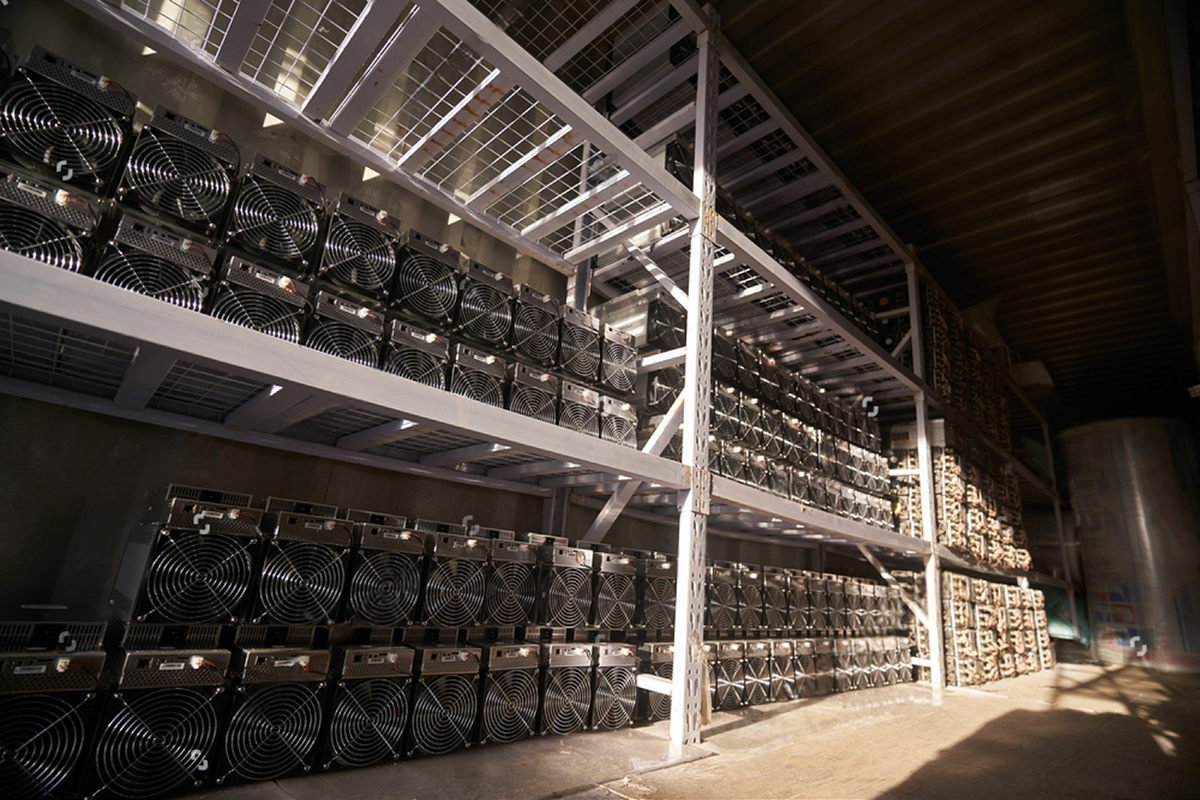
France has outlined stringent regulatory safeguards governing the proposed sale of a majority stake in its state-backed energy cloud infrastructure to a U.S.-based bitcoin mining company. The transaction, which could grant the miner access to high-performance computing resources tied to national energy assets, is unfolding against a backdrop of heightened scrutiny over energy security, foreign investment, and digital asset infrastructure.
For institutional crypto investors, the deal highlights the increasingly complex intersection between energy policy, national security, and large-scale bitcoin mining operations in Europe.
Market Reaction: Mining Stocks and Bitcoin Hold Steady
Bitcoin traded near the $66,000–$69,000 range as news of France’s oversight conditions emerged, showing limited immediate volatility. Publicly listed mining equities in North America also recorded muted price movements, reflecting the transaction’s strategic nature rather than immediate earnings impact.
However, energy-linked mining infrastructure remains a focal point for investors. Global hashrate recently exceeded 600 EH/s, underscoring intense competition for low-cost power. Access to state-supported energy grids—particularly in nuclear-heavy markets like France—could materially affect cost structures for large-scale operators.
Institutional investors are closely monitoring how regulatory barriers may shape capital deployment in Europe compared to more permissive jurisdictions in North America or the Middle East.
Regulatory Framework: Energy Sovereignty and Foreign Investment Controls
France’s conditions reportedly include safeguards to preserve energy sovereignty, maintain state oversight of grid stability, and limit operational autonomy related to strategic computing infrastructure. Under French foreign direct investment (FDI) laws, sectors tied to energy, data infrastructure, and critical technologies require government authorization for majority foreign ownership.
Authorities are also emphasizing compliance with the European Union’s sustainability targets. Bitcoin mining’s energy intensity remains politically sensitive, even as operators increasingly integrate renewable and nuclear sources.
The proposed structure may involve:
- Golden-share provisions granting the French state veto rights over strategic decisions.
- Energy usage caps during peak demand periods to protect grid stability.
- Operational transparency requirements tied to environmental reporting.
Such measures signal that while European governments are open to digital asset infrastructure investment, they are unlikely to relinquish oversight of critical national assets.
Strategic Implications: Mining Expansion Meets Political Constraints
For bitcoin miners, proximity to reliable, low-carbon energy sources is a competitive advantage. France’s nuclear-powered grid—where over 60% of electricity generation derives from nuclear energy—offers predictable pricing and low carbon intensity, appealing attributes for institutional investors focused on ESG alignment.
Yet regulatory friction may increase transaction costs and elongate deal timelines. Institutional allocators evaluating mining exposure must now account not only for hashprice metrics and hardware efficiency but also for geopolitical and sovereign risk.
Psychologically, the episode reinforces a broader market theme: bitcoin mining has evolved from a purely private-sector activity into a strategically scrutinized infrastructure industry. Governments increasingly view high-performance computing and energy allocation as national interests rather than neutral commercial transactions.
Looking ahead, France’s approach could set a precedent for other European Union member states balancing digital infrastructure growth with energy policy priorities. If structured effectively, the deal may demonstrate that sovereign oversight and private mining investment can coexist. Conversely, overly restrictive conditions could deter cross-border capital flows into European mining ventures. For professional investors, monitoring regulatory approvals, energy pricing frameworks, and cross-jurisdictional policy shifts will be critical in assessing how sovereign considerations reshape the global mining landscape.
Comparison, examination, and analysis between investment houses
Leave your details, and an expert from our team will get back to you as soon as possible












Leave a comment