

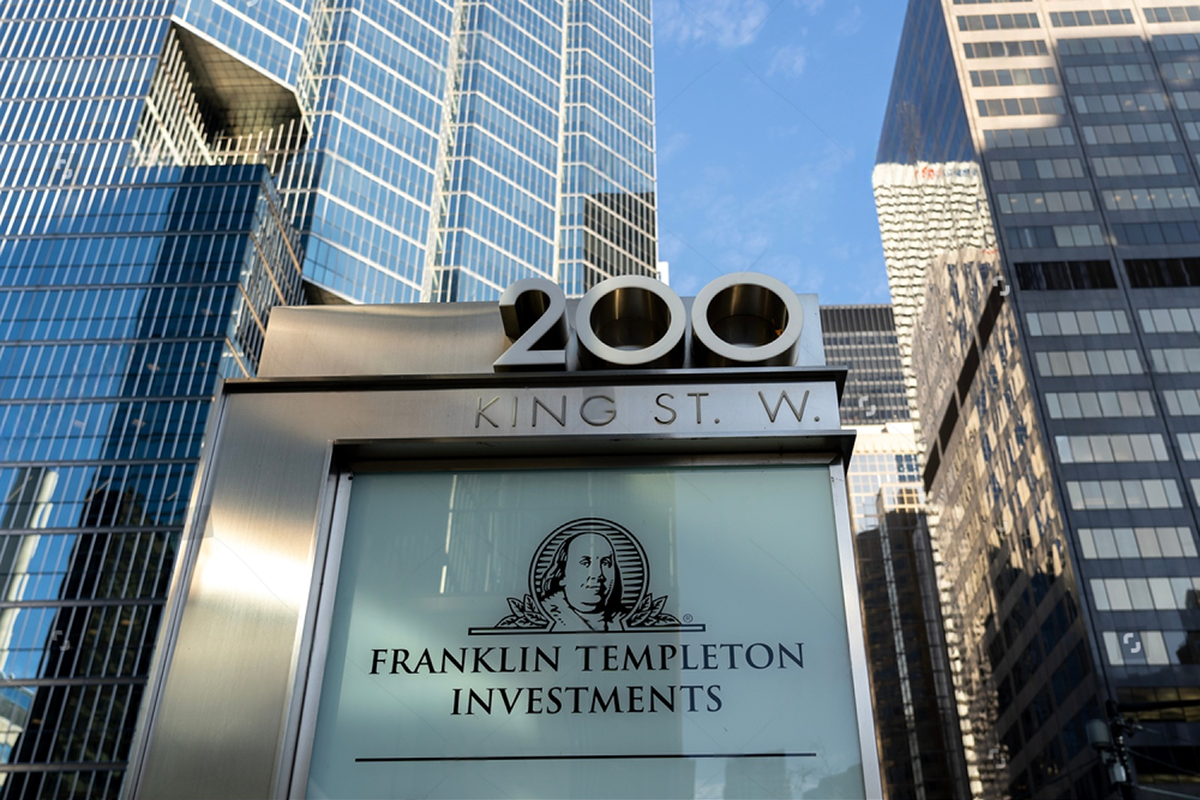
Franklin Templeton and Swift are increasingly aligning around a vision of financial markets that operate 24/7 and onchain, underscoring how traditional asset managers and global payment networks are adapting to blockchain-based infrastructure. The coordinated messaging reflects a broader shift in institutional finance, where tokenization, real-time settlement, and programmable assets are moving from experimentation toward operational integration amid evolving regulatory clarity.
Market Context: Tokenization Gains Institutional Traction
The push toward continuous, on-chain financial infrastructure coincides with rapid growth in tokenized assets, which now exceed $10 billion in on-chain value across treasuries, money market funds, and private credit instruments. Franklin Templeton’s own blockchain-based money market fund has processed hundreds of millions of dollars in transactions, demonstrating operational viability for regulated tokenized products. Meanwhile, Swift, which connects more than 11,000 financial institutions globally, has conducted pilot programs linking traditional messaging systems to public and permissioned blockchains, signaling that legacy rails are preparing to interoperate with digital ledgers rather than compete against them.
Technology Integration: Bridging Legacy Systems and Blockchain
Swift’s experimentation with blockchain interoperability highlights a pragmatic approach to modernization. Rather than replacing existing infrastructure outright, the network has tested cross-chain messaging solutions that allow tokenized assets to settle across multiple distributed ledgers while remaining compliant with established standards. For institutional investors, this hybrid model reduces operational risk by maintaining familiar settlement processes while enabling near-instant clearing and real-time asset transfers. Franklin Templeton’s tokenization efforts similarly emphasize compliance, transparency, and integration with regulated custodians, aligning digital asset rails with institutional workflows.
Regulatory Framework: Compliance as a Scaling Enabler
The movement toward on-chain banking is unfolding alongside clearer regulatory frameworks in key jurisdictions, including Europe’s digital asset legislation and evolving guidance in the United States and Asia. Policymakers increasingly differentiate between speculative crypto trading and tokenized representations of traditional securities, providing a pathway for banks and asset managers to operate on blockchain infrastructure without breaching compliance mandates. For institutions, regulatory alignment is not optional; it is a prerequisite for scaling tokenized financial products to mainstream clients.
Investor Implications: Continuous Markets and Liquidity Efficiency
For sophisticated investors, a 24/7 on-chain financial system could reshape liquidity management and collateral efficiency. Continuous settlement reduces counterparty exposure and may unlock capital currently tied up in multi-day clearing cycles. Moreover, programmable assets allow for automated compliance checks, dividend distribution, and collateral substitution, potentially lowering operational friction across global markets. Investor sentiment toward tokenization has become more measured but increasingly constructive, reflecting recognition that incremental infrastructure upgrades may deliver more durable impact than speculative digital asset rallies.
Looking ahead, the collaboration between established institutions and blockchain infrastructure providers will likely determine how quickly on-chain banking scales beyond pilot programs. Success will depend on interoperability standards, regulatory harmonization, and sustained institutional demand for efficiency gains. For crypto investors, the endorsement of continuous, blockchain-based finance by entities such as Franklin Templeton and Swift reinforces a structural evolution in capital markets, where distributed ledger technology is positioned not as a disruption from the outside, but as an embedded layer within the global financial system.
Comparison, examination, and analysis between investment houses
Leave your details, and an expert from our team will get back to you as soon as possible










Leave a comment