

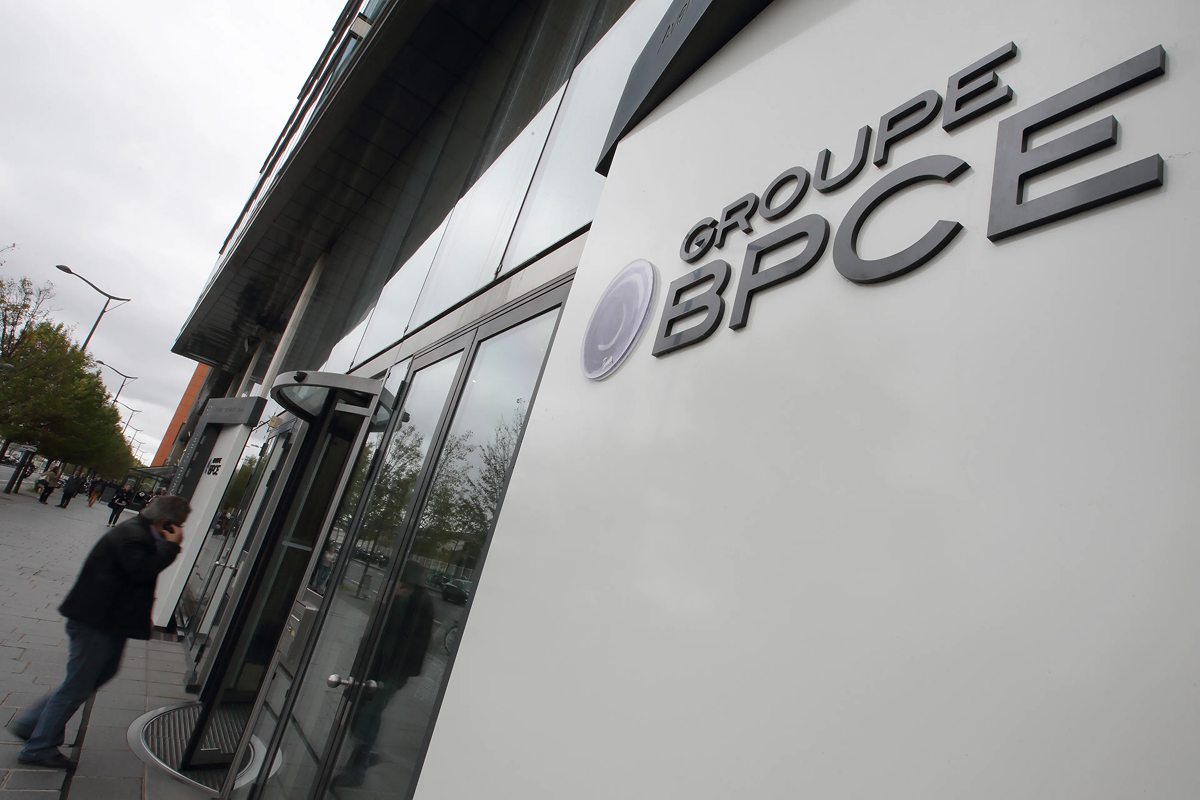
France’s second-largest banking group, BPCE, is preparing to introduce crypto trading services to more than 2 million retail customers, marking one of the most significant digital-asset integrations by a traditional European financial institution. The move comes as regulated crypto adoption accelerates across the EU, supported by MiCA’s unified framework and rising investor interest following Bitcoin’s 2025 rebound above $90,000. Market analysts note that BPCE’s entry could strengthen Europe’s position as a maturing hub for institutional-grade crypto infrastructure.
Market Reaction as European Financial Institutions Deepen Crypto Exposure
BPCE’s announcement arrives at a time when digital assets are showing renewed strength, with Bitcoin trading around $92,300, up approximately 4.8% week-over-week, and Ether climbing 3.1% to $3,420. While markets did not show an immediate price spike following the news, sentiment indicators suggest increasing confidence in traditional finance participation. Data from CoinShares shows that European crypto ETP inflows reached $210 million in the first week of December, a 12% increase from the prior period, suggesting capital rotation toward regulated products.
For investors, BPCE’s involvement signals a broader structural shift: large banks are not only offering custody but also entering execution and trading. Analysts argue that this could improve liquidity and reduce perceived counterparty risk for new entrants, especially retail users still hesitant to onboard through cryptocurrency-native exchanges. As liquidity deepens, spreads across major EUR-denominated crypto trading pairs are expected to tighten, benefiting professional traders and institutions operating within the bloc.
Regulatory Framework and Technical Integration Under MiCA
BPCE’s rollout will operate under the EU’s Markets in Crypto-Assets (MiCA) regime, which formally takes effect for service providers in 2025. MiCA’s rules on custody, transparency, and reserve requirements aim to reduce systemic risks associated with digital-asset operations. BPCE’s licensing process will place it among the earliest major banks utilizing MiCA for retail crypto services, potentially creating a compliance benchmark for other European institutions.
Technically, the bank is expected to partner with a licensed digital-asset service provider for execution and safekeeping. Similar partnerships in Europe have shown rapid adoption—Germany’s Commerzbank reported a 22% quarter-over-quarter increase in institutional crypto custody activity after receiving its regulatory license. BPCE’s scale, combined with its broad retail footprint, may accelerate the normalization of crypto exposure within traditional banking applications such as mobile wallets and investment dashboards.
Investor Sentiment and Strategic Behaviors
Crypto investors view BPCE’s entry as an important behavioral inflection point: retail clients who previously avoided exchanges due to security or regulatory concerns may now gain easier access through familiar banking channels. Surveys conducted by France’s regulator, the AMF, show that 34% of young retail investors would consider crypto trading if offered by a regulated bank—nearly double the current active participation rate.
Institutional analysts also highlight a psychological effect: TradFi validation tends to reduce volatility driven by uncertainty, encouraging more strategic, long-term allocation behavior. As more banks integrate digital assets into advisory and wealth-management pipelines, market participants anticipate a gradual shift from speculative trading toward structured, risk-managed exposure.
In the coming months, attention will turn to BPCE’s product design, onboarding controls, and the bank’s ability to scale trading volumes without operational bottlenecks. For investors, the development underscores both opportunity and risk: while regulated access may expand liquidity and stabilize participation, it also raises questions about pricing models, custody centralization, and future regulatory tightening across the EU. Market observers expect other major institutions to follow, potentially reshaping Europe’s competitive landscape in digital-asset finance.
Comparison, examination, and analysis between investment houses
Leave your details, and an expert from our team will get back to you as soon as possible












02bet eh? Seems kinda minimalistic. Does that mean good odds or not much to offer? Thoughts? Check it out and see for yourself: 02bet