

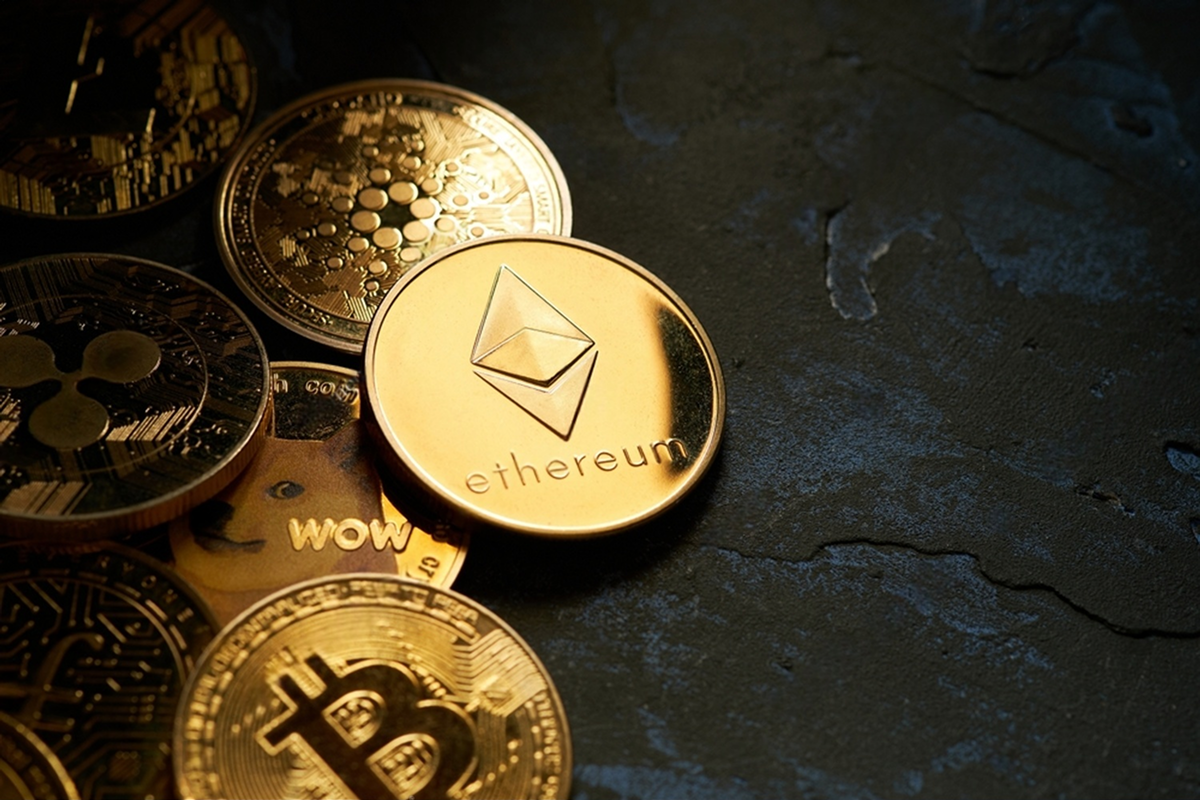
Ethereum Layer 2 networks are entering a decisive phase as Vitalik Buterin sharpens Ethereum’s long-term roadmap around scalability, security, and decentralization, reducing the protocol’s reliance on application-layer dependencies. The shift is reshaping market expectations for rollups and scaling solutions that once thrived as extensions of Ethereum’s narrative but are now being pushed to prove independent value amid intensifying competition, regulatory scrutiny, and capital selectivity across crypto markets.
Market Reaction: Valuations Reprice as Layer 2s Seek Identity
Layer 2 tokens have shown increasingly divergent performance over the past six months, reflecting investor reassessment of sustainability beyond Ethereum alignment. While total value locked across major rollups still exceeds $40 billion, growth has slowed to single-digit percentages quarter over quarter, compared with double-digit expansion earlier in the cycle. Token prices across several Layer 2 ecosystems have underperformed Ethereum by more than 15% year to date, suggesting that markets are discounting projects perceived as overly dependent on Ethereum’s roadmap rather than differentiated economic models.
Technical Implications: Ethereum’s Minimalism Raises the Bar
Buterin’s renewed emphasis on a minimal base layer places greater responsibility on Layer 2s to handle execution, user experience, and monetization independently. Advances such as proto-danksharding have reduced transaction costs on rollups by over 80% since implementation, improving scalability but compressing fee-based revenue for Layer 2 operators. As a result, rollups are being forced to explore alternative revenue streams, including sequencing fees, data availability solutions, and application-specific services, moving them closer to fully fledged platforms rather than auxiliary networks.
Regulatory and Structural Pressures Intensify
As Layer 2s evolve from infrastructure extensions into semi-autonomous ecosystems, they are attracting greater attention from regulators assessing governance, token economics, and decentralization claims. Projects with centralized sequencers or opaque governance structures face increasing scrutiny, particularly as capital allocators prioritize regulatory resilience. The push toward decentralization is no longer philosophical but economic, as institutional investors demand clarity on operational risk, compliance exposure, and long-term protocol sustainability.
Investor Sentiment: From Narrative Alignment to Fundamental Differentiation
Investor psychology around Layer 2s is shifting decisively away from narrative proximity to Ethereum and toward fundamental differentiation. Asset managers and venture investors report a stronger focus on metrics such as developer retention, application stickiness, and independent fee generation rather than headline transaction counts. The result is a more selective capital environment, where Layer 2s must justify valuations through measurable adoption and defensible economic models rather than ecosystem affiliation alone.
Looking ahead, the maturation of Layer 2s will likely define Ethereum’s broader ecosystem trajectory, as weaker projects consolidate or fade while stronger platforms emerge as standalone networks. For crypto investors, the shift underscores a structural evolution in market dynamics, where alignment with Ethereum remains important but no longer sufficient, and long-term value increasingly depends on execution, governance, and economic independence.
Comparison, examination, and analysis between investment houses
Leave your details, and an expert from our team will get back to you as soon as possible











If you are looking for excitement, then Jilievoappslogin is definitely the site. I really like this. See what you think: jilievoappslogin
Yo, jililive777 is where it’s at! The live games are a blast. Seriously, give it a shot, you won’t regret it. Find your fun at jililive777
Been playing on jilipark16 lately and it’s been pretty good! Lots of games and a smooth experience. Definitely a solid choice for some fun! Go to jilipark16 and see for yourself.