

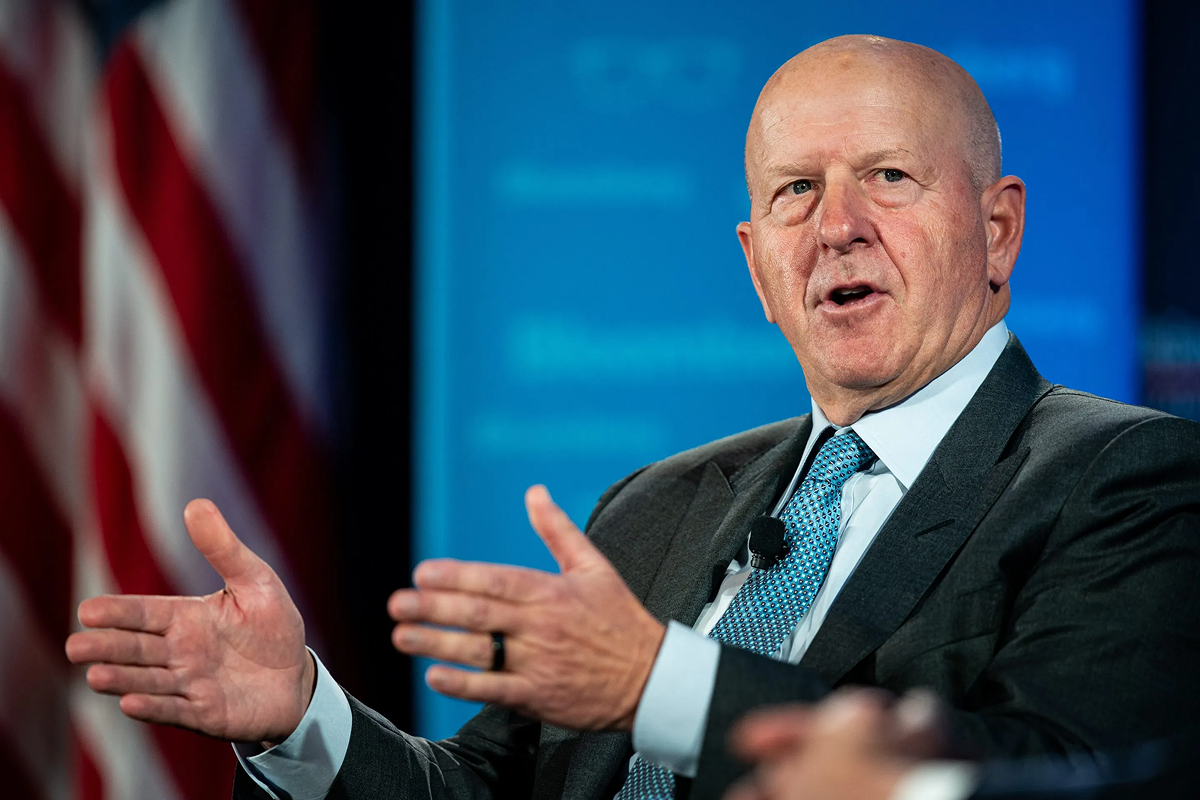
Goldman Sachs is devoting increased senior-level attention to cryptocurrencies and prediction markets, according to CEO David Solomon, signaling a sustained strategic interest in blockchain-enabled financial infrastructure. The comments come as digital assets regain institutional relevance amid shifting monetary policy expectations, rising on-chain volumes, and a more defined global regulatory backdrop.
For crypto investors, Goldman’s positioning underscores how large banks are selectively re-engaging with digital assets—not as speculative instruments, but as market infrastructure with potential applications across trading, hedging, and data-driven forecasting.
Market Context and Institutional Signals
Solomon’s remarks arrive as Bitcoin continues to trade near multi-month highs, with spot prices hovering above $90,000 earlier this quarter and 30-day volatility declining below 40%, according to market data. At the same time, institutional crypto volumes have increased steadily, with CME-listed bitcoin futures open interest rising more than 25% year over year.
Goldman has historically taken a cautious but adaptive stance toward crypto. Its renewed focus suggests large financial institutions increasingly view digital assets as complementary to traditional markets, particularly as client demand shifts toward hedging tools, alternative data, and programmable settlement.
Prediction Markets and Financial Innovation
One area Solomon highlighted was prediction markets, which use market pricing to forecast economic, political, or financial outcomes. These platforms, often built on blockchain rails, have seen sharp growth, with global volumes exceeding $3 billion in 2025—up nearly 60% from the prior year.
From an institutional perspective, prediction markets are gaining attention not as retail betting venues, but as information aggregation mechanisms. Banks and asset managers increasingly explore whether such markets can enhance risk assessment, macro forecasting, and event-driven trading strategies when combined with traditional analytics.
Regulatory Positioning and Strategic Constraints
Goldman’s engagement remains tightly linked to regulatory clarity. U.S. and European policymakers have made progress in defining frameworks for digital assets, custody, and derivatives, reducing legal uncertainty for banks. Analysts estimate that more than 70% of large global banks are now running internal pilots related to tokenization, digital collateral, or blockchain-based settlement.
However, Solomon emphasized that activity remains disciplined. Capital allocation, client suitability, and compliance obligations continue to shape how deeply Goldman can participate. This cautious approach reflects a broader industry mindset: innovation without balance-sheet risk.
Investor Sentiment and Long-Term Implications
For sophisticated crypto investors, Goldman’s posture reinforces a key behavioral shift: institutional validation no longer depends on price enthusiasm, but on functional utility. Surveys of hedge funds show that over 50% now view crypto-related infrastructure as strategically relevant even without direct token exposure.
Looking ahead, market participants will watch whether Goldman translates research and experimentation into expanded client offerings, particularly around tokenized instruments or data-driven derivatives. The pace of adoption will likely hinge on regulatory execution and whether digital markets can consistently deliver efficiency gains over legacy systems.
Comparison, examination, and analysis between investment houses
Leave your details, and an expert from our team will get back to you as soon as possible












Leave a comment