

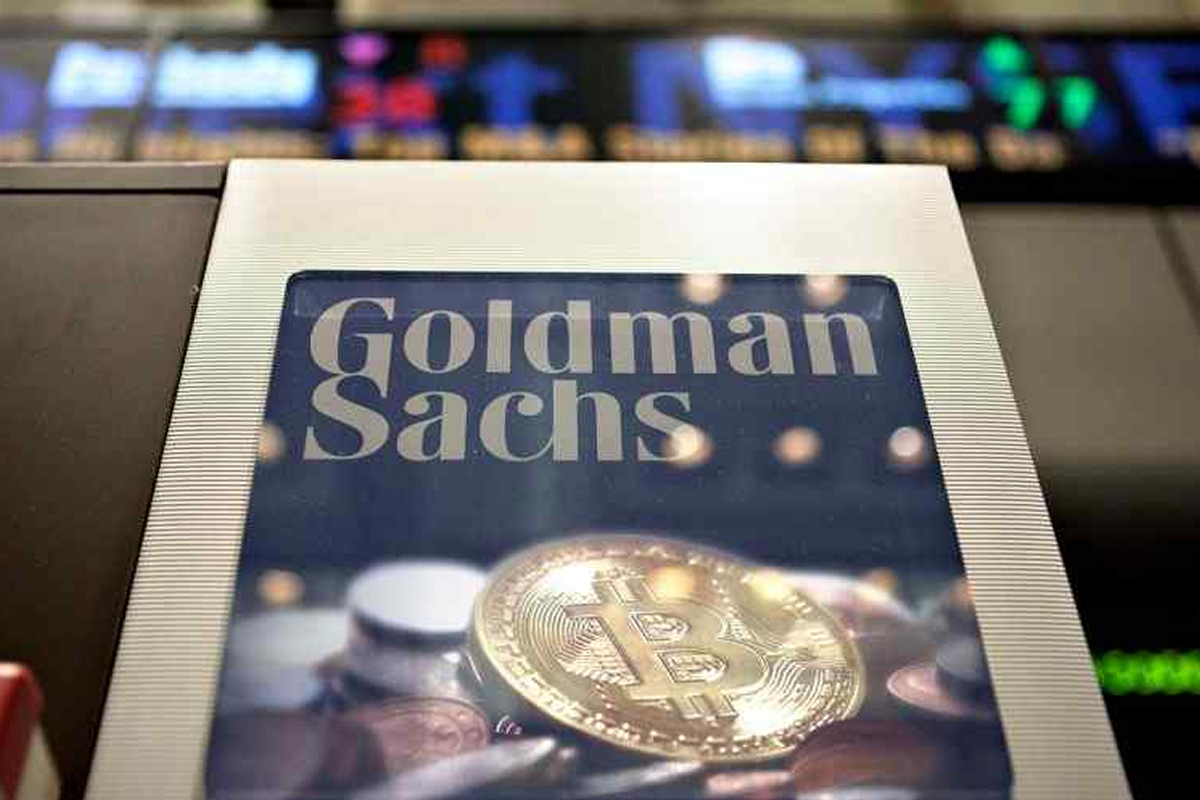
Goldman Sachs says clearer and more consistent global crypto regulation is emerging as the key driver behind the next phase of institutional adoption of digital assets. As regulatory frameworks mature across the U.S., Europe, and parts of Asia, large asset managers, banks, and pension funds are increasingly reassessing crypto’s role within diversified portfolios.
The shift comes as crypto markets stabilize after years of volatility, with institutions focusing less on price momentum and more on infrastructure, compliance, and risk management.
Market Context: Institutions Move Beyond the Early Experiment Phase
According to industry data cited by Goldman analysts, institutional participation now accounts for an estimated 35%–40% of total crypto trading volumes, up from roughly 25% two years ago. Bitcoin and Ethereum remain the primary entry points, representing more than 70% of institutional crypto exposure.
Spot Bitcoin ETFs have played a central role in lowering operational barriers, attracting billions of dollars in net inflows and providing regulated access for traditional investors. Goldman notes that regulated vehicles have reduced concerns around custody, valuation, and auditability—long-standing hurdles for institutional mandates.
Regulatory Clarity: From Constraint to Strategic Enabler
Goldman argues that regulation, once viewed as a threat to crypto markets, is increasingly becoming an enabler of scale. Frameworks such as MiCA in the European Union and evolving U.S. guidance around custody, disclosures, and market structure are helping institutions define compliance boundaries with greater confidence.
As a result, banks and asset managers are expanding internal crypto teams and compliance budgets. Goldman estimates that institutional spending on crypto-related compliance and infrastructure has risen by more than 60% since 2023, signaling long-term commitment rather than short-term opportunism.
Investor Strategy: Risk Controls Over Speculation
Unlike retail-driven cycles, institutional investors are approaching crypto with a risk-adjusted mindset. Allocations typically remain below 2%–3% of total portfolio assets, often framed as a diversification or inflation-hedging tool rather than a return-maximization trade.
Derivatives usage also reflects this shift. Hedging activity now represents a growing share of institutional volume, with futures and options increasingly used to manage volatility rather than amplify leverage. This behavior, Goldman notes, contributes to lower systemic risk even during periods of price turbulence.
Looking ahead, Goldman sees further regulatory convergence as the decisive factor shaping crypto’s institutional trajectory. Progress on stablecoin oversight, cross-border settlement rules, and tokenized securities could unlock participation from conservative capital pools that have so far remained on the sidelines. While price cycles will continue, the bank expects the next phase of adoption to be driven less by speculation and more by integration into mainstream financial architecture.
Comparison, examination, and analysis between investment houses
Leave your details, and an expert from our team will get back to you as soon as possible










Leave a comment