

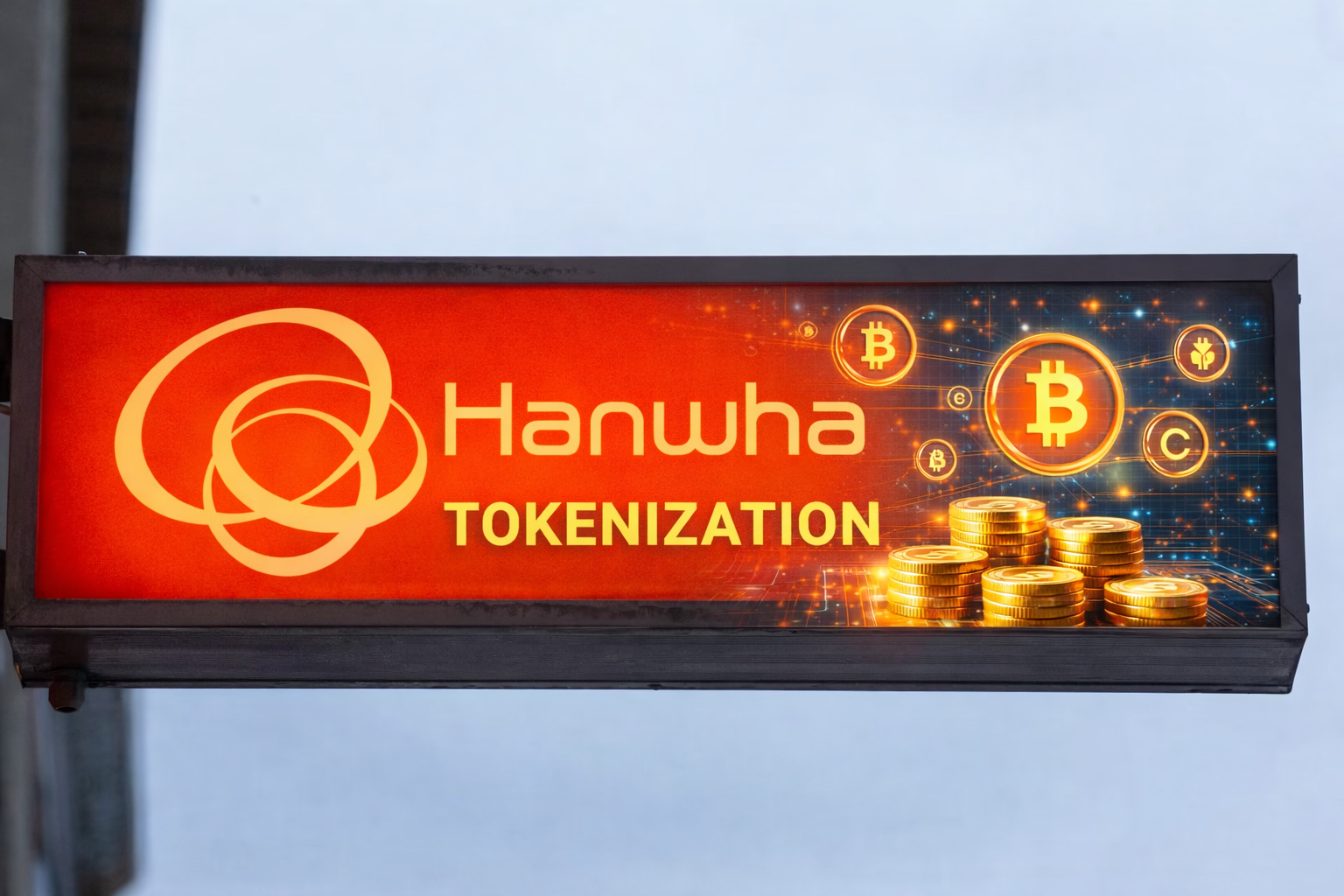
Key Points
• Hanwha Investment & Securities committed roughly $13 million to U.S.-based wallet infrastructure firm Kresus.
• The funding will accelerate enterprise-grade wallet systems and real-world asset tokenization platforms.
• The deal reflects continued institutional backing for blockchain infrastructure despite volatile crypto markets.
South Korean financial heavyweight Hanwha Investment & Securities is deepening its exposure to blockchain infrastructure with a $13 million investment in U.S.-based wallet developer Kresus Labs.
The roughly 18 billion won funding round is aimed at advancing enterprise digital wallet infrastructure, real-world asset tokenization platforms and onchain financial workflows, according to the companies. The partnership follows a memorandum of understanding signed during Abu Dhabi Finance Week in December.
A Bet on Infrastructure, Not Speculation
Rather than backing speculative crypto tokens, Hanwha’s investment targets core blockchain infrastructure — specifically wallet security and compliant tokenization systems that can integrate with traditional finance.
Kresus develops “seedless” wallet recovery technology, eliminating the need for users to store or manage traditional 12- to 24-word recovery phrases. By replacing seed phrases with more intuitive authentication systems, the company aims to lower barriers to adoption for both retail and institutional users.
The firm also uses multi-party computation (MPC) security architecture, a method that distributes cryptographic control across multiple parties to reduce single points of failure — a key requirement for regulated financial institutions.
Real-World Asset Tokenization Strategy
Hanwha plans to deploy Kresus’ infrastructure to enhance client-facing digital asset services and explore tokenized versions of traditional financial products.
Tokenization of real-world assets — such as bonds, funds and structured products — has emerged as a central theme in institutional blockchain adoption. For large financial firms, however, compliance standards, custody safeguards and operational reliability remain major hurdles.
By investing directly in wallet and tokenization technology, Hanwha is positioning itself to bridge conventional capital markets with blockchain-based settlement rails.
Institutional Capital Still Flowing
The deal highlights a broader trend: even as crypto markets experience volatility, institutional capital continues to flow into backend infrastructure.
Financial firms increasingly view custody, wallet architecture and tokenization platforms as foundational layers that can plug into existing systems without requiring full exposure to cryptocurrency price swings.
For Hanwha, the investment signals confidence that blockchain-based asset management will expand beyond retail speculation and into regulated financial ecosystems.
As global institutions race to modernize capital markets infrastructure, wallet security and compliant tokenization frameworks are becoming strategic assets — and firms like Kresus are emerging as critical enablers of that shift.
Confidential advisory: This article is for informational purposes only and does not constitute investment, legal, or financial advice.
Comparison, examination, and analysis between investment houses
Leave your details, and an expert from our team will get back to you as soon as possible










Partner with us and enjoy recurring commission payouts!