

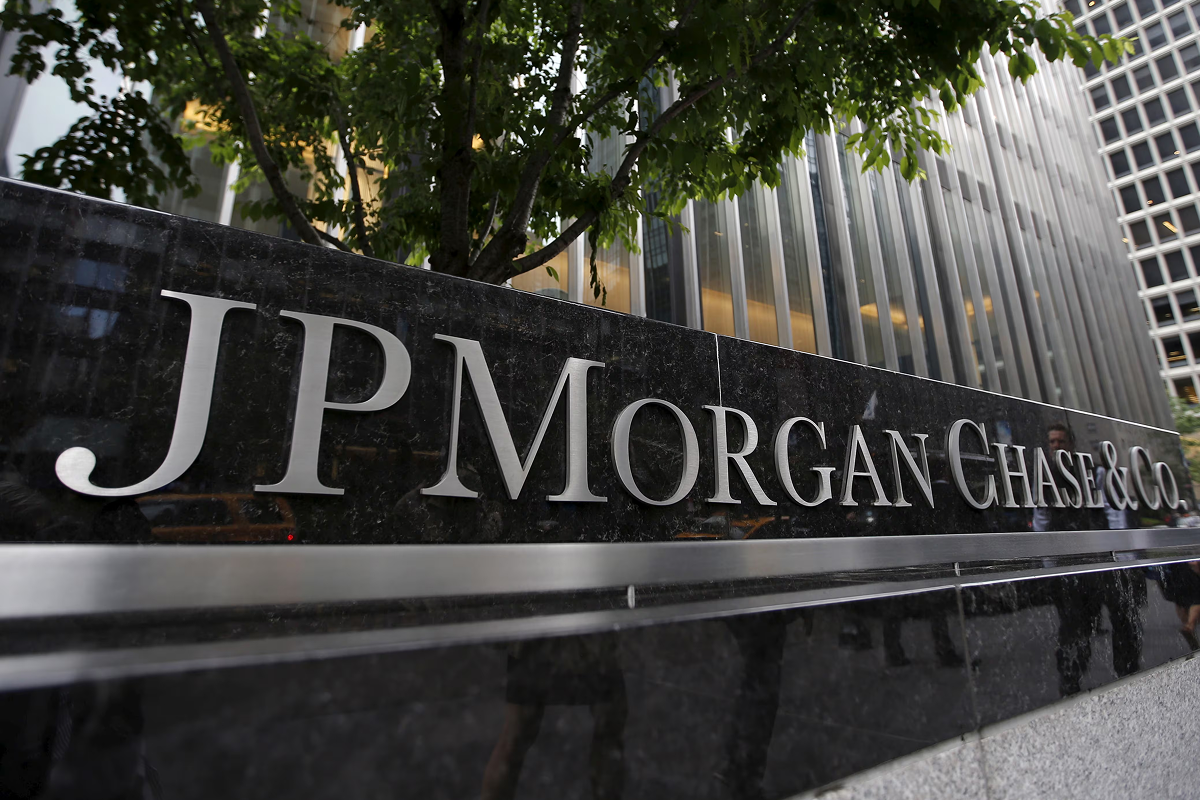
JPMorgan has arranged a landmark tokenized commercial paper issuance on the Solana blockchain for Galaxy Digital Holdings, marking one of the earliest U.S. debt instruments executed and settled entirely on a public chain. The development underscores a broader shift as traditional financial institutions explore programmable finance infrastructure amid growing institutional interest in digital assets and tokenized markets.
Market Reaction: Institutional Adoption Accelerates
The Solana-based commercial paper issuance — reportedly worth US$50 million, with Coinbase Global and Franklin Templeton as anchor purchasers — reflects tangible institutional capital flowing into tokenized instruments. By enabling the entire issuance and redemption to settle in USDC stablecoin, the transaction demonstrates reduced settlement friction and potentially lower operational costs compared with traditional markets. In the wake of the announcement, Solana (SOL) traded with modest volatility, illustrating how foundational financial use cases can inject renewed attention into blockchain network economics.
Market participants view this deal as a real-world test case for layering credit markets onto public ledgers. If such transactions gain traction, they could expand on-chain liquidity for debt instruments — an area historically constrained by siloed ecosystems and legacy infrastructure. For institutional crypto investors and allocators, USCP (the tokenized commercial paper) represents an emerging class of blockchain-native instruments with potential implications for portfolio diversification and on-chain yield strategies.
Regulatory & Structural Implications: Public Chains in Traditional Finance
The Galaxy issuance — structured and arranged by JPMorgan, with primary settlement on Solana — blurs lines between traditional debt markets and emerging digital infrastructure. JPMorgan created the on-chain USCP token and facilitated delivery-versus-payment settlement, positioning the bank as a bridge between regulated capital markets and decentralized infrastructure.
This transaction stands among the first in the United States to use a public blockchain for both issuance and servicing of commercial paper, a traditionally short-term, unsecured debt vehicle. Unlike private permissioned ledgers, Solana offers high throughput and lower transaction costs, though it also subjects the deal to public network dynamics, including validator economics and throughput competition. From a regulatory perspective, the deal underscores evolving scrutiny as agencies assess how blockchain-native securities align with existing frameworks — potentially influencing future guidance on custody, settlement, and disclosure requirements.
Investor Sentiment & Strategic Perspective: Cautious Engagement Meets Innovation
Institutional investors and asset managers are increasingly viewing tokenization not as speculative cryptocurrency exposure, but as an operational efficiency play. The participation by Coinbase (providing custody and wallet services) and Franklin Templeton suggests that legacy financial firms are evaluating programmable assets through the prism of existing fiduciary and compliance obligations.
Investor sentiment appears bifurcated: conservative allocators appreciate the expedited settlement and transparency afforded by on-chain records, while more aggressive allocators are focused on how tokenized assets can integrate with broader liquidity-management and funding strategies. Solana’s low-cost, high-speed network characteristics could attract further institutional experimentation, particularly as firms seek to streamline capital markets workflows and reduce reconciliation risk endemic to traditional systems.
Looking ahead, the interplay between regulatory clarity, evolving custody standards, and institutional demand will shape the pace of tokenization in capital markets. Key questions center on scalability of public blockchains for higher-volume debt instruments, interoperability with existing market infrastructure, and how regulators adapt frameworks to accommodate on-chain securities. For sophisticated crypto investors and institutions, tracking subsequent tokenized offerings — and the market’s response to these hybrid instruments — will be critical in assessing the long-term viability and structural impact of blockchain-based debt markets.
Comparison, examination, and analysis between investment houses
Leave your details, and an expert from our team will get back to you as soon as possible







688betcc. Has a few good special offers for sports, not bad after all. I use it every other week. I reckon you should get onto it soon!: 688betcc