Key Points:
- Kazakhstan’s National Bank signed an MoU with Tether to study a stablecoin linked to the Kazakh tenge and develop use cases for digital assets.
- The initiative includes a potential real-world asset tokenization pilot in Alatau, potentially using Tether’s Hadron platform, alongside research into decentralized finance.
- Kazakhstan already has a regulatory framework covering stablecoins and tokenized assets, while 22 digital-asset projects were operating in the National Bank’s regulatory sandbox earlier in 2026.
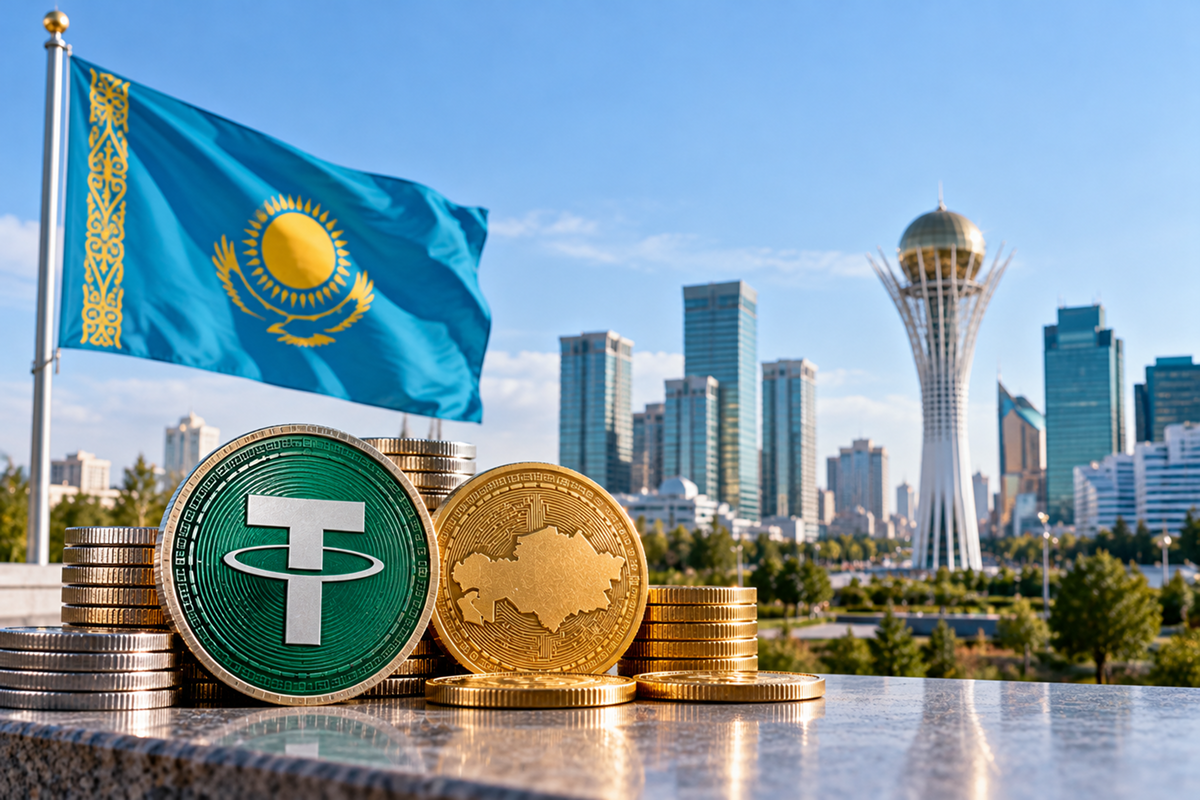
Kazakhstan is bringing Tether into a government-backed effort to explore stablecoins, real-world asset tokenization and decentralized finance. The agreement with the National Bank of Kazakhstan and the Alatau City Authority places the country’s digital-asset strategy within a regulated institutional framework, while potentially giving Tether a role in developing financial infrastructure beyond its flagship USDT stablecoin.
A Tenge-Linked Stablecoin Moves Into the Study Phase
Under the memorandum of understanding, the parties will examine international stablecoin issuance models, identify potential domestic use cases and prepare a concept and pilot proposal for a stablecoin pegged to the Kazakh tenge. The agreement does not establish a launch date or confirm that such a token will ultimately be issued.
The initiative comes as Kazakhstan has already established a legal category for digital financial assets, including money-backed stablecoins, tokenized real assets and financial instruments issued in digital form. The framework took effect in 2026 and is designed to bring these instruments into a regulated environment.
For crypto investors, the significance is that Kazakhstan is treating stablecoins increasingly as part of financial-market infrastructure, rather than solely as crypto-market instruments. A locally denominated stablecoin could eventually support payments, settlement and other financial applications, although the current agreement remains exploratory.
Tokenization Gives Tether a Broader Role
The partnership also calls for the development of an asset-tokenization framework and a pilot project in Alatau. Tether said its Hadron tokenization platform could potentially be used to support the initiative, with the parties first identifying priority asset categories and designing a conceptual model.
This is strategically relevant because tokenization can bring traditionally illiquid or administratively complex assets onto digital infrastructure. Kazakhstan’s regulatory framework already recognizes tokenized real and tangible assets, while the National Bank has been developing a regulatory sandbox for digital financial assets. Earlier in 2026, the central bank said 22 projects were operating in its sandbox, including stablecoins, real-asset tokenization and crypto-fiat settlement initiatives.
Alatau Becomes a Testing Ground
The proposed tokenization pilot will take place within the jurisdiction of Alatau, a city being positioned as a technology and financial innovation hub. The MoU also includes workshops and training covering stablecoin issuance, reserve management and distributed-ledger technology for National Bank specialists and relevant government agencies.
The focus on institutional expertise is significant. Successful tokenization requires more than blockchain infrastructure; it also depends on custody, legal ownership, settlement, disclosure and investor-protection mechanisms. Kazakhstan’s central bank has emphasized financial stability, transaction transparency and investor protection as priorities for the initiative.
Why the Tether Partnership Matters
The agreement comes as Kazakhstan expands the regulated use of digital assets. The National Bank’s framework specifically provides mechanisms for tokenization and regulated digital-asset service providers, while its broader strategy includes stablecoins for cross-border payments and tokenized government bonds.
For institutional crypto markets, the next milestones will be more important than the memorandum itself: the publication of a tenge-stablecoin concept, selection of assets for tokenization and launch of the Alatau pilot. If those steps progress within the existing regulatory framework, Kazakhstan could provide a useful test of how stablecoins and tokenized assets can be integrated into conventional financial infrastructure while maintaining central-bank oversight.
Comparison, examination, and analysis between investment houses
Leave your details, and an expert from our team will get back to you as soon as possible