

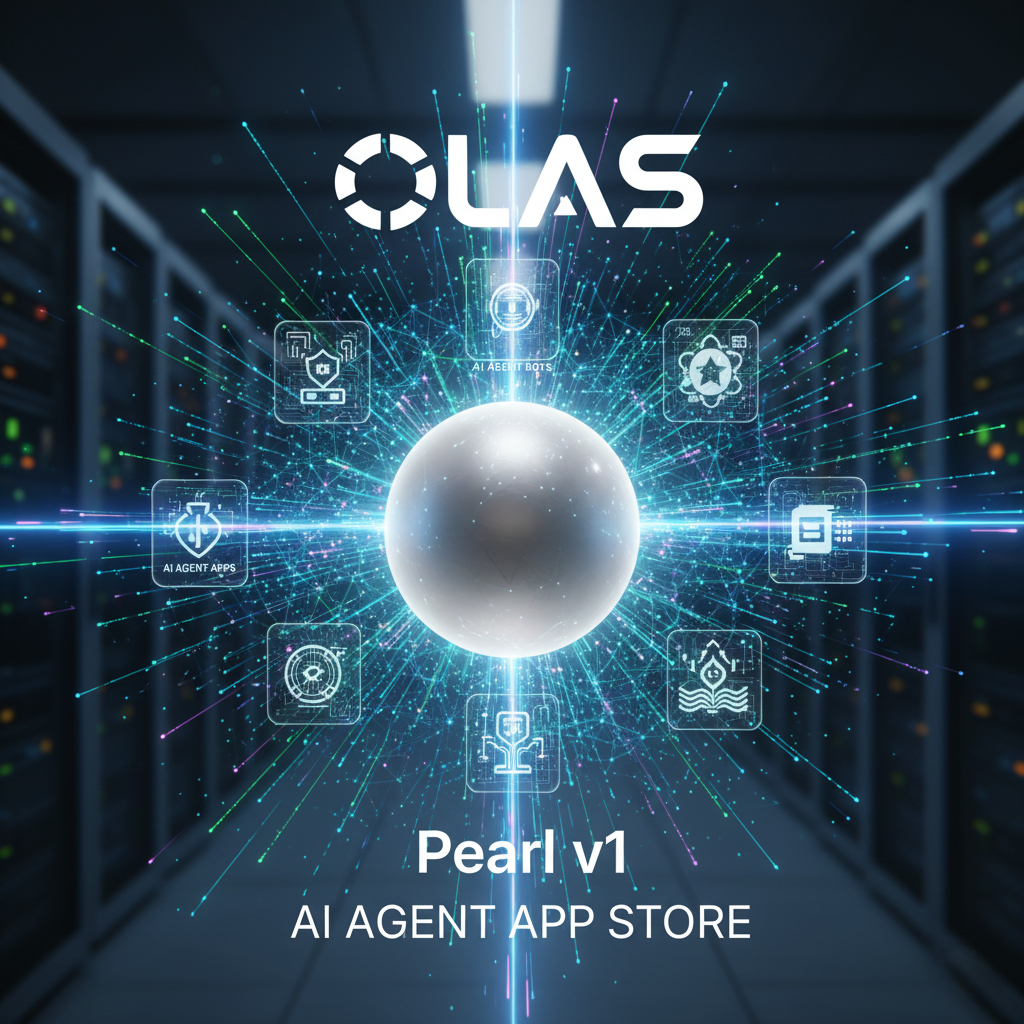
The Olas protocol has launched Pearl v1, described as the first decentralized “AI agent app store,” which allows users to own and operate autonomous artificial-intelligence agents in a self-custodial environment. This development arrives amid a surge of institutional interest in AI-native crypto services and comes as investors seek new narratives beyond token speculation. The introduction of Pearl adds another dimension to how AI and Web3 are converging in the crypto market.
Market Reaction: Crypto Investors Eye New Infrastructure Layer
Pearl v1 arrived following a high-profile rollout, and early metrics, as reported by industry outlets, indicate meaningful traction: the beta version of a DeFi trading agent built on Pearl delivered over 150 % return on investment (ROI) in 150 days. Although this is not a guarantee of future results, it signals that crypto-native AI applications may move from concept toward measurable performance. For token investors and institutions already exposed to the OLAS token, which powers the Olas ecosystem, these developments heighten interest in agent activity metrics and staking economics. The broader crypto market, still digesting macro pressures and regulatory uncertainty, may view this as a potential new infrastructure wave—albeit one that still carries execution risk.
Technical & Ecosystem Implications: Control, Transparency and Custody
What differentiates Pearl is its architecture: users sign in via familiar Web2 flows (e.g., Google, Apple), fund agents via credit/debit card, yet maintain self-custody of data and assets on-chain. From a strategic perspective, this shift toward “own your AI agent” reflects a move away from centralized AI platforms Renting models toward decentralized ownership. For crypto institutions, this means new due-diligence vectors: agent libraries, on-chain verification, staking models, and token-burn dynamics (Olas outlines mechanism where agent fees burn OLAS). The structural change could attract builders and capital into AI-agent-native protocols, but it also requires monitoring of governance, smart-contract risk, and user adoption. The question for professional investors is whether Pearl becomes a meaningful infrastructure layer — or remains a speculative overlay.
Investor Sentiment & Strategic Behaviour: From Narrative to Utility
From the psychological lens, the launch of Pearl may signal a shift in investor behaviour: the crypto market is gradually moving from “token only” speculation toward **utility and infrastructure** narratives. For institutional allocators, the ability to evaluate agent performance, staking yields and token-economics offers a more tangible framework. That said, the enthusiasm remains tempered: Olas is still emerging, competitive landscapes are crowded, and metrics such as daily active agents (DAAs) and staking turnover will be scrutinized. Additionally, for risk-aware investors, the self-custody promise may appeal—but also introduces operational risk, especially in enterprise settings where compliance and audit trails matter.
The rollout of Pearl v1 invites several next moves: tracking agent-to-agent transaction growth and user-adoption metrics, monitoring OLAS token staking and burn rates, and assessing how the wider AI-crypto ecosystem responds (competitors, integrations, regulatory signals). On the horizon lie potential catalysts—such as enterprise integrations of agent libraries, AI-driven automation protocols for DeFi, and broader adoption of self-custodial agent models. Yet risks remain: scalability, governance, smart-contract exploits, and shifting regulatory regimes around AI ownership and AI-driven finance are all factors to watch.
Comparison, examination, and analysis between investment houses
Leave your details, and an expert from our team will get back to you as soon as possible










https://shorturl.fm/zlafM
https://shorturl.fm/h3hjf