

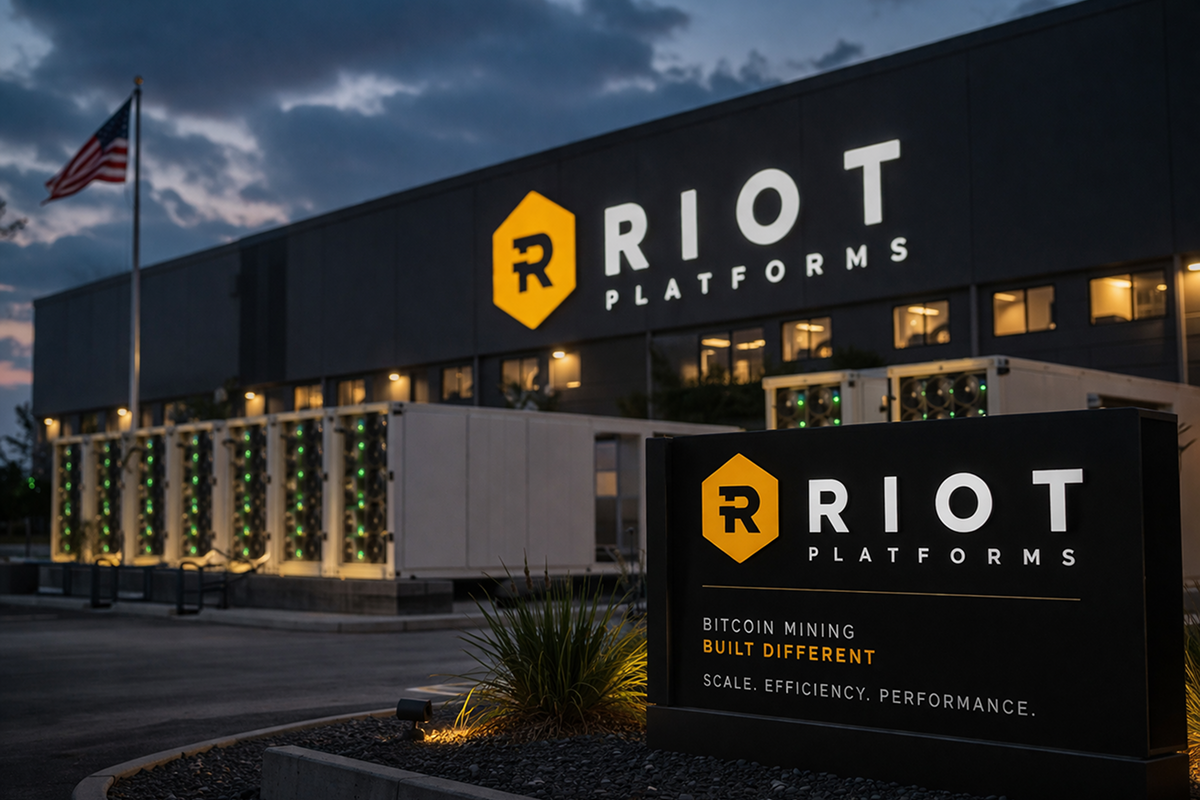
Riot Platforms sold 3,778 Bitcoin in the first quarter, signaling a shift in strategy among mining companies toward liquidity management and operational sustainability. The move comes as miners navigate rising costs, evolving market dynamics, and increased competition in the post-halving environment.
As Bitcoin continues to trade near cycle highs, the decision highlights a broader transition from accumulation to active treasury management across the mining sector.
Market Reaction: Selling Absorbed by Strong Institutional Demand
Bitcoin (BTC) remained relatively stable in the $66,000–$72,000 range following Riot’s sales, indicating that the market was able to absorb the additional supply. The 3,778 BTC sold is estimated to be worth approximately $250–270 million based on average quarterly prices.
Daily trading volumes remained robust at $25–35 billion, while institutional inflows into Bitcoin ETFs continued to average between $800 million and $1.5 billion weekly. This suggests that demand from asset managers and long-term investors is offsetting selling pressure from miners.
- BTC price: ~$66,000–$72,000
- BTC sold by Riot: 3,778 BTC
- Estimated value: $250M–$270M
The limited price impact reflects the depth of current market liquidity and the growing role of institutional capital in stabilizing price movements.
Mining Economics: Shift Toward Cash Flow Optimization
Riot’s decision to sell a significant portion of its mined Bitcoin highlights the changing economics of the mining industry. Following recent network adjustments and increasing operational costs, miners are under pressure to maintain cash flow stability rather than accumulate assets.
Industry data indicates that mining costs have increased by approximately 15–25% year-over-year, driven by higher energy prices and infrastructure investments. At the same time, competition among miners has intensified, reducing margins.
As a result, more mining firms are adopting a strategy of regular Bitcoin sales to cover expenses and fund expansion. This marks a departure from previous cycles, where miners often held large portions of their BTC as a speculative reserve.
The shift toward operational discipline reflects a maturing industry that is increasingly focused on sustainable business models.
Investor Perspective: Rebalancing Risk and Exposure
Investor sentiment toward mining companies is evolving as firms prioritize financial stability over long-term accumulation. While Bitcoin remains a core asset, miners are increasingly viewed as infrastructure providers rather than direct proxies for BTC price movements.
Derivatives data shows that open interest in Bitcoin futures remains elevated at approximately $85–95 billion, indicating continued market participation despite miner selling. Funding rates remain neutral, suggesting balanced positioning.
Meanwhile, on-chain data shows that long-term holders continue to accumulate, with over 70% of circulating BTC held in wallets inactive for more than six months. This dynamic indicates that ownership is gradually shifting from miners to institutional and long-term investors.
Behaviorally, the market reflects a transition toward risk-adjusted allocation, where participants balance exposure to Bitcoin with broader portfolio considerations.
Strategic Outlook: Redistribution of Supply and Market Maturity
The sale of 3,778 BTC by Riot is part of a broader trend of supply redistribution within the Bitcoin ecosystem. As miners reduce holdings, institutional investors and asset managers are increasingly absorbing available supply.
This transition could contribute to a more stable ownership structure over time, reducing the influence of miner-driven selling cycles on price volatility. However, continued selling from mining firms may introduce periodic pressure, particularly during periods of weaker demand.
Looking ahead, investors will monitor trends in miner behavior, institutional inflows, and macro conditions to assess the sustainability of current price levels. The evolving role of miners as disciplined operators rather than passive holders is likely to remain a defining feature of the next phase in Bitcoin’s market development.
Comparison, examination, and analysis between investment houses
Leave your details, and an expert from our team will get back to you as soon as possible









Leave a comment