

Key Points
• Riot Platforms sold roughly $200M in bitcoin during November and December, reducing holdings to 18,005 BTC.
• VanEck’s Matthew Sigel says the sales could fully fund Phase 1 of Riot’s Corsicana AI data center build.
• Miner BTC sales are increasingly tied to funding AI infrastructure amid tighter credit conditions.
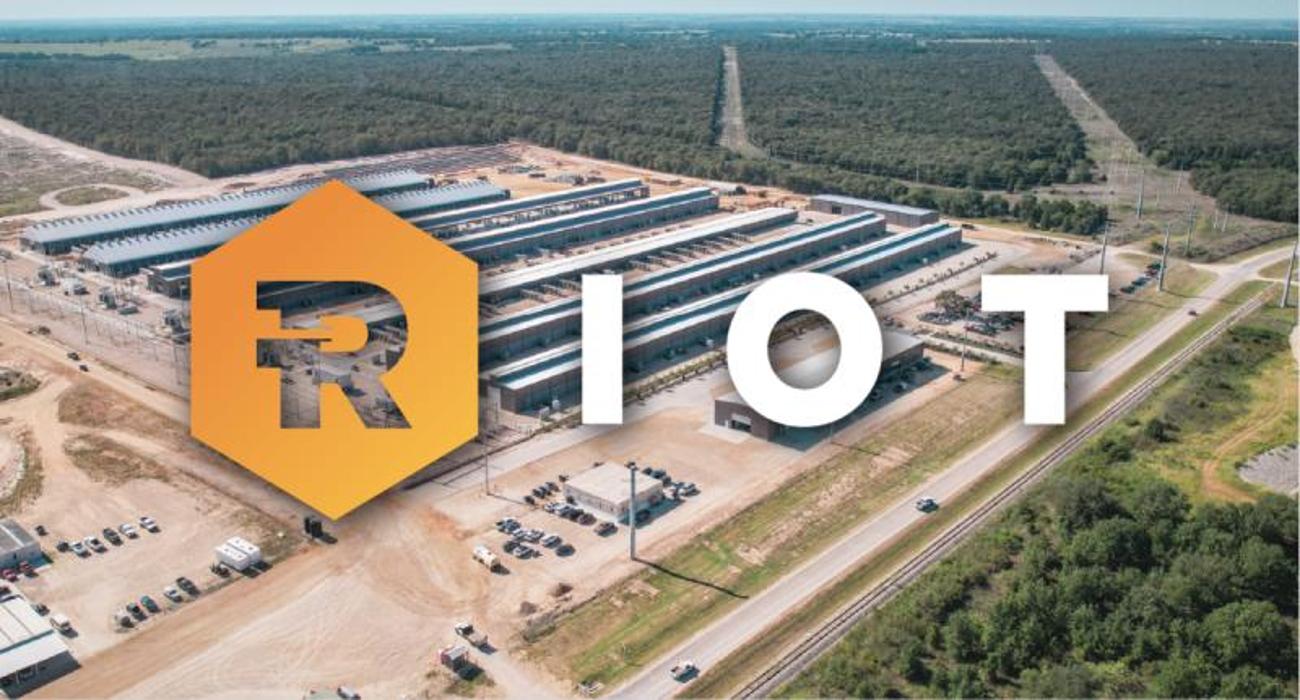
Riot Platforms’ aggressive bitcoin sales in the final months of 2025 highlight a growing structural link between the crypto mining sector and the artificial intelligence infrastructure boom. The publicly listed miner offloaded roughly $200 million worth of bitcoin across November and December, a move analysts say may directly finance its expanding ambitions beyond pure crypto mining.
According to disclosures, Riot sold 383 bitcoin in November and 1,818 bitcoin in December, generating approximately $198–200 million in proceeds. Those sales reduced the company’s bitcoin holdings to 18,005 BTC by year-end, marking one of Riot’s most significant liquidation periods of the cycle.
The timing is notable. Bitcoin ended 2025 under pressure after failing to sustain momentum above $100,000, while miners faced tighter credit conditions, higher energy costs, and rising competition. Against that backdrop, Riot’s sales appear less like opportunistic profit-taking and more like strategic capital allocation.
Funding the AI pivot
Matthew Sigel, head of digital assets research at VanEck, framed the sales as effectively self-funded capital expenditure. In a note, Sigel said the amount Riot sold roughly matches the company’s guided capital spending for the first phase of its Corsicana AI data center project in Texas, a 112-megawatt core-and-shell build targeted for completion in early 2027.
“In other words,” Sigel wrote, “one winter of BTC sales equals funding Phase 1 of the AI data center pivot.”
That observation underscores a broader shift underway among large bitcoin miners. As margins compress and capital markets become less forgiving, miners are increasingly monetizing BTC treasuries to fund diversification into AI and high-performance computing (HPC) infrastructure — assets that promise longer-duration, contracted cash flows.
Bitcoin sales and market impact
Miner selling has been one of the key sources of bitcoin supply in 2025, alongside long-term holder distribution earlier in the cycle. Riot’s roughly 2,200 BTC sold in the last two months of the year represent a small fraction of daily global trading volume, but they matter at the margin — particularly during periods of thin liquidity.
Sigel argued that miners have become “among the largest marginal sellers of BTC” as they redirect capital toward AI-related capex, especially when debt financing becomes more expensive. That dynamic may help explain why bitcoin struggled to gain traction in 2025 despite growing institutional adoption and spot ETF inflows earlier in the year.
At the same time, these sales are not necessarily bearish in a structural sense. Unlike distressed selling during prior bear markets, the current wave is largely strategic — converting a volatile asset into long-term infrastructure that could stabilize revenues.
Riot’s evolving business model
Riot Platforms has been explicit about its intention to evolve from a pure-play bitcoin miner into a power and data center operator capable of serving both crypto and AI workloads. The Corsicana site, originally developed for large-scale mining, is being repositioned to attract hyperscale and enterprise AI customers seeking reliable power and compute capacity.
This hybrid model mirrors moves by peers such as Hut 8 and other North American miners, many of which now view bitcoin mining as just one use case for energy-rich infrastructure. In this context, selling bitcoin to fund AI build-outs can be seen as recycling digital capital into physical assets.
Market reaction and forward view
Riot shares were down about 2% in Tuesday trading, roughly in line with a modest pullback in Bitcoin, which slipped around 1.2% to $92,500. The muted reaction suggests investors were not surprised by the sales and may already be pricing in ongoing BTC monetization by miners.
Looking ahead, the key question is whether AI infrastructure returns justify the opportunity cost of selling bitcoin. If demand for AI compute continues to surge and long-term contracts materialize, miners like Riot could emerge as unlikely beneficiaries of the AI boom. If not, they risk having sold scarce digital assets near cyclical lows.
For now, Riot’s year-end sales illustrate a defining theme for 2026: bitcoin miners are no longer just miners — they are capital allocators at the intersection of crypto, energy, and AI.
Comparison, examination, and analysis between investment houses
Leave your details, and an expert from our team will get back to you as soon as possible








Leave a comment