

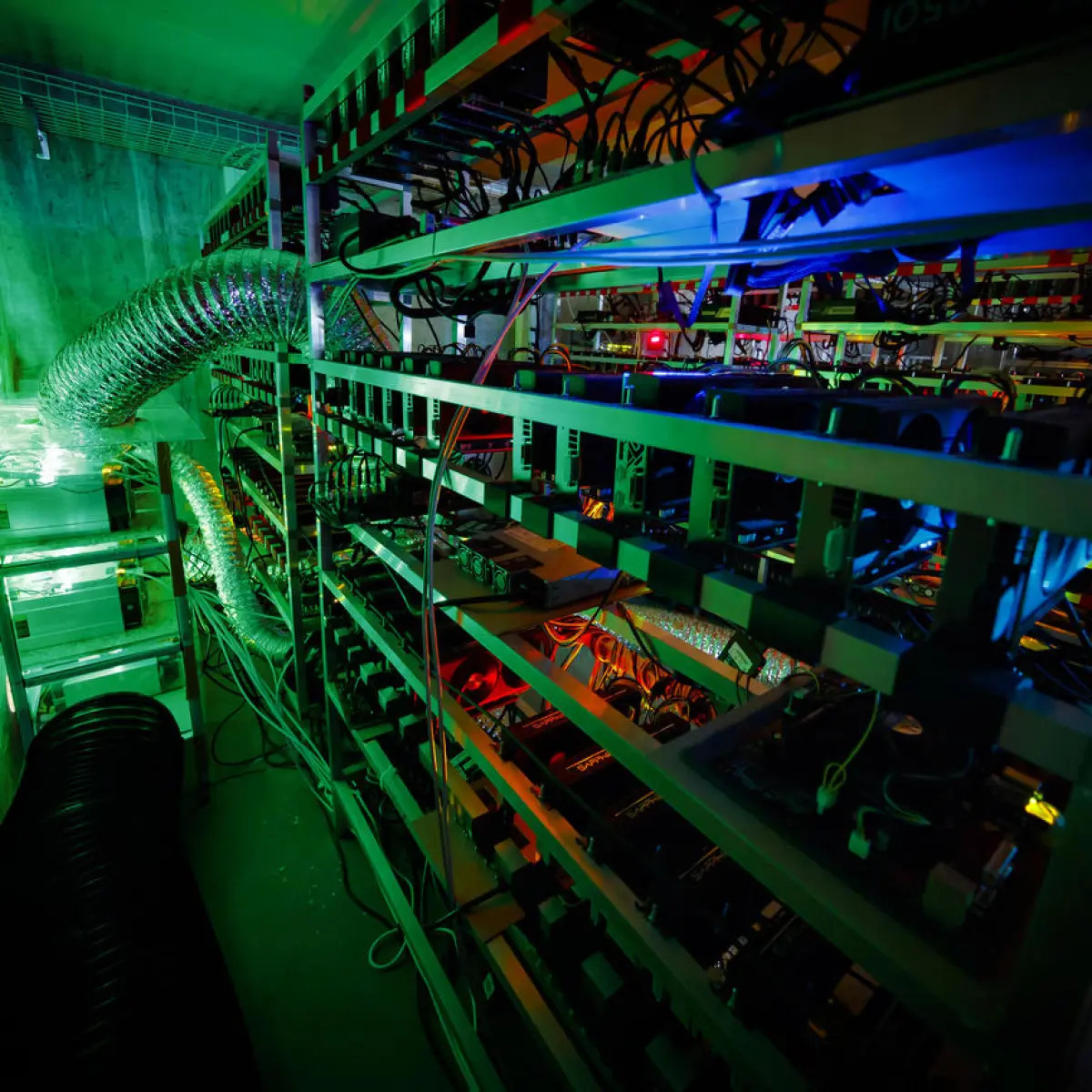
Russia is preparing to significantly tighten its grip on the cryptocurrency mining sector, proposing criminal penalties — including forced labor and prison sentences — for operators who mine bitcoin without proper registration. The move marks a sharp escalation just over a year after the country formally legalized crypto mining in an effort to bring the industry under state control.
Draft amendments published this week by Russia’s Ministry of Justice would reclassify many forms of unregistered mining from an administrative offense into a criminal one. If adopted, the changes would reshape enforcement across one of the world’s largest bitcoin mining hubs, where authorities say noncompliance remains widespread despite legalization in 2024.
Legalization Failed to End the ‘Gray Zone’
Russia legalized cryptocurrency mining last summer after President Vladimir Putin signed legislation designed to regulate the sector, impose taxation, and manage its growing strain on energy infrastructure. The goal was to formalize an industry that had flourished in legal ambiguity, driven by cheap electricity and cold climates.
That effort has fallen short. According to Deputy Finance Minister Ivan Chebeskov, only about 30% of miners have registered with the Federal Tax Service, leaving the majority operating in what officials describe as a persistent “gray zone.” Many miners have reportedly avoided registration, reporting requirements, and taxes while continuing to consume large volumes of electricity.
The proposed criminal penalties reflect growing frustration within the government that softer enforcement tools have failed to change behavior.
Forced Labor and Prison Sentences on the Table
Under the draft law, individuals caught mining cryptocurrency without proper registration could face fines ranging from 500,000 to 1.5 million rubles (roughly $5,500 to $16,500), alongside penalties of up to two years of forced labor. In less severe cases, courts could impose compulsory labor of up to 480 hours.
For larger or organized operations, the consequences escalate sharply. Mining that generates “significant” or “especially large” income, or that involves coordinated groups, could result in fines of up to 2.5 million rubles, forced labor for as long as five years, or prison sentences of comparable length. Authorities would also retain the right to confiscate mining equipment and impose additional financial penalties.
The introduction of forced labor reflects Russia’s broader approach to economic crimes, signaling that unregistered mining is increasingly viewed as a serious threat rather than a regulatory nuisance.
Electricity Strain Drives Enforcement Push
Energy infrastructure concerns are a central driver behind the proposed crackdown. Russia’s regulatory framework distinguishes between small-scale and commercial miners based on electricity consumption. Individuals using less than 6,000 kilowatt-hours per month may mine without registering as commercial operators, provided they pay personal income tax on mined assets.
Commercial miners, however, must register, submit monthly production reports, and comply with regional restrictions. Authorities say many operators ignore these rules, often tapping electricity illegally or operating in regions where mining is temporarily restricted.
Officials estimate that illegal mining consumes billions of kilowatt-hours annually, contributing to grid instability. Several regions have reported outages linked to unregistered mining farms, prompting seasonal bans during peak winter demand. Law enforcement actions in recent years have included the shutdown of large-scale operations and arrests of utility workers accused of facilitating illegal connections.
A Signal to the Global Mining Industry
Russia’s proposed criminal penalties underscore a broader shift toward stricter state control over crypto mining, even in jurisdictions that have chosen legalization over outright bans. For miners, the message is clear: operating outside the regulatory perimeter is becoming increasingly risky.
If enacted, the amendments would likely accelerate consolidation among compliant operators while pushing smaller or marginal miners out of the market. They may also influence how other countries approach enforcement as governments balance the economic benefits of mining against energy security and tax compliance.
For now, Russia’s mining sector stands at a crossroads — legalized in principle, but facing some of the harshest enforcement measures yet proposed anywhere in the crypto world.
Comparison, examination, and analysis between investment houses
Leave your details, and an expert from our team will get back to you as soon as possible













https://shorturl.fm/AnKSA