

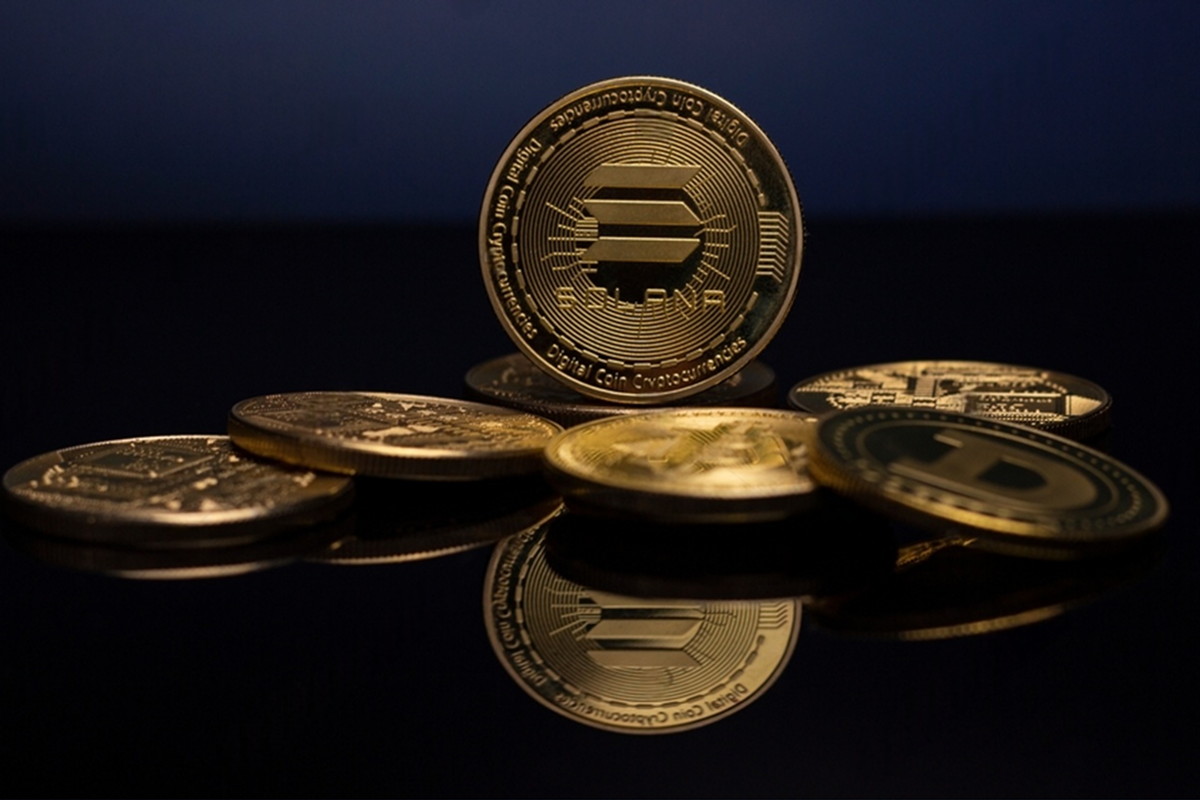
Solana is confronting a critical design challenge as discussions around post-quantum security intensify: how to enhance cryptographic resilience without compromising the network’s hallmark high-speed performance. The debate comes amid growing awareness of quantum computing risks across the crypto industry.
As institutional adoption expands and infrastructure matures, the balance between security and scalability is emerging as a defining factor for next-generation blockchain platforms.
Market Reaction: Limited Immediate Impact but Rising Strategic Focus
Solana (SOL) continues to trade in the $140–$155 range, with minimal short-term price impact from quantum-related discussions. Over the past month, SOL has recorded gains of approximately 4–6%, supported by ongoing ecosystem activity and developer engagement.
Daily transaction volumes across the Solana network remain elevated, exceeding 40–60 million transactions per day, reinforcing its position as one of the highest-throughput blockchains in the market.
- SOL price: ~$140–$155
- Monthly gain: ~4%–6%
- Daily transactions: 40M–60M
While markets are not yet pricing in immediate quantum risks, the topic is gaining importance among institutional investors evaluating long-term infrastructure resilience.
Technical Tradeoff: Speed vs. Cryptographic Resilience
Solana’s architecture is optimized for high throughput and low latency, enabling thousands of transactions per second. However, transitioning to post-quantum cryptography introduces significant technical challenges.
Quantum-resistant algorithms typically require larger key sizes and increased computational overhead, which could reduce transaction speed and increase network costs. For a performance-focused blockchain like Solana, this creates a fundamental tradeoff between maintaining efficiency and enhancing security.
Developers are exploring hybrid approaches, including layered security models and optional upgrades, to mitigate these tradeoffs. However, implementing such changes would require careful coordination to avoid disrupting existing applications and user experience.
The issue underscores a broader challenge facing the crypto industry: adapting to future threats without compromising current functionality.
Investor Perspective: Long-Term Risk vs. Near-Term Performance
Investor sentiment reflects a nuanced view of the situation. While quantum computing threats are considered long-term risks, they are increasingly factored into strategic decision-making, particularly among institutional participants.
Derivatives data shows that open interest in SOL futures remains stable at approximately $3–5 billion, with funding rates near neutral. This indicates balanced positioning and limited speculative reaction to the news.
At the same time, capital continues to flow into high-performance networks, with Solana’s total value locked (TVL) holding near $4–5 billion. This suggests that investors still prioritize scalability and ecosystem growth in the near term.
Behaviorally, the market is adopting a dual-track approach, where participants focus on current performance metrics while gradually incorporating long-term security considerations into their evaluations.
Strategic Outlook: Preparing for a Post-Quantum Future
The challenge faced by Solana reflects a broader industry transition toward quantum-resistant infrastructure. As timelines for quantum advancements become clearer, blockchain networks will need to implement upgrades that balance security enhancements with network efficiency.
For Solana, the ability to maintain its competitive advantage in speed while adapting to new cryptographic standards will be critical. Failure to address security concerns could impact long-term adoption, while overly aggressive changes could reduce performance and user engagement.
Looking ahead, investors will monitor developments in post-quantum cryptography, network upgrade proposals, and ecosystem responses. The evolving tradeoff between security and speed is likely to shape the next phase of blockchain innovation, influencing how capital is allocated across competing platforms in an increasingly complex technological landscape.
Comparison, examination, and analysis between investment houses
Leave your details, and an expert from our team will get back to you as soon as possible











Leave a comment