

Key Points
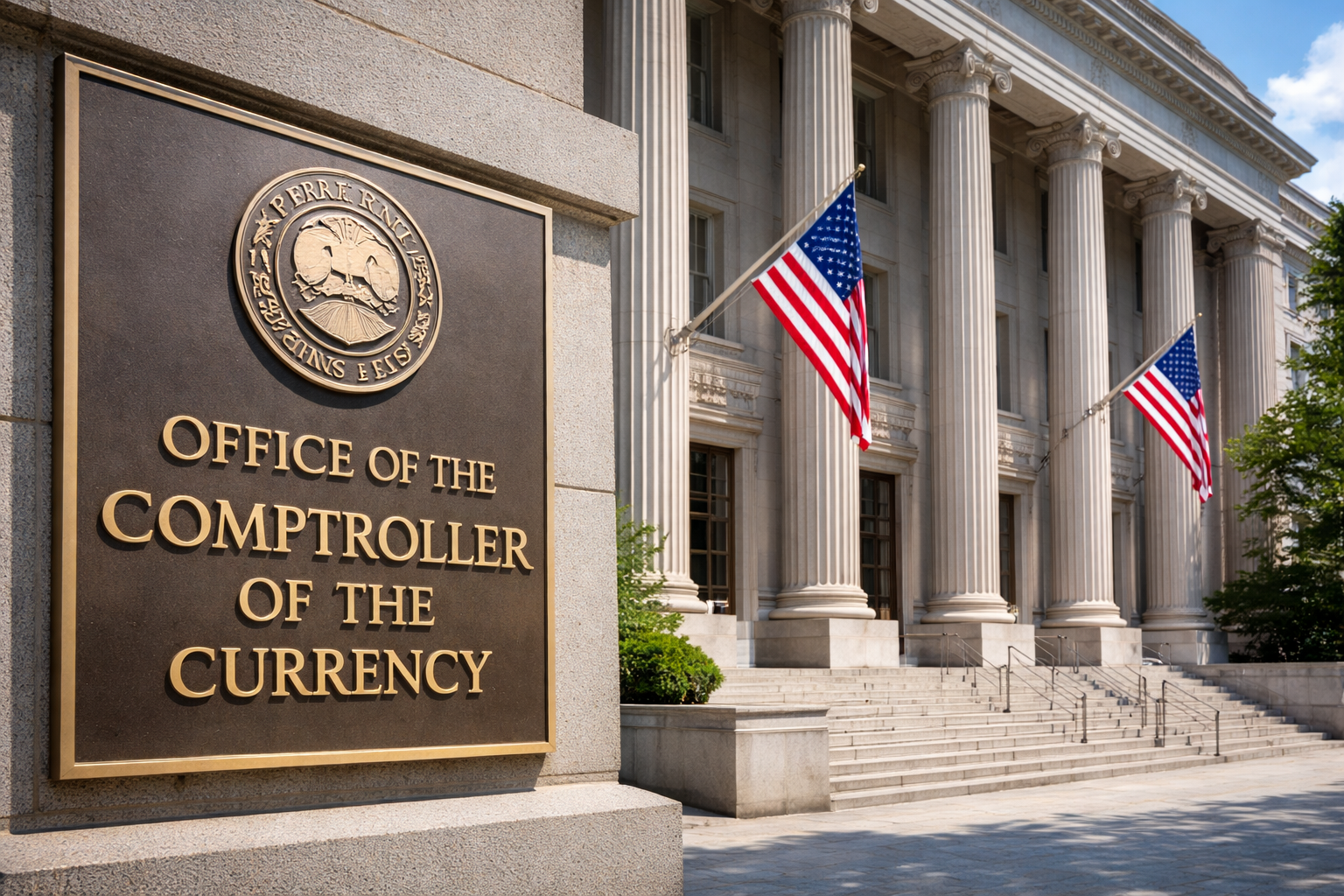
- Bridge received conditional approval from the Office of the Comptroller of the Currency to form a national trust bank.
- The charter would allow Bridge to issue stablecoins, custody digital assets and manage reserves under direct federal oversight.
- The move aligns Bridge with other stablecoin issuers that have recently secured similar preliminary approvals.
Stablecoin infrastructure firm Bridge, owned by payments giant Stripe, has received conditional approval from the Office of the Comptroller of the Currency to establish a national trust bank, marking a significant step toward operating under a full federal banking framework.
If finalized, the charter would allow Bridge National Trust Bank to issue stablecoins, custody digital assets and manage reserves subject to direct federal supervision. The development reflects accelerating efforts by stablecoin firms to integrate more deeply into the regulated U.S. financial system.
Building Within a Federal Framework
Bridge said the approval positions it to support enterprises, fintech firms, crypto businesses and traditional financial institutions seeking to issue or integrate digital dollar products within a clearly defined regulatory environment.
The company stated that its compliance systems are already aligned with the standards outlined in the Guiding and Establishing National Innovation for U.S. Stablecoins (GENIUS) Act, legislation passed last year to formalize oversight of stablecoin issuers. While federal banking regulators — including the OCC, the Federal Reserve and the Federal Deposit Insurance Corporation — are still finalizing rulemaking under the GENIUS framework, the conditional charter signals regulatory progress.
Bridge applied for the national trust charter in October, with OCC records indicating the agency signed off last week. The regulator has not yet provided a timeline for final approval.
Stripe’s Expanding Blockchain Strategy
The charter approval follows Stripe’s $1.1 billion acquisition of Bridge in 2024, a move widely interpreted as a strategic bet on stablecoin-powered payments infrastructure.
Bridge currently powers stablecoin issuance for products such as Phantom’s CASH and MetaMask’s mUSD via Stripe’s Open Issuance platform. By operating under a national trust bank structure, the firm would gain the ability to directly issue and manage regulated digital dollar products, potentially streamlining integration with banks and institutional partners.
The model mirrors a broader shift among stablecoin firms seeking federal charters to solidify credibility and reduce regulatory uncertainty.
Growing Institutional Momentum
Bridge joins a cohort of firms that have secured similar conditional approvals from the OCC. In December, Circle, Ripple, Paxos, Fidelity Digital Assets and BitGo all received initial authorization. Erebor Bank was granted a conditional national bank charter earlier in October.
The clustering of approvals suggests regulators are increasingly open to integrating stablecoin issuers into the traditional banking system — provided they meet capital, compliance and reserve management standards.
Strategic Implications
A national trust bank charter would place Bridge under a more predictable supervisory regime, potentially easing institutional adoption of its infrastructure. For Stripe, the approval enhances its position in the evolving digital dollar ecosystem, where stablecoins are increasingly viewed as core payment rails rather than peripheral crypto assets.
The broader question now is timing. Final approval and the implementation of GENIUS Act rules will determine how quickly these firms can operationalize fully regulated stablecoin issuance at scale.
If finalized, Bridge’s charter could further accelerate the convergence between fintech, traditional banking and blockchain-based payment systems — signaling that stablecoins are steadily moving from experimental instruments to federally supervised financial infrastructure.
Comparison, examination, and analysis between investment houses
Leave your details, and an expert from our team will get back to you as soon as possible











Leave a comment