

Key Points
• Most real-world asset issuers are using tokenization to improve capital formation rather than unlock secondary market liquidity, according to new Brickken data.
• While major exchanges push 24/7 trading models, many issuers remain focused on regulatory validation, compliant structures and issuance workflows.
• Regulatory friction remains the biggest obstacle, with 84.6% of respondents reporting it has shaped or slowed their rollout strategies.
Capital Formation Takes Center Stage
A fourth-quarter 2025 survey conducted by tokenization platform Brickken shows that issuers of real-world assets (RWAs) are prioritizing fundraising efficiency over liquidity ambitions.
Among respondents, 53.8% identified capital formation as their primary reason for tokenizing assets, while only 15.4% cited liquidity as their main motivation. Notably, 38.4% said liquidity was not currently required at all, underscoring that many tokenization efforts are still rooted in private-market dynamics rather than trading-first models.
According to Jordi Esturi, chief marketing officer at Brickken, tokenization is increasingly being treated as financial infrastructure rather than a speculative overlay. Issuers, he said, are using blockchain rails to streamline investor access, reduce operational complexity and expand capital reach. The data reflects a broader industry recalibration: tokenization as a fundraising engine first, and a liquidity engine second.
Exchanges Push 24/7, Issuers Build Foundations
The findings come as major trading venues accelerate plans for round-the-clock digital asset markets.
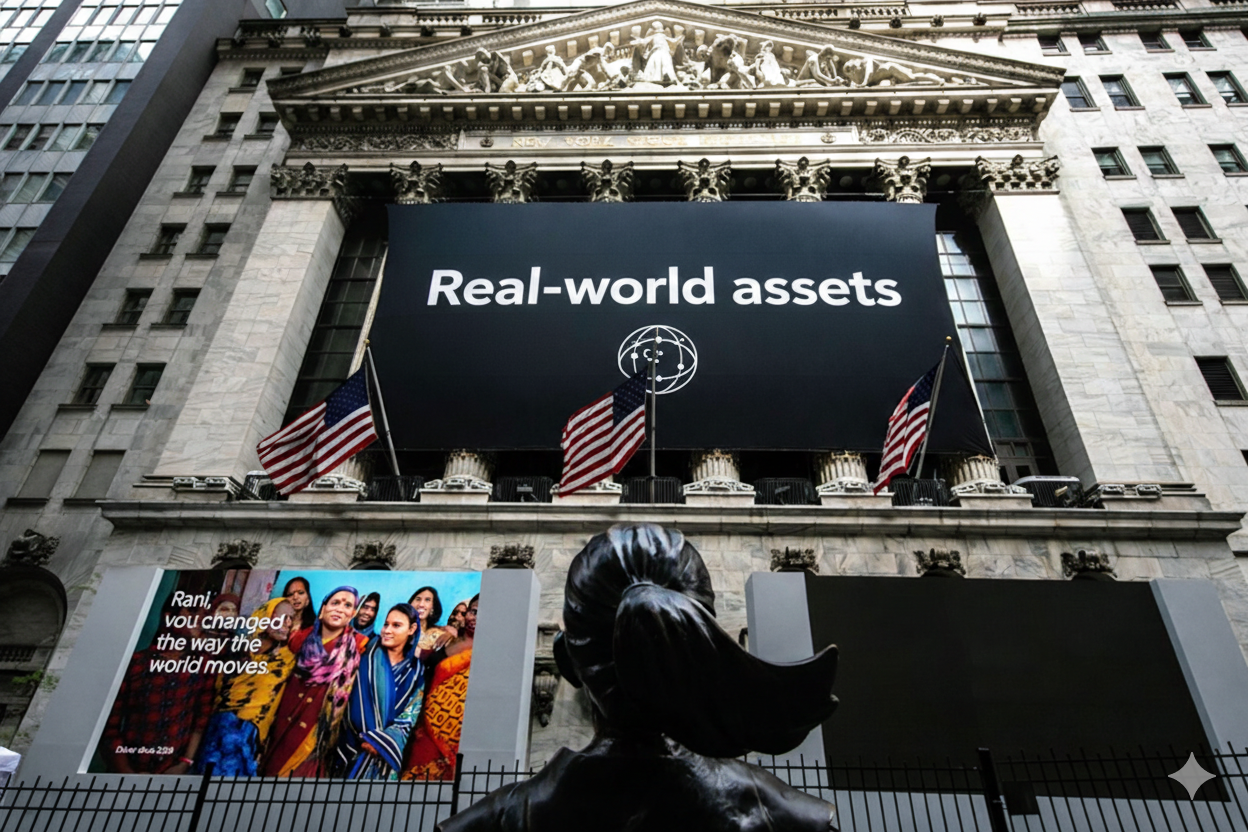
CME Group has announced expanded 24/7 crypto derivatives trading, while both New York Stock Exchange and Nasdaq have outlined ambitions for extended-hours and tokenized equity trading frameworks.
Yet many issuers remain in what Brickken describes as a validation phase. Roughly 69.2% of surveyed participants reported being live with tokenized assets, 23.1% are in progress and 7.7% remain in planning. Despite this operational progress, liquidity remains secondary to structural groundwork.
Esturi emphasized that trading venues require high-quality, compliant assets to function effectively. Without standardized issuance pipelines, secondary markets risk becoming empty shells. In this framing, issuance infrastructure — not exchange liquidity — is the true bottleneck.
Optional Liquidity vs. Mandatory Liquidity
The survey highlights a key distinction between optional and mandatory liquidity.
Many private market issuers operate on long-term capital cycles, where forced liquidity is not inherently desirable. Instead, tokenization can expand investor pools without requiring constant secondary trading.
Ian de Bode, chief strategy officer at Ondo, has argued that highly liquid assets such as tokenized stocks and ETFs are attractive because they benefit from established price discovery mechanisms. However, not all RWAs share that characteristic. Illiquid assets like real estate or private credit require more deliberate market-building. The data suggests that liquidity is viewed as inevitable over time — but only after issuance scale and regulatory clarity mature.
Regulation Remains the Primary Drag
Regulatory friction emerged as the dominant constraint. More than half of respondents, 53.8%, said regulation slowed operations outright, while 30.8% reported partial or contextual regulatory challenges. In total, 84.6% experienced some form of compliance-related drag. By comparison, only 13% cited technological hurdles as the most difficult barrier.
Legal structuring and jurisdictional clarity remain central concerns. Market participants are increasingly designing tokenization frameworks with compliance embedded from the outset rather than retrofitted post-launch.
Industry leaders stress that programmable compliance — embedding investor protections, transfer restrictions and reporting standards directly into smart contracts — is essential to bridging traditional finance and decentralized systems.
Beyond Real Estate: Diversification Expands
While tokenized real estate once dominated headlines, the survey shows broader asset diversification. Equities and shares accounted for 28.6% of tokenized or planned assets, while IP and entertainment-related assets made up 17.9%. Real estate represented 10.7%. Other sectors represented include private credit, renewable energy, carbon assets, aerospace, hospitality and banking. This expansion suggests tokenization is evolving from a niche property experiment into a broader issuance layer for alternative assets.
Infrastructure Before Speculation
The overarching message from the Brickken data is structural rather than speculative. Tokenization is being built upstream — at the issuance, compliance and capital formation layers — rather than downstream in trading volume metrics.
While exchanges race to enable 24/7 tokenized markets, issuers appear focused on creating legally sound, investor-ready products capable of feeding those markets over time. In that sense, liquidity is not being abandoned — it is being sequenced.
Comparison, examination, and analysis between investment houses
Leave your details, and an expert from our team will get back to you as soon as possible












Leave a comment