Key Points
- President Donald Trump has appointed Director of National Intelligence Jay Clayton to lead the newly created Super Intelligence Force, a federal task force focused on coordinating US artificial intelligence efforts.
- The group also includes FTC Chairman Andrew Ferguson, Office of Personnel Management Director Scott Kupor and Pentagon technology official Emil Michael.
- The task force will report directly to Trump and Chief of Staff Susie Wiles and is expected to coordinate with technology companies, infrastructure providers and other stakeholders.
President Donald Trump has appointed US Director of National Intelligence Jay Clayton to lead a new federal task force focused on artificial intelligence, formally creating what the administration calls the “Super Intelligence Force.”
Trump announced the appointment Sunday in a post on Truth Social, saying the SIF would coordinate the federal government’s efforts to ensure that the United States remains a leader in what he refers to as “super intelligence.” The announcement followed reports last week that Trump was preparing to establish a new AI-focused force and appoint an additional senior official to oversee the effort.
The task force will report directly to Trump and White House Chief of Staff Susie Wiles. It is expected to engage with technology companies, consumers, public-interest organizations, critical infrastructure providers and other stakeholders as the administration develops its approach to advanced AI.
Clayton Takes Dual Role in AI and Intelligence
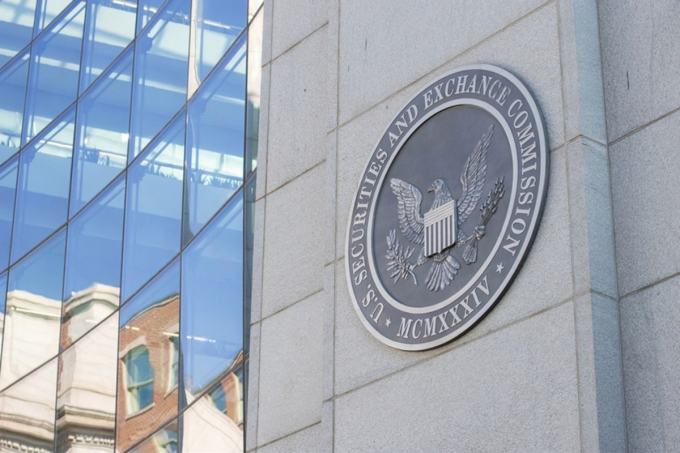
Clayton currently serves as director of national intelligence, a position he assumed after being confirmed by the Senate in July. He was sworn in as the ninth DNI on Aug. 3. Before returning to government, Clayton served as chairman of the Securities and Exchange Commission during Trump’s first administration and later served as US attorney for the Southern District of New York.
His appointment gives the new AI task force a leader whose current responsibilities include overseeing the US intelligence community. The administration has not indicated that Clayton will leave his position as DNI.
The decision places AI policy coordination alongside one of the federal government’s central national-security functions, reflecting the growing overlap between advanced computing, cybersecurity, intelligence and critical infrastructure.
Senior Officials Join New Task Force
Trump also named several senior administration officials to the SIF.
The group includes Andrew Ferguson, chairman of the Federal Trade Commission; Scott Kupor, director of the Office of Personnel Management; and Emil Michael, undersecretary of war for research and engineering and chief technology officer for the Department of War.
The task force is intended to coordinate existing federal efforts rather than operate solely as a technology-policy body. Its work is expected to involve government agencies as well as private-sector companies developing and deploying advanced AI systems.
The administration’s announcement comes shortly after Trump met with executives from major AI companies at the White House. Those companies signed a voluntary agreement concerning responsibilities around the development and deployment of the technology.
AI Leadership and Regulation Debate
The creation of the SIF comes amid an ongoing US debate over how quickly advanced AI should develop and what role the federal government should play in managing associated risks.
Trump has emphasized maintaining US leadership in AI while questioning approaches that could impose additional regulatory constraints on the industry. At the same time, technology companies, researchers and policymakers have continued debating safeguards, cybersecurity risks and mechanisms for responding to increasingly capable AI systems.
Reuters reported that the SIF will have 120 days to produce a comprehensive report examining AI-related risks and opportunities and the government’s role in addressing them.
The structure could therefore become an important mechanism for coordinating the administration’s positions across national security, technology policy and federal oversight.
Outlook
The creation of the Super Intelligence Force adds another layer to the US government’s rapidly evolving approach to artificial intelligence. With Clayton retaining his intelligence leadership role while coordinating the new task force, the initiative places AI development within a broader framework involving national security, federal agencies and the private technology sector.
The next major milestone will be the task force’s assessment of AI risks, opportunities and the appropriate role for government. Its recommendations could provide further direction on how the administration intends to balance technological development, national competitiveness and oversight of increasingly capable AI systems.
Comparison, examination, and analysis between investment houses
Leave your details, and an expert from our team will get back to you as soon as possible