

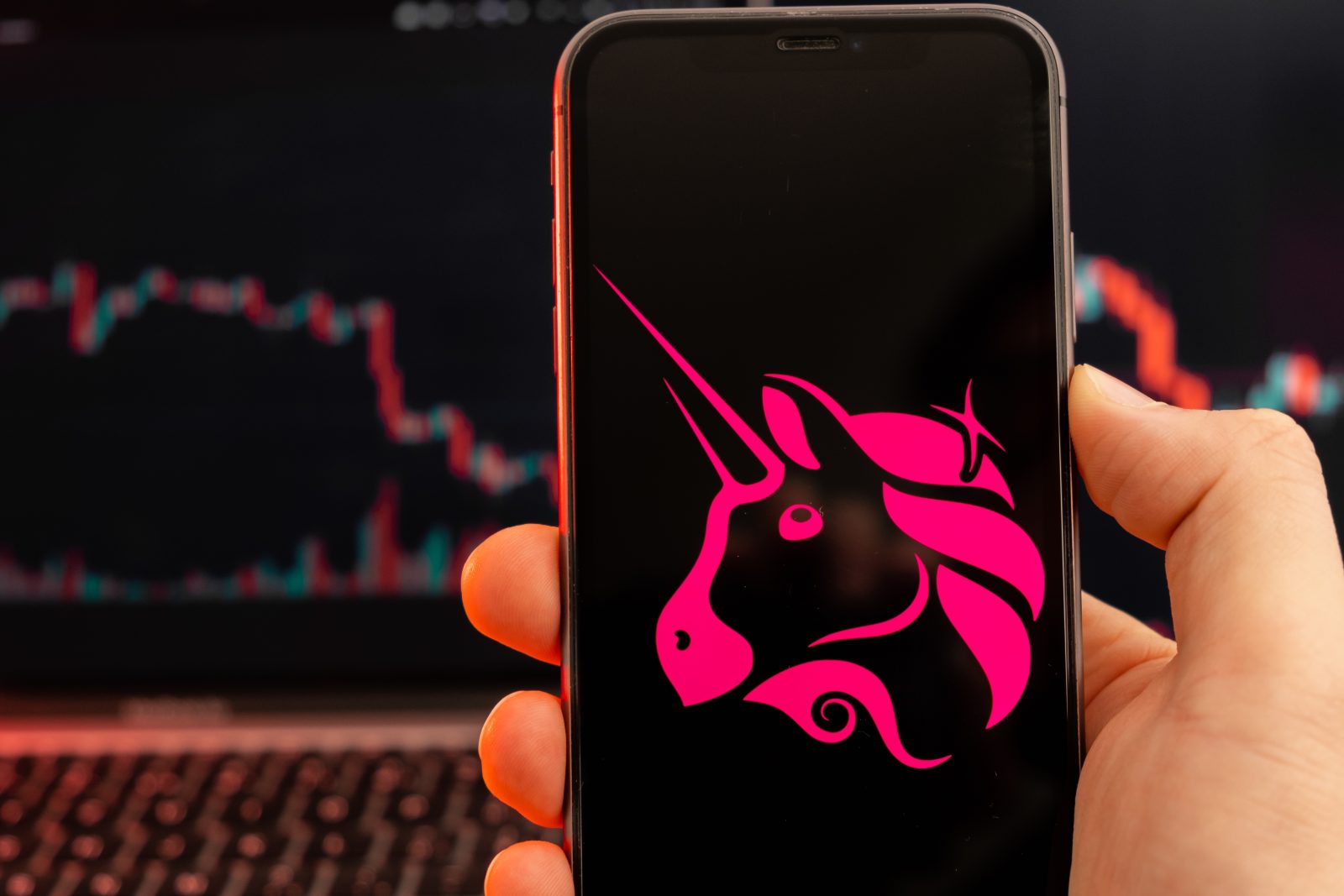
Uniswap’s long‑anticipated protocol “fee switch” is poised to go live later this week after community governance voting hit the necessary threshold, marking one of the most consequential upgrades in the decentralized exchange’s history. The shift comes amid renewed market focus on sustainable revenue models in DeFi, with broader implications for tokenomics, liquidity incentives, and governance participation across crypto markets.
Market Reaction: Prices Under Pressure and Volume Dynamics
The Uniswap (UNI) token has already reflected the market’s reaction to the impending fee switch proposal, rising sharply as vote support grew. Trading data shows UNI up approximately 25% since the voting period began, demonstrating investor sensitivity to governance outcomes and potential changes in revenue distribution. Historically, similar announcements have driven even larger spikes — for example, UNI surged over 45% in past fee‑switch proposal rallies, with trading volumes spiking as holders priced in token burns and future revenue capture.
Liquidity providers on Uniswap v2 and v3 have played a central role in price dynamics. Roughly $227 million in swap fees were generated across Uniswap in recent 30‑day windows, underscoring the platform’s significant fee flow. With the fee switch, protocol revenue that was previously distributed entirely to LPs could partially be redirected toward token burns or other protocol uses, influencing trader and LP behavior as the change takes effect.
Regulatory and Technical Implications
The governance process for the fee switch, known as the “UNIfication” proposal, has amassed more than 60 million votes in favor, surpassing the benchmark required for passage. Once the vote closes, a two‑day timelock is expected before activation on the Unichain mainnet, switching on fee mechanisms for both v2 and v3 pools.
A cornerstone of the proposal involves burning 100 million UNI tokens from the Uniswap Foundation treasury, effectively reducing circulating supply and strengthening long‑term tokenomics. The plan also includes a Protocol Fee Discount Auction system designed to enhance returns for liquidity providers, indicating a sophisticated approach to balancing protocol revenue and LP incentives.
Beyond fee mechanics, governance restructuring — including potential consolidation of roles between Uniswap Labs and the Uniswap Foundation — signals evolving organizational dynamics. Such structural shifts may resonate with regulators and institutional investors assessing compliance norms in decentralized finance.
Investor Sentiment and Strategic Perspectives
Investor sentiment surrounding the fee switch reflects a blend of optimism and caution. Many UNI holders view the shift as overdue, with long-standing debate around the fee switch positioning it as a catalyst for aligning protocol revenue with token holder value. However, sentiment also highlights liquidity considerations: reducing LP earnings could lead to shifts in where liquidity is supplied, particularly if alternative protocols offer more favorable economics.
Behavioral analytics indicate that traders are reacting not only to price signals but also to deeper structural changes within the Uniswap ecosystem. This suggests that holders are assessing long-term sustainability rather than short-term speculative gains. Community debates continue to center on balancing growth, decentralization principles, and economic incentives.
Looking ahead, the activation of Uniswap’s fee switch will be a key milestone in DeFi’s evolution toward self-sustaining revenue models. Market participants should watch how liquidity providers adjust positions in response to new fee distributions, as well as how UNI’s valuation responds in the weeks following activation. Technical metrics such as trading volumes, fee generation rates, and participation in the new auction mechanism will be critical indicators of how effectively the fee switch strengthens Uniswap’s competitive position within the broader decentralized exchange landscape.
Comparison, examination, and analysis between investment houses
Leave your details, and an expert from our team will get back to you as soon as possible







https://shorturl.fm/EFCAB
Used the ph333slotloginapp the other night. Easy peasy to log in. App works great. Give it a try at: ph333slotloginapp.
Keep an eye on betkanyontwitter for exclusive deals. It’s the best way to stay in the loop. Get connected at betkanyontwitter, you wont regret it!