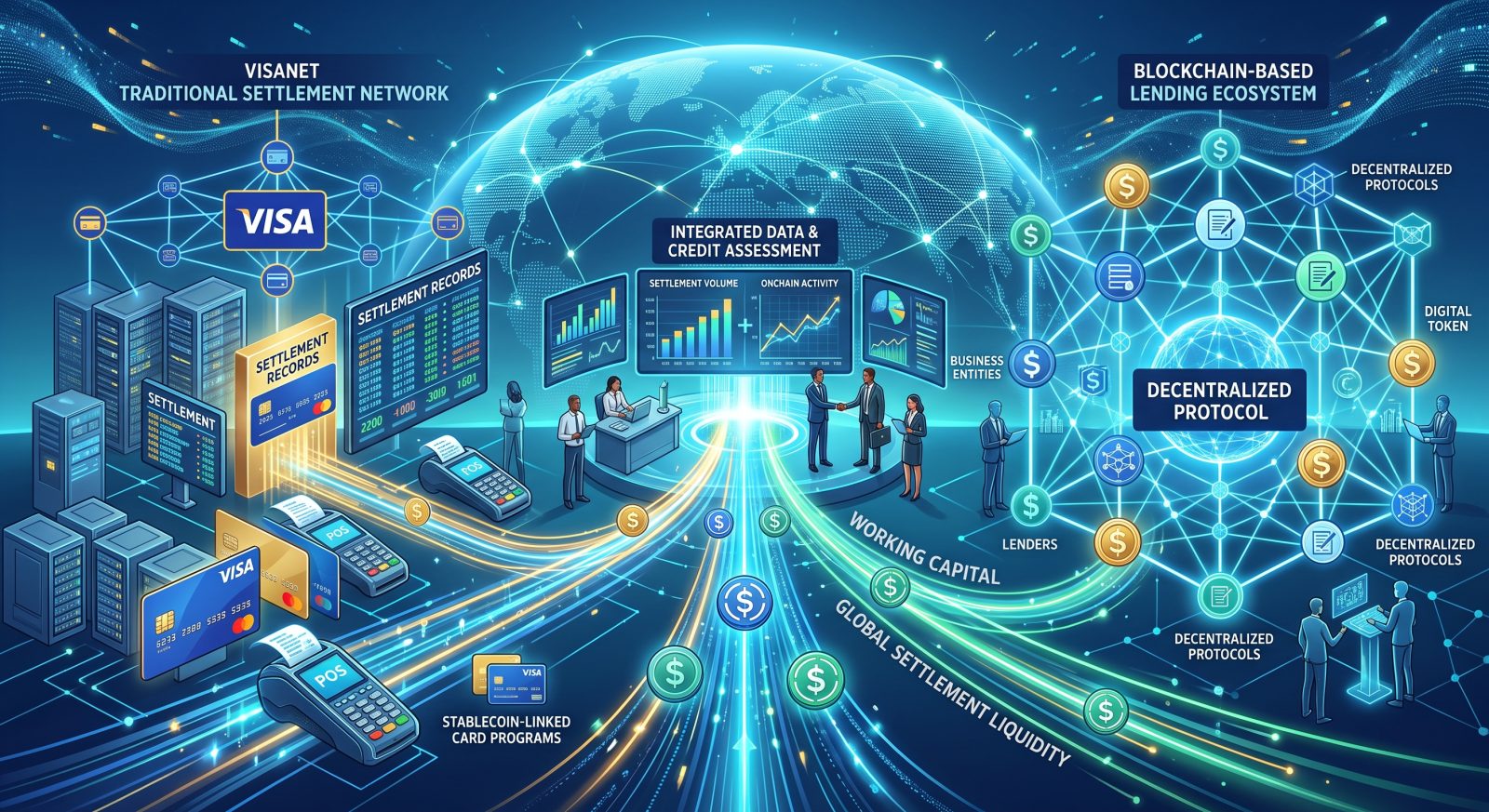
Visa Connects VisaNet With Onchain Lending
Visa is combining data from its VisaNet settlement network with blockchain-based lending infrastructure, giving lenders a new way to assess and finance payment obligations associated with stablecoin-linked card programs.
The initiative allows lenders to use Visa settlement records alongside onchain transaction data when evaluating borrowers and providing working capital.
The move represents a notable convergence between traditional payment infrastructure and decentralized financial technology. Rather than positioning blockchain lending as a separate financial ecosystem,
Visa is integrating it with existing payment flows, potentially allowing businesses to access liquidity more efficiently as stablecoin-based payments expand.
Credit Coop Provides an Early Test Case
Visa highlighted Credit Coop, a blockchain-based credit protocol that provides businesses with credit lines, as an early example of the model.
Since 2023, Credit Coop has financed more than $2.5 billion in cumulative settlement volume across participating facilities, involving more than 3,000 borrowing events and approximately 9,000 repayments.
The figures point to an emerging use case for onchain lending that is less dependent on speculative crypto trading.
Payment settlement creates predictable financing requirements, potentially allowing blockchain-based credit providers to underwrite short-term liquidity using transaction activity as part of the underlying data set.
Stablecoin Payments Scale Rapidly on Visa
Visa’s decision comes as its stablecoin payments business expands rapidly. More than 160 stablecoin-linked card programs now operate across its network,
while stablecoin-related payment volume has increased by nearly 200% year over year.
Visa also reported that stablecoin settlement volume has surpassed a $20 billion annualized run rate, representing more than a 15-fold increase from year-ago levels.
The acceleration suggests stablecoins are moving beyond their traditional role as trading infrastructure and increasingly becoming part of consumer and commercial payment systems.
Visa Expands Its Position Across the Stablecoin Stack
The latest initiative fits into Visa’s broader strategy of investing across multiple layers of the stablecoin ecosystem.
During its fiscal third-quarter earnings call in July, management said the company was investing in blockchains, wallets, infrastructure, and applications.
Visa has also joined the OpenStandard consortium, which is developing the OpenUSD stablecoin alongside more than 140 participating businesses, including Stripe.
Meanwhile, Visa’s own analytics indicate that adjusted stablecoin transaction volume reached a record $1.79 trillion in June,
while 30-day volume stood at approximately $1.2 trillion.
Investor and Market Implications
The integration of payment data with onchain credit could have broader implications for how financial institutions assess liquidity and creditworthiness.
Transaction histories generated through payment networks can potentially complement blockchain data, creating a more comprehensive view of business activity.
For investors, the development also reinforces a broader trend: established financial companies are increasingly treating blockchain infrastructure as a component of existing financial systems rather than a competing alternative.
The opportunity is significant, but execution, regulatory requirements, counterparty risk, and the reliability of underlying blockchain networks remain important considerations.
Outlook: From Stablecoin Payments to Onchain Financial Infrastructure
Visa’s latest initiative could mark another step in the institutionalization of blockchain-based finance.
If stablecoin payment volumes continue to grow, the demand for working capital, settlement financing, and credit products linked to those transactions could expand alongside them.
The longer-term opportunity will depend on whether onchain credit can demonstrate competitive pricing, reliable risk assessment, and regulatory compatibility at scale.
For Visa, connecting its global settlement network to blockchain-based lending provides a potential bridge between traditional payments and an increasingly programmable financial system.
Comparison, examination, and analysis between investment houses
Leave your details, and an expert from our team will get back to you as soon as possible