

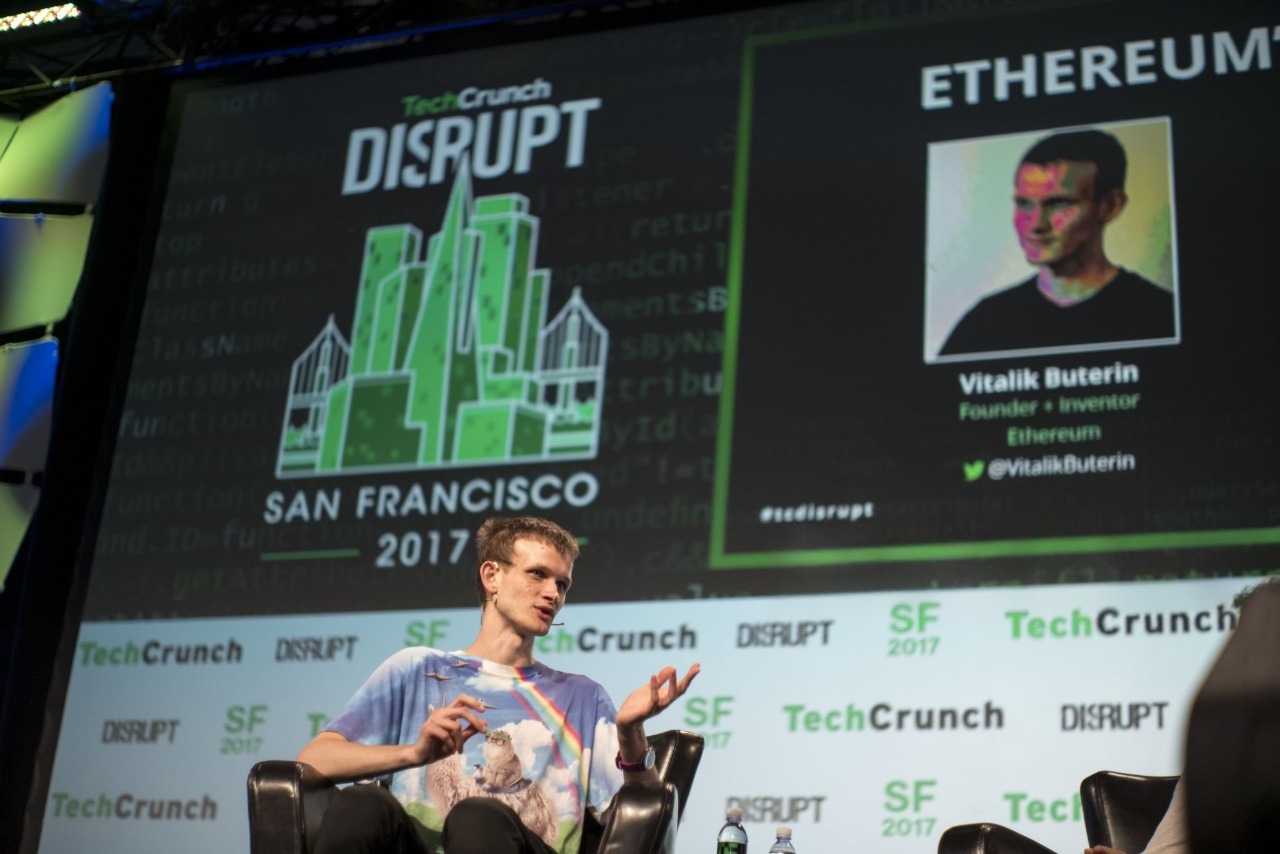
Vitalik Buterin has outlined a framework for how Ethereum could become a critical coordination layer for the future of artificial intelligence, arguing that blockchain infrastructure can address trust, verification, and incentive problems emerging in AI systems. The comments come as capital and attention concentrate around AI across global markets, intensifying debate over whether crypto networks can translate technical relevance into durable economic value amid tight liquidity and evolving regulation.
Market Context: AI Momentum Reshapes Capital Allocation
AI-linked equities and infrastructure projects have absorbed a growing share of global risk capital, with AI-related indices outperforming broader markets by wide margins this year, while crypto assets have remained more range-bound. Against that backdrop, Buterin’s comments reframe Ethereum not as a speculative competitor to AI, but as complementary infrastructure. Ethereum’s network processes more than 1 million transactions per day on the base layer, with rollups multiplying that capacity, positioning it as a neutral settlement and coordination platform rather than a compute-heavy rival to centralized AI systems.
Technology Intersection: Verification, Coordination, and Incentives
Buterin’s thesis centers on Ethereum’s ability to provide verifiability and coordination in AI-driven environments. As AI agents increasingly act autonomously, questions around data integrity, model provenance, and outcome verification become more pressing. Ethereum’s immutable ledger and smart contracts can be used to verify AI outputs, coordinate interactions between agents, and enforce incentive structures without relying on centralized intermediaries. This positions Ethereum as a trust layer rather than a compute engine, complementing off-chain AI models that already dominate processing-intensive workloads.
Regulatory and Structural Implications
The convergence of AI and blockchain also introduces complex regulatory considerations. Policymakers are increasingly focused on transparency, accountability, and auditability in AI systems, particularly in sectors such as finance and public infrastructure. Ethereum-based verification frameworks could align with these priorities by offering tamper-resistant records of AI decision-making and data usage. For institutional investors, this regulatory alignment is critical, as compliance-friendly infrastructure is more likely to attract long-term adoption than experimental architectures operating outside policy frameworks.
Investor Sentiment: Utility Over Narrative
Investor reaction to AI-crypto convergence has been measured, reflecting a market that now prioritizes utility over narrative-driven rallies. While AI-themed tokens have seen episodic inflows, institutional allocators remain cautious, favoring platforms with established security, developer ecosystems, and predictable governance. Ethereum’s role in AI is therefore viewed less as a near-term price catalyst and more as a strategic positioning exercise, reinforcing its relevance in a future where digital infrastructure must support both autonomous systems and regulatory oversight.
Looking ahead, Ethereum’s ability to capitalize on the AI wave will depend on execution rather than vision alone. Progress in scalability, continued adoption of rollups, and real-world deployments that demonstrate AI verification and coordination at scale will be closely watched. For crypto investors, Buterin’s outline highlights a longer-term opportunity: Ethereum evolving into foundational infrastructure for an AI-driven economy, where trust, transparency, and programmable incentives become as valuable as raw computational power.
Comparison, examination, and analysis between investment houses
Leave your details, and an expert from our team will get back to you as soon as possible













Leave a comment