


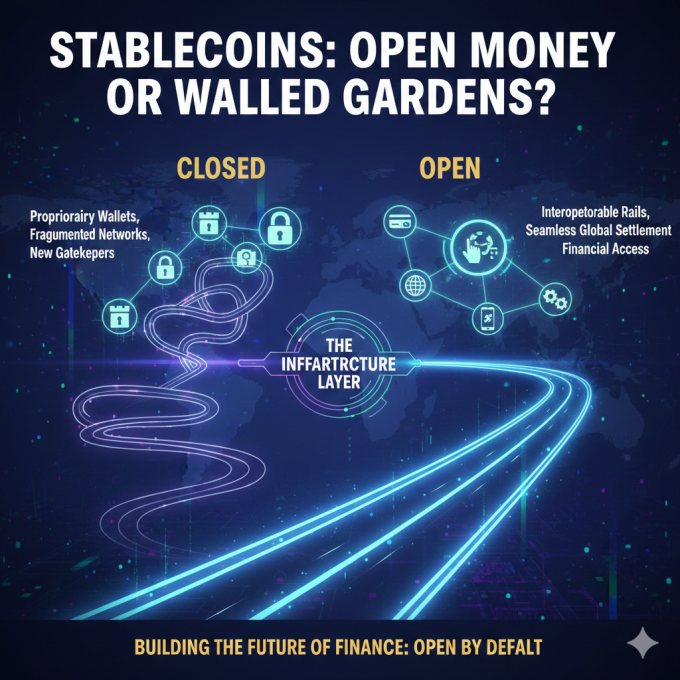
Ethereum co-founder Vitalik Buterin has raised fresh concerns about the long-term viability of decentralized stablecoins, arguing that the crypto industry has yet to solve several structural design problems at the heart of these systems. His comments arrive as stablecoins become increasingly central to both crypto markets and traditional finance, intensifying scrutiny on whether their foundations are robust enough to withstand political, economic and technological stress.
In a recent post, Buterin reframed the stablecoin debate away from short-term market performance and toward deeper architectural risks. Rather than promoting a new model, he focused on why existing decentralized designs may prove fragile over time, even if they appear stable today.
Stablecoins and the Dollar Dependency Problem
One of Buterin’s core critiques centers on the persistent reliance of decentralized stablecoins on the U.S. dollar. While dollar-pegged assets have been essential for crypto adoption, he argued that systems claiming to be resilient should not remain indefinitely anchored to a single national currency.
Over long time horizons, even modest inflation can erode purchasing power, undermining the usefulness of a static dollar peg. Buterin suggested that future stablecoins may need to track broader price indexes or baskets of goods instead of fiat currencies alone. Such an approach, while complex, could better preserve real economic value and align with the original goal of creating politically neutral money.
Oracle Risk and Systemic Fragility
Another major vulnerability highlighted by Buterin involves price oracles, the mechanisms blockchains rely on to ingest real-world data. Because blockchains cannot verify external prices on their own, they depend on oracle systems that can become single points of failure.
If an oracle can be manipulated by a sufficiently capitalized actor, entire stablecoin systems may unravel. Buterin emphasized that this risk is not theoretical; it reflects a structural weakness that grows as systems scale. Without stronger safeguards, decentralized stablecoins could face cascading failures during periods of market stress.
Governance Turmoil Hits Privacy Coins
The debate over crypto design weaknesses has unfolded alongside governance shocks elsewhere in the ecosystem. The privacy-focused network Zcash saw its token price drop sharply after a key development team exited following a dispute with a supporting nonprofit.
Developers behind a major Zcash implementation said governance misalignment made it impossible to continue their work effectively. The episode underscores how governance, not just code, can materially affect network stability and investor confidence, particularly in ecosystems already facing regulatory pressure.
Platforms and the Financial Information Layer
At the same time, infrastructure around crypto discourse is evolving. X, owned by Elon Musk, is developing crypto-aware “smart cashtags” that allow users to tag specific assets or smart contracts directly in posts. The feature aims to make financial discussions more precise by linking tickers to live data and related conversations.
If widely adopted, such tools could tighten the feedback loop between social sentiment and market behavior, raising both transparency and volatility as information spreads faster and with greater context.
Quantum Computing and Bitcoin’s Long-Term Security
Beyond markets and governance, long-term technological risks are also resurfacing. Advances in quantum computing threaten traditional cryptographic systems, including those securing Bitcoin. While large-scale quantum attacks remain theoretical, researchers are already testing defenses.
One proposed solution involves quantum-resistant signature schemes, designed to protect transactions against future breakthroughs. These efforts reflect a broader recognition that crypto’s promise depends not just on decentralization, but on continuous adaptation to emerging technological realities.
Looking Ahead
Taken together, these developments highlight a maturing industry confronting its unresolved weaknesses. Stablecoins are scaling into global financial plumbing, governance disputes are testing decentralized ideals, and existential technology risks are moving from abstract theory into early experimentation.
For crypto to sustain its next phase of growth, design trade-offs that were once acceptable may need to be revisited. The coming years are likely to reward systems that prioritize resilience over convenience, even if that path proves slower and more complex.
Comparison, examination, and analysis between investment houses
Leave your details, and an expert from our team will get back to you as soon as possible








Interesting points about responsible gaming! It’s great to see platforms like ph 799 app prioritizing security & fair play under PAGCOR regulations. A streamlined signup is a big plus too! 👍