Key Takeaways
- Market expectations for US crypto legislation are weakening as Galaxy adjusts CLARITY Act approval probability to 60%.
- Regulatory delays are increasing uncertainty for institutional crypto adoption and structured product expansion.
- Time-sensitive legislative dynamics are becoming a key driver of sentiment across digital asset markets.
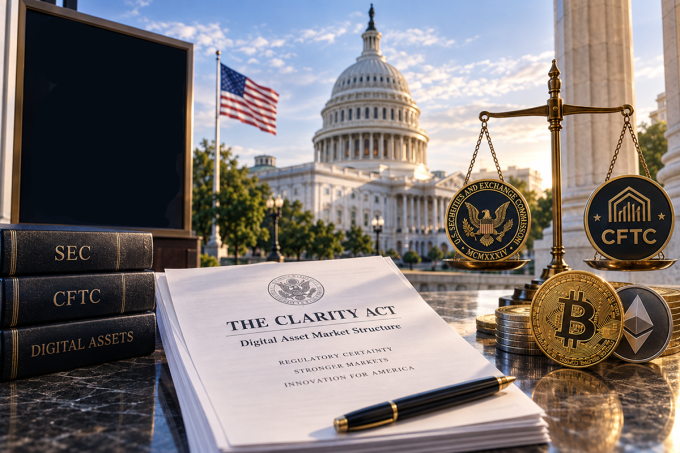
Galaxy Digital has revised its probability estimate for the CLARITY Act’s passage down to 60%, signaling growing uncertainty around the timeline for comprehensive US crypto market structure legislation. The adjustment comes as political negotiations stall and the legislative calendar tightens, reducing the likelihood of near-term regulatory clarity for digital assets.
The update arrives at a sensitive moment for crypto markets, where Bitcoin has been trading in a relatively tight range and liquidity conditions remain highly reactive to macroeconomic and policy developments. For institutional investors, regulatory visibility remains one of the most important variables influencing capital allocation decisions.
Regulatory Momentum Faces Political Friction
The CLARITY Act has been widely viewed as a foundational step toward defining jurisdictional boundaries between US financial regulators and establishing clearer rules for digital asset markets. However, the latest reassessment reflects increasing skepticism that the bill can advance through both chambers of Congress within the current timeframe.
Legislative bottlenecks, competing policy priorities, and election-cycle dynamics are all contributing to the slowdown. As a result, market participants are recalibrating expectations for how quickly structural regulatory clarity will emerge.
Historically, periods of delayed regulation have coincided with increased volatility in crypto markets, as investors struggle to price in long-term policy outcomes while reacting to short-term macro signals.
Market Impact Reflects Sensitivity to Policy Signals
Digital asset markets have become increasingly sensitive to regulatory headlines, with Bitcoin and Ethereum often reacting within hours to policy-related developments. While price movements remain driven by broader macro factors such as interest rates and liquidity conditions, regulatory expectations now play a secondary but meaningful role in shaping sentiment.
Trading volumes across major exchanges have remained elevated during recent policy updates, suggesting that investors are actively repositioning exposure based on shifting expectations around US legislative progress.
A perceived delay in the CLARITY Act could weigh on institutional participation, particularly among asset managers who require clearer compliance frameworks before expanding crypto allocations. This dynamic is especially relevant for structured products, custody solutions, and ETF-linked ecosystems.
Investor Sentiment Balances Optimism and Frustration
Market participants are increasingly divided between long-term optimism about eventual regulatory clarity and short-term frustration over repeated delays. While some investors view regulatory uncertainty as temporary, others are adjusting strategies to account for extended timelines.
This divergence is reflected in trading behavior, where long-term holders continue to accumulate positions while short-term participants react more aggressively to policy signals. The result is a market structure characterized by periodic volatility spikes driven by regulatory headlines rather than fundamental shifts in asset adoption.
Institutional desks in particular are monitoring legislative progress closely, as the timing of regulatory clarity could influence the next phase of capital inflows into digital assets.
What Comes Next for Crypto Regulation Expectations
With the legislative calendar narrowing, the probability of near-term passage for the CLARITY Act will depend heavily on political prioritization and negotiation momentum in the coming weeks. A failure to advance the bill could push meaningful US crypto market structure reform further into the next cycle.
For investors, the key variable is no longer just whether regulation will arrive, but when. As that timeline becomes less certain, regulatory expectations are likely to remain a central driver of sentiment across digital asset markets.
Comparison, examination, and analysis between investment houses
Leave your details, and an expert from our team will get back to you as soon as possible