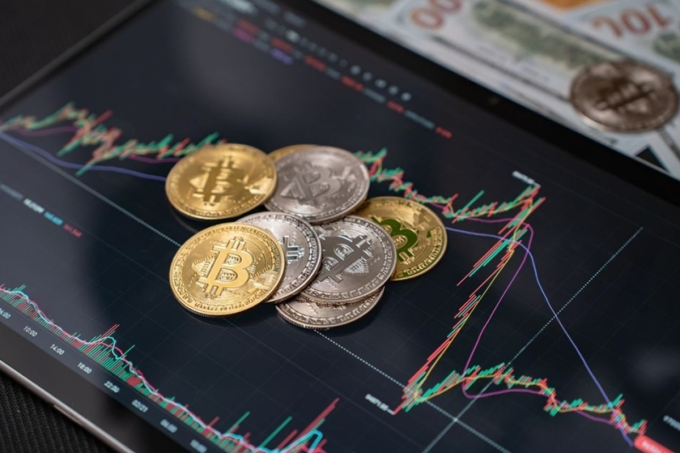
Institutional investors are playing an increasingly dominant role in cryptocurrency markets, helping reshape trading dynamics and reduce the extreme volatility that once defined the asset class. A new report from leading crypto market maker Wintermute found that institutions now account for a record 72% of crypto trading activity, reflecting the growing integration of digital assets into traditional financial markets.
The shift comes as global asset managers, hedge funds, banks, and trading firms continue expanding their digital asset operations amid improving regulatory frameworks and rising demand for tokenized financial products. Rather than chasing speculative momentum, institutional participants are increasingly emphasizing liquidity, risk management, and long-term capital allocation.
Wall Street’s Growing Presence Is Reshaping Market Structure
According to Wintermute’s latest market report, institutional trading now represents 72% of overall cryptocurrency market activity—the highest share recorded to date. The report suggests that the increasing participation of professional investors has contributed to lower market volatility, improved liquidity, and more efficient price discovery across major digital assets.
Unlike retail-driven trading cycles that often amplify short-term price swings, institutional investors generally deploy systematic strategies based on portfolio diversification, quantitative models, and macroeconomic analysis. As a result, larger trading volumes are increasingly being absorbed without generating the sharp market dislocations that previously characterized the cryptocurrency sector.
The trend also reflects broader acceptance of cryptocurrencies as an institutional asset class, supported by expanding custody services, regulated investment vehicles, and improved trading infrastructure.
Capital Flows Become More Selective Across Digital Assets
While institutional participation has expanded, the report notes that capital allocation has become increasingly selective. Rather than broadly supporting every cryptocurrency, professional investors are concentrating capital in networks with stronger fundamentals, deeper liquidity, and clearer long-term use cases.
This disciplined approach has benefited established assets such as Bitcoin and Ethereum, while encouraging more careful evaluation of alternative blockchain networks based on metrics including developer activity, transaction volumes, ecosystem growth, and regulatory clarity.
Wintermute also highlighted continued growth in tokenized real-world assets (RWAs), an area attracting increasing attention from banks, asset managers, and financial technology firms. Tokenization is widely viewed as one of blockchain’s most promising institutional applications, enabling traditional financial instruments to be represented and traded on distributed ledger networks.
Market Maturity Is Changing Investor Behavior
The growing influence of institutional investors is also changing market psychology. As volatility moderates, cryptocurrency markets are gradually evolving from speculative trading environments toward more mature financial ecosystems where risk-adjusted returns, portfolio construction, and liquidity management play larger roles in investment decision-making.
Professional investors increasingly assess digital assets using a combination of on-chain analytics, derivatives positioning, macroeconomic conditions, and regulatory developments rather than relying primarily on momentum-driven trading strategies. This evolution has contributed to more stable market behavior while encouraging broader participation from traditional financial institutions.
For institutional allocators, the continued expansion of tokenized assets alongside improving market infrastructure may prove as significant as cryptocurrency price performance itself, reflecting blockchain technology’s growing role within the broader financial system.
Looking ahead, investors will monitor whether institutional participation continues to expand as regulatory clarity improves across major jurisdictions. Continued growth in tokenized assets, deeper liquidity, and broader adoption by traditional financial institutions could further strengthen the structural maturity of cryptocurrency markets, although macroeconomic conditions and monetary policy are expected to remain important drivers of short-term market sentiment.
Comparison, examination, and analysis between investment houses
Leave your details, and an expert from our team will get back to you as soon as possible