Key Points:
- The European Central Bank plans to invest a small portion of its own funds in euro-denominated tokenized securities, giving the central bank direct operational exposure to blockchain-based financial markets.
- The investments will settle through Pontes, a new Eurosystem platform connecting tokenized-asset markets with central bank money rather than relying exclusively on private settlement assets.
- Pontes is the first step in a broader Eurosystem strategy, with additional functionality and longer operating hours planned and full implementation expected by 2028.
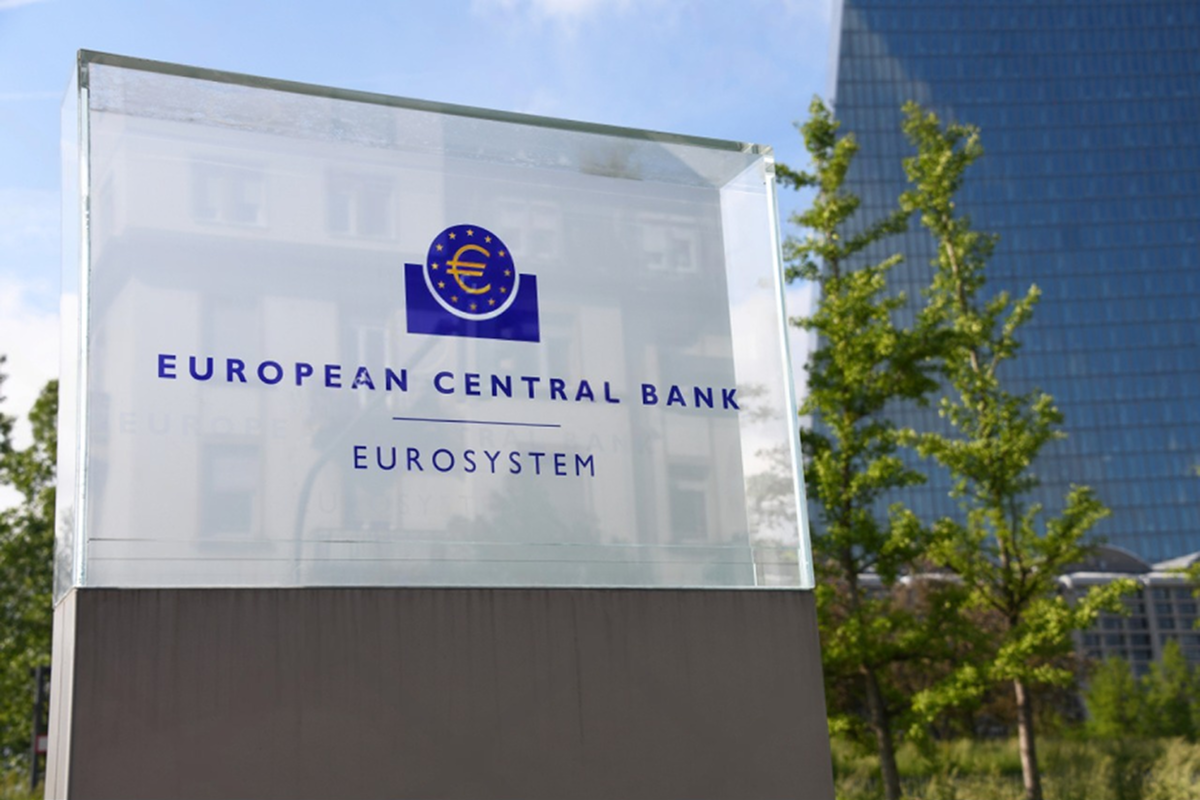
The European Central Bank has taken a significant step into institutional tokenization by preparing to invest part of its own funds in tokenized securities. The initiative coincides with the launch of Pontes, a Eurosystem settlement platform designed to connect blockchain-based financial markets with central bank money, providing a regulated settlement layer for the growing tokenized-finance ecosystem.
ECB Moves From Research to Direct Market Experience
The ECB said its initial investments will involve a small portion of its own-funds portfolio, which is separate from monetary-policy operations and helps finance the central bank’s operating expenses. The precise size and timing have not yet been determined. The ECB Executive Board will make those decisions after preparatory work and based partly on the development of tokenized securities issuance across Europe.
Initial purchases will focus on euro-denominated securities issued by euro-area central governments, regional authorities, agencies and European supranational institutions. This means the first phase is centered on conventional high-quality securities represented in tokenized form rather than speculative cryptoassets.
The significance is therefore primarily institutional and infrastructural. By becoming an investor itself, the ECB expects to gain practical experience across the entire investment lifecycle, including trade execution, settlement, systems and portfolio management.
Pontes Creates a Central-Bank Settlement Layer
Pontes launched on Sept. 21 as the Eurosystem’s solution for settling wholesale tokenized-asset transactions in central bank money. The platform is intended to address one of the key infrastructure questions surrounding tokenization: how digital securities can settle using a risk-free form of money issued by the central bank.
The Eurosystem said Pontes builds on DLT experiments conducted in 2024, during which public- and private-sector participants identified access to central bank money as important for broader adoption. An initial group of banks and distributed-ledger operators has already completed onboarding, while additional participants are expected to connect in the coming months.
Tokenization Strategy Extends Beyond Pontes
The platform represents only one component of Europe’s broader digital-finance strategy. The ECB is developing Appia, an initiative intended to establish a blueprint for a tokenized financial ecosystem by 2028. Pontes will initially provide a core set of settlement services, with enhanced features and longer operating hours expected to be introduced progressively.
For crypto and digital-asset investors, this distinction matters because the ECB’s approach is focused on integrating distributed-ledger technology into existing regulated financial markets. Rather than replacing traditional financial infrastructure outright, the strategy seeks to combine tokenized assets with central-bank settlement, potentially reducing friction between blockchain-based securities and conventional institutional finance.
Why the Move Matters for Digital Assets
The ECB’s decision also highlights the growing competition over the settlement infrastructure of tokenized markets. If tokenized bonds and other securities scale, the availability of central bank money could reduce reliance on private stablecoins or other settlement mechanisms for institutional transactions. That could have implications for banks, securities platforms, stablecoin issuers and blockchain networks competing to support institutional tokenization.
The immediate market impact should nevertheless be measured against the program’s limited initial scale. No investment amount has been announced, and the ECB has not committed to a specific purchase schedule. The more important development is the central bank’s willingness to gain first-hand experience with tokenized securities.
Investors will be watching whether Pontes attracts additional financial institutions, how quickly tokenized issuance expands, and whether the ECB broadens the range of assets and services supported. With full implementation targeted for 2028, the initiative gives Europe several years to test whether blockchain-based securities can achieve institutional scale while retaining central-bank settlement and regulatory oversight.
Comparison, examination, and analysis between investment houses
Leave your details, and an expert from our team will get back to you as soon as possible