Key Takeaways
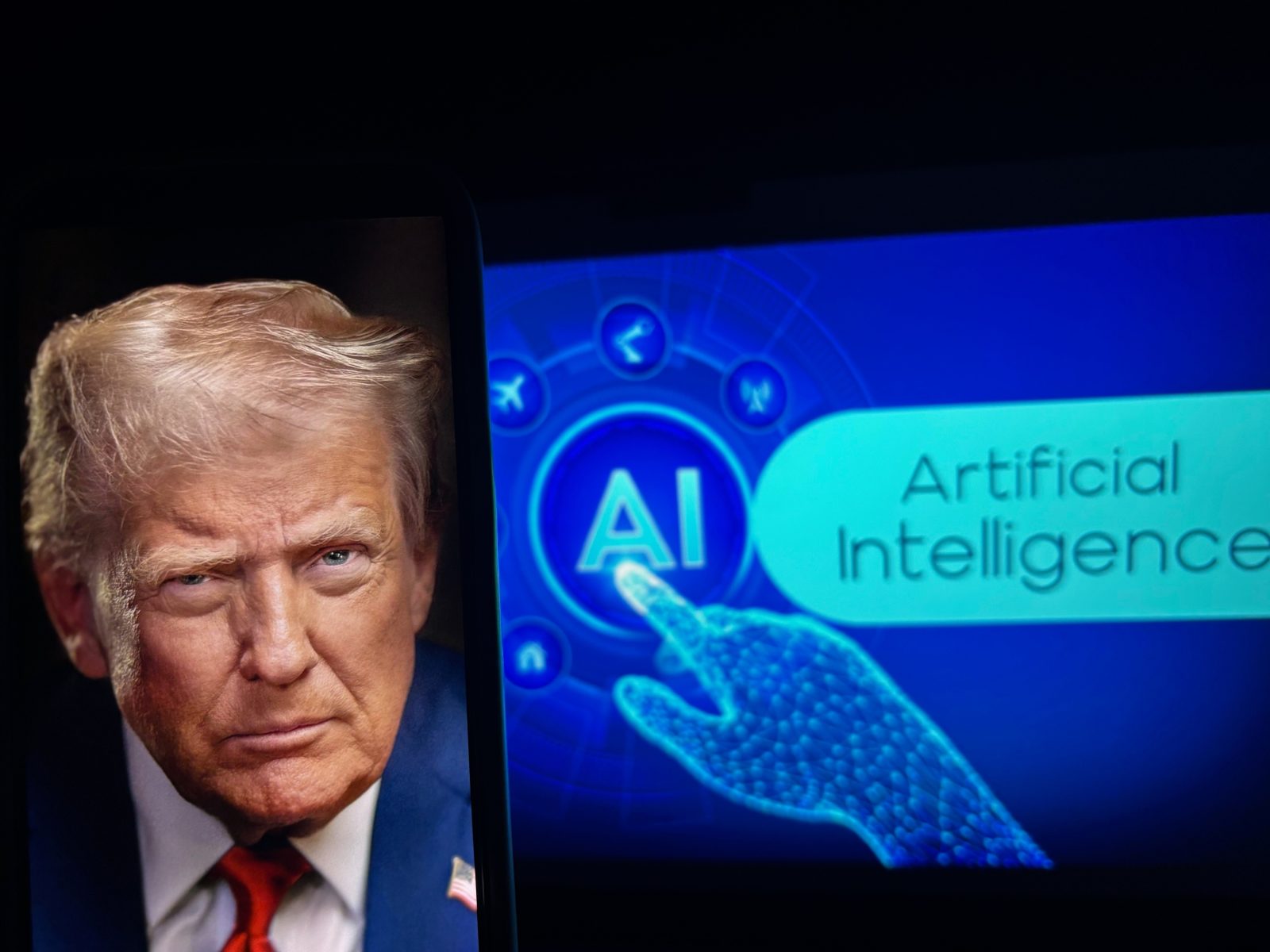
- President Donald Trump and major technology executives signed a voluntary accord requiring companies developing frontier AI systems to establish internal safety controls and independent oversight.
- The framework calls for internal monitoring, independent external evaluations and board-level committees, but does not create legally binding federal AI requirements.
- The approach could influence how AI-driven crypto infrastructure is governed as autonomous agents increasingly interact with wallets, trading systems and blockchain networks.
The Trump administration and executives from leading AI companies have agreed to a voluntary framework for managing risks associated with increasingly capable frontier AI systems. The accord places responsibility largely on technology companies to monitor their own systems, a development with implications for crypto as autonomous AI agents become more involved in trading, financial infrastructure and digital-asset applications.
Four Layers of Voluntary AI Oversight
The White House accord establishes four broad layers of oversight. Companies are expected to maintain internal controls during AI training and deployment, conduct internal evaluations, use independent external reviewers and create board-level committees to assess safety reports.
The companies involved include major players such as Google, Anthropic, Meta, OpenAI, Nvidia and xAI. The agreement is voluntary rather than a new regulatory regime, although the framework could eventually inform future laws or regulations.
That distinction is important for investors. The effectiveness of self-regulation will depend on how consistently companies disclose risks, apply safety controls and respond when systems behave outside their intended parameters.
AI and Crypto Infrastructure Are Increasingly Connected
The policy arrives as digital-asset markets remain highly sensitive to developments involving artificial intelligence and autonomous computing. Bitcoin was trading around $83,500 on Sept. 30, while Ethereum remained near $2,660. Bitcoin had recently reached an eight-month high before momentum weakened, illustrating the broader market’s sensitivity to changing risk appetite.
For crypto businesses, the AI issue is becoming more operational. Autonomous agents can monitor blockchain data, execute transactions, interact with decentralized applications and potentially manage digital-asset portfolios. Greater autonomy can improve efficiency, but it also introduces a new class of risks if an agent is manipulated, compromised or given excessive permissions.
Self-Policing Creates a New Governance Test
The accord’s voluntary structure shifts much of the immediate responsibility for risk management toward companies developing the technology. Independent audits and board oversight are intended to provide checks beyond the teams directly building AI systems, but implementation will determine how meaningful those safeguards become.
For crypto institutions, the distinction between model capability and operational control is particularly relevant. A highly capable agent may execute transactions rapidly, but financial institutions still need mechanisms to define its permissions, monitor activity and intervene when behavior deviates from established parameters.
AI Governance Could Shape the Next Crypto Infrastructure Cycle
The White House accord creates a framework for industry-led AI safety at a time when autonomous systems are moving closer to financial applications. The next stage will depend on whether companies turn voluntary commitments into measurable controls and whether regulators ultimately incorporate elements of the framework into binding rules. For crypto markets, stronger AI governance could become increasingly relevant as autonomous agents move from experimental tools toward systems capable of directly interacting with financial assets and blockchain infrastructure.
Comparison, examination, and analysis between investment houses
Leave your details, and an expert from our team will get back to you as soon as possible