Key Points:
- Ethereum gained 66% in the third quarter of 2026, significantly outperforming the S&P 500, which advanced 2% over the same period.
- Despite the rally, Ether remains 37% lower than its level five years ago, while the S&P 500 delivered an 85% total return with dividends reinvested over that period.
- Ethereum’s ecosystem includes approximately $147.9 billion in stablecoins and $17 billion in tokenized real-world assets, supporting its role in decentralized finance.
Ethereum delivered a powerful rebound in the third quarter of 2026, outperforming traditional equities as global uncertainty continued to influence financial markets. Ether gained 66% during the quarter, compared with a 2% advance for the S&P 500, prompting renewed discussion about its long-term potential. However, the rally presents a more complex question for crypto investors: whether stronger market performance reflects durable economic demand for Ethereum or a recovery that could lose momentum.
Ethereum’s Quarterly Rally Does Not Erase Its Longer-Term Underperformance
The third-quarter advance was Ethereum’s strongest quarterly performance since its exceptional rally in 2021, according to The Motley Fool report by Alex Carchidi. The scale of the move has attracted renewed attention from bullish market participants, including Tom Lee, chairman of BitMine Immersion Technologies, who argued that Ethereum was outperforming other major assets.
Yet the longer-term figures offer a different perspective. Ether remains approximately 37% below its level five years ago, while an index fund tracking the S&P 500 would have generated an estimated 85% total return over the same period, with dividends reinvested.
This contrast highlights the difference between short-term momentum and sustained investment performance. A strong quarter can improve sentiment and recover part of previous losses, but it does not establish that an asset has entered a durable upward trend. Investors assessing Ethereum’s prospects must consider its underlying economic activity alongside its price history.
Stablecoins and Tokenized Assets Strengthen Ethereum’s Market Position
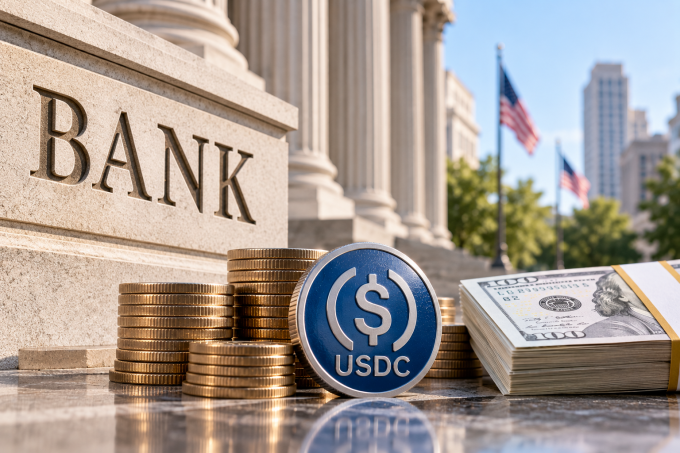
Ethereum’s investment case extends beyond its recent price appreciation. The network hosts approximately $147.9 billion in stablecoins and $17 billion in tokenized real-world assets, according to the supplied report. These assets include financial instruments represented as digital tokens on a blockchain, connecting traditional financial markets with decentralized infrastructure.
The concentration of capital within Ethereum’s ecosystem can reinforce its importance to digital finance. Stablecoins facilitate trading and payments, while tokenized assets can provide blockchain-based access to instruments such as Treasury bills. These activities create demand for the infrastructure used to issue, transfer and manage digital assets.
Ethereum also supports a broad decentralized finance (DeFi) ecosystem, where users can access financial applications involving lending, trading and potential yield generation. Capital may gravitate toward networks with established liquidity and a wide range of applications, although competition from other blockchains and changing market conditions can influence where activity develops.
Why Investors Should Distinguish Adoption From Price Momentum
Ethereum’s infrastructure provides a potential foundation for long-term demand, but network activity does not automatically translate into proportional gains for ETH holders. The relationship between ecosystem growth and token value depends on factors including transaction demand, network economics, competition and the extent to which activity generates sustained demand for Ether.
The recent 66% quarterly increase also creates a different risk profile from the one investors faced before the rally. Rapid price appreciation can attract additional market participation, but it can also leave an asset vulnerable to a reversal if expectations move ahead of underlying adoption. The Motley Fool’s analysis therefore cautions against treating one exceptional quarter as sufficient justification for an excessively concentrated position.
For institutional investors, the distinction between Ethereum’s role as financial infrastructure and ETH as a traded asset remains particularly important. A growing stablecoin market or expanding tokenization activity may strengthen the network’s strategic relevance, but neither guarantees that its native token will outperform traditional equities over a particular period.
What Could Determine Ethereum’s Next Phase?
Looking ahead, Ethereum’s ability to sustain its recovery will depend on whether ecosystem growth translates into persistent demand and whether broader financial conditions remain supportive of digital assets. Investors will be watching stablecoin issuance, tokenized asset activity, DeFi participation and competition from alternative networks, alongside ETH’s price performance.
The third-quarter rally has renewed Ethereum’s visibility as a major digital asset, but its longer-term record demonstrates why momentum alone is insufficient. The central question is whether the network’s financial applications can support durable economic value over time. Until that relationship becomes clearer, the contrast between strong recent performance and weaker five-year returns remains an important part of evaluating Ethereum’s market outlook.
Comparison, examination, and analysis between investment houses
Leave your details, and an expert from our team will get back to you as soon as possible