


Major stock exchange operators including Nasdaq and Intercontinental Exchange (ICE), the parent company of the New York Stock Exchange, are increasingly exploring how blockchain technology could modernize global equity markets. Their initiatives come as financial institutions evaluate ways to place portions of the $126 trillion global equity market onto distributed ledger infrastructure.
The push reflects a broader transformation within financial markets, where tokenization, digital settlement systems, and blockchain-based infrastructure are gaining attention from regulators, banks, and asset managers seeking faster settlement and lower operational costs.
Market Infrastructure and Efficiency Gains
Traditional equity markets rely on a network of clearinghouses, custodians, and settlement systems that can take two business days (T+2) to finalize transactions. Blockchain-based systems, by contrast, offer the potential for near-instant settlement through distributed ledgers.
Global equity markets represent roughly $126 trillion in value, according to industry estimates, with daily trading volumes frequently exceeding $700 billion across major exchanges. Even marginal efficiency improvements in clearing and settlement could translate into significant savings for brokers, institutional investors, and exchanges.
- $126 trillion estimated global equity market capitalization
- $700 billion+ typical daily global equity trading volume
- T+2 settlement currently used in most traditional markets
Blockchain settlement could reduce counterparty risk by allowing transactions to settle in real time while simultaneously transferring ownership and payment.
Regulatory and Technology Considerations
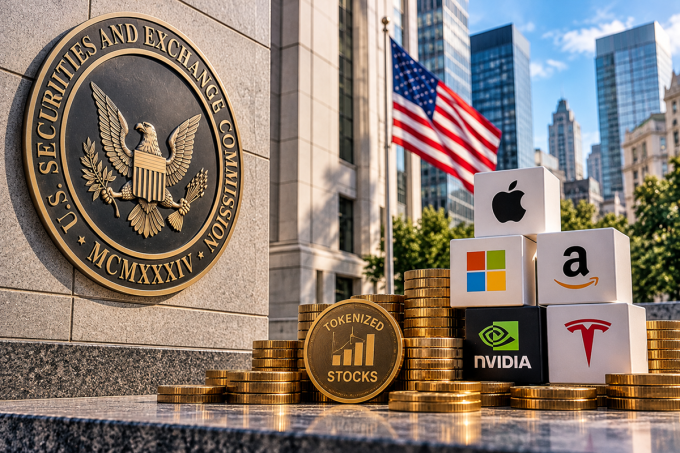
Despite the potential efficiency gains, transitioning equities to blockchain infrastructure involves complex regulatory challenges. Stock exchanges operate under strict oversight from agencies such as the U.S. Securities and Exchange Commission (SEC), and any tokenized securities must comply with existing securities laws.
Technology infrastructure also remains a critical factor. Blockchain networks must demonstrate the ability to handle extremely high transaction volumes comparable to traditional exchange systems. Modern exchanges can process tens of thousands of orders per second, requiring highly scalable solutions.
Several financial institutions are already testing pilot programs involving tokenized stocks, digital securities, and blockchain-based settlement platforms. These initiatives are often conducted within regulatory sandboxes to evaluate operational and compliance frameworks.
Institutional Strategy and Investor Perspective
For institutional investors, blockchain adoption in equity markets could reshape how securities are issued, traded, and settled. Tokenized equities could enable 24/7 trading, fractional ownership, and direct peer-to-peer settlement without relying on multiple intermediaries.
At the same time, large asset managers prioritize market stability, liquidity depth, and regulatory clarity. As a result, many institutions view blockchain integration as a gradual evolution rather than a rapid replacement of existing systems.
The growing interest from exchange operators also reflects a strategic recognition that digital asset infrastructure and traditional financial markets are beginning to converge.
Looking ahead, the adoption of blockchain within equity markets will likely depend on regulatory approval, technological scalability, and institutional acceptance. If these conditions align, tokenization could transform how global securities markets operate, potentially bringing elements of the world’s largest asset class onto blockchain-based infrastructure.
Comparison, examination, and analysis between investment houses
Leave your details, and an expert from our team will get back to you as soon as possible









Leave a comment