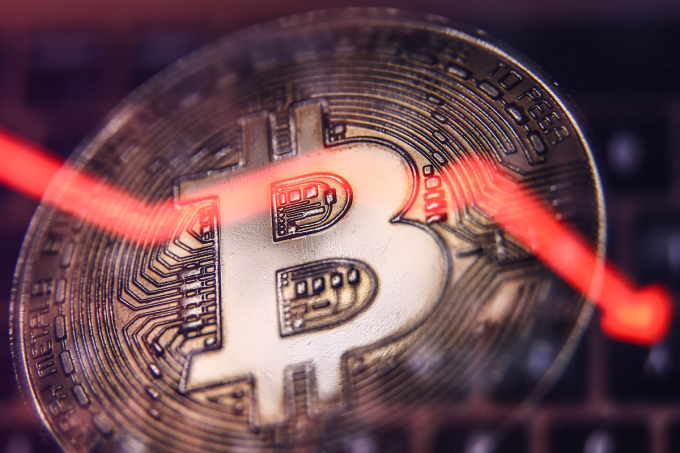
Bitcoin’s recent rally has come to an abrupt halt as escalating U.S.-China trade tensions have reignited market volatility. The world’s leading cryptocurrency fell below $110,000 on Tuesday, marking a significant retreat from its recent highs. This downturn underscores the growing correlation between digital assets and traditional financial markets, as geopolitical uncertainties continue to influence investor sentiment.
Bitcoin’s price plunged to approximately $110,481, reflecting a 3.75% decline from the previous close. The intraday high reached $115,948, while the low dipped to $110,099. This sharp decline follows a brief rebound earlier in the week, which was short-lived as renewed U.S.-China trade tensions took center stage. The broader cryptocurrency market mirrored this downturn, with Ethereum and other major altcoins experiencing similar sell-offs.
The resurgence of trade disputes between the U.S. and China has heightened risk aversion among investors. The announcement of new tariffs and retaliatory measures has led to a flight to safety, with assets like gold reaching record highs. This shift in investor behavior has put pressure on riskier assets, including cryptocurrencies, which are increasingly viewed as correlated with traditional markets.
Additionally, the strengthening of the U.S. dollar has further dampened demand for digital assets. As the dollar gains strength, the relative appeal of non-yielding assets like Bitcoin diminishes, leading to reduced investment flows into the cryptocurrency market.
From a technical perspective, Bitcoin’s recent decline has brought it closer to critical support levels. Analysts are closely monitoring the $110,000 mark, as a sustained break below this level could signal further downside potential. Conversely, a rebound and reclaiming of the $115,000 level would suggest resilience and the possibility of a renewed upward trend.
Market participants are also keeping an eye on upcoming economic events, such as Federal Reserve meetings and U.S. economic data releases, which could influence market liquidity and investor risk appetite.
As the U.S.-China trade tensions continue to evolve, their impact on global financial markets remains uncertain. For Bitcoin and other cryptocurrencies, the path forward will depend on how these geopolitical developments unfold and how investors adjust their portfolios in response. While the current environment presents challenges, it also offers opportunities for those who can navigate the complexities of the evolving market landscape.
The state of Texas has allocated $5 million to purchase shares in BlackRock’s spot Bitcoin ETF (IBIT), signaling a notable move by a public...

Bysagi habasovNovember 26, 2025The cryptocurrency market slid sharply today, with Bitcoin and Ethereum leading declines amid macroeconomic uncertainty and persistent outflows from ETF products. The pullback...
Bysagi habasovNovember 26, 2025Market Net Asset Value, better known as mNAV, has become one of...

ByLior morDecember 1, 2025A sweeping shift in U.S. digital asset regulation is positioning the country...

Bysagi habasovDecember 1, 2025Cybersecurity experts have identified spear phishing as the leading tactic employed by...
Byarticles articlesDecember 1, 2025Bitcoin experienced a sharp decline over the weekend, dropping roughly 5 percent...
Bysagi habasovDecember 1, 2025Excepteur sint occaecat cupidatat non proident
https://shorturl.fm/lAOwq
https://shorturl.fm/gXIq8