

Key Points:
-
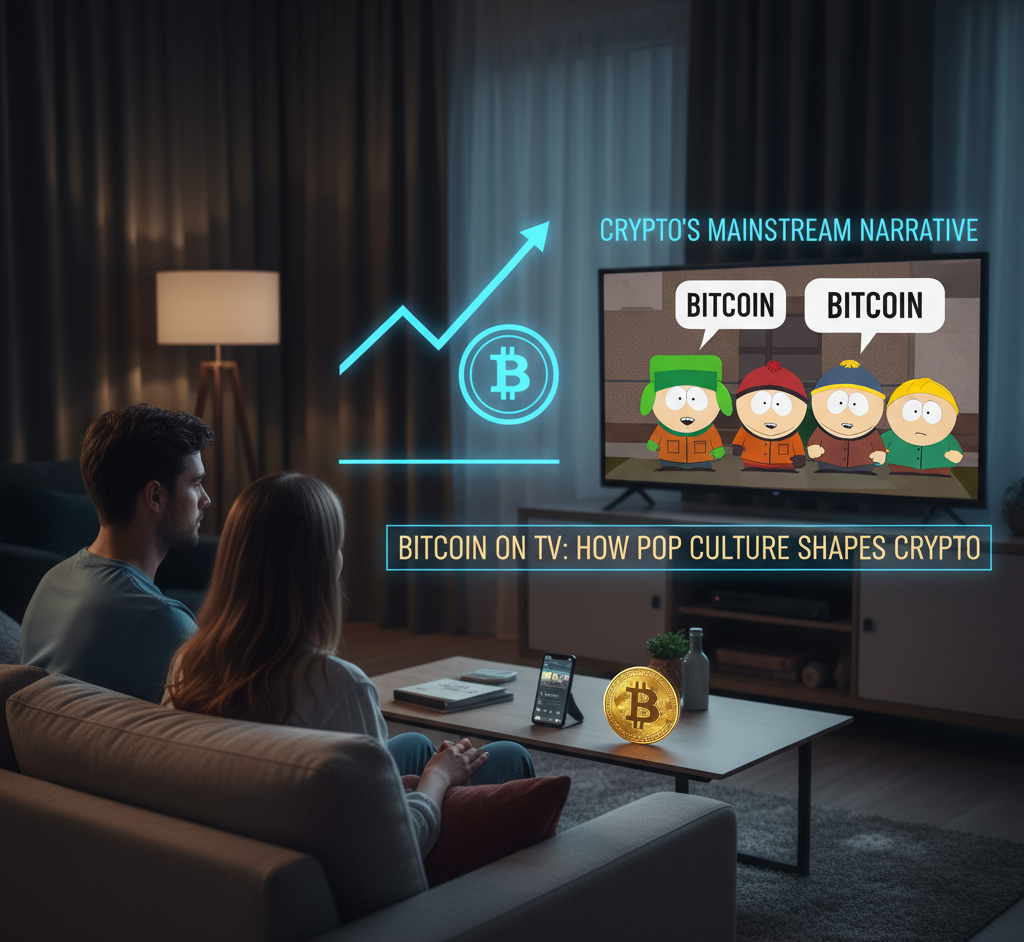
Television portrayals of Bitcoin, from South Park to The Simpsons, both satirize and normalize digital assets.
-
Pop culture references often coincide with market milestones, reflecting and amplifying investor sentiment.
-
While humor dominates portrayals, such depictions contribute to crypto’s cultural legitimacy and long-term adoption.
Crypto as Entertainment and Market Signal
Cryptocurrency has steadily crossed over from finance into pop culture, and television has played a major role in shaping its narrative. Bitcoin and its ecosystem have become recurring subjects of satire and parody in mainstream shows, most notably in South Park, where digital assets have appeared as both the butt of jokes and symbols of cultural transformation.
In its 27th season, South Park once again spotlighted crypto, mocking prediction markets, trading apps, and political ties to the industry. While such depictions lean heavily on satire, they reinforce one critical trend: Bitcoin has entered mainstream consciousness to the point where it can be casually referenced on primetime television.
This cultural presence carries weight in financial markets, where perception often influences behavior. For investors, media exposure—even when satirical—signals broader recognition of digital assets.
South Park: Bitcoin as Currency, Ponzi, and Punchline
Over the years, South Park has kept up with Bitcoin’s evolving role. In a 2021 post-COVID special, Bitcoin was portrayed as the dominant currency in the future, albeit framed as a Ponzi scheme. That episode aired just as BTC hovered near record highs, a reminder that mainstream parodies often track closely with real-world market sentiment.
The show’s latest episode centered on prediction markets and featured a parody of Fox News reporting on crypto bets. It joins earlier segments, such as the 2021 portrayal of NFTs as a contagious craze, with Butters’ obsession symbolizing the mania that gripped retail investors at the time.
While such caricatures sting, many in the crypto industry interpret them as a badge of legitimacy—proof that digital assets have achieved cultural permanence.
Beyond Satire: The Simpsons and Educational Crossovers
Not all portrayals have been mocking. In 2020, The Simpsons aired a segment narrated by Jim Parsons (Sheldon from The Big Bang Theory) explaining cryptocurrency and blockchain. This unusual choice reflected a willingness to engage viewers with educational content about a complex subject.
A year later, Bitcoin returned in The Simpsons with a tongue-in-cheek prediction that BTC would rise “to infinity.” The message was less about investment advice and more about the ubiquity of crypto chatter in the cultural lexicon.
These examples highlight a dual narrative: crypto as both comic fodder and a serious technology shaping the future of money.
Celebrity Endorsements and Hollywood’s Influence
Pop culture’s intersection with crypto is not confined to cartoons. In 2021, actor Matt Damon headlined Crypto.com’s infamous “Fortune Favors the Brave” campaign. Released just before Bitcoin’s then-record high near $69,000, the ad quickly became a cultural meme—and later, a cautionary tale as prices fell sharply in 2022.
Such moments underscore how television and celebrity messaging can amplify hype cycles, influencing retail investor psychology. The combination of star power and mass media often drives speculative waves, regardless of fundamentals.
Media, Markets, and the Future of Crypto Narratives
The growing presence of Bitcoin and crypto on television reflects the sector’s transition from niche innovation to cultural mainstay. While satire may dominate portrayals, each reference—whether mocking, educational, or promotional—cements digital assets further into the mainstream dialogue.
For investors, these cultural signals matter. Media attention helps normalize crypto, creating long-term legitimacy even when short-term portrayals are dismissive. Just as Wall Street once shrugged off internet memes before embracing them, television’s treatment of Bitcoin may foreshadow its deeper integration into everyday financial life.
The question ahead is not whether crypto will appear in pop culture, but how these portrayals will shape public perception during future cycles of hype, adoption, and regulation.










https://shorturl.fm/NXfcf
https://shorturl.fm/xW3II
https://shorturl.fm/TFB1W
https://shorturl.fm/xjNOV
https://shorturl.fm/RmS96