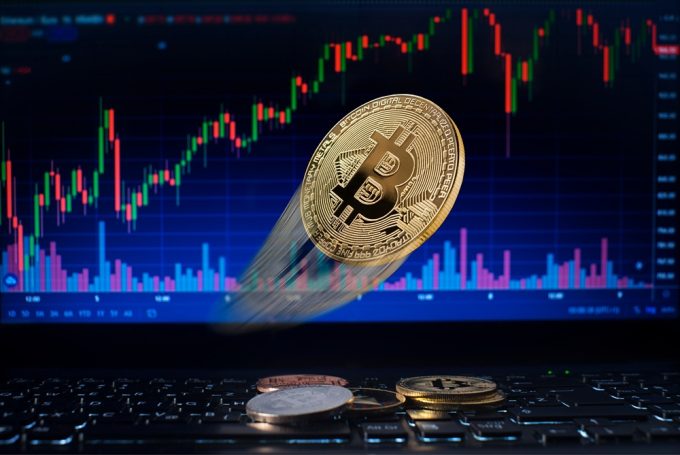
Bitcoin (BTC) and Ethereum (ETH) opened trading at their lowest levels in approximately two weeks, reflecting continued pressure across digital asset markets. The decline comes as investors assess the implications of monetary policy expectations, shifting institutional capital flows, and broader risk-off sentiment affecting global financial markets.
While cryptocurrency adoption continues to expand through exchange-traded funds, tokenized financial products, and blockchain infrastructure development, recent price weakness highlights the sector’s growing sensitivity to macroeconomic conditions. For professional investors, the move serves as another reminder that digital assets increasingly trade within the broader context of global capital markets.
Major Cryptocurrencies Extend Recent Pullback
Bitcoin and Ethereum, the two largest cryptocurrencies by market capitalization, entered the trading session under pressure after several days of market weakness. The move pushed both assets to their lowest levels in roughly two weeks, raising questions about near-term market momentum.
Price declines in major cryptocurrencies often influence broader market sentiment, affecting altcoins, decentralized finance tokens, and blockchain-related equities. As institutional participation has grown, Bitcoin and Ethereum have become important indicators of overall risk appetite within the digital asset ecosystem.
For investors, monitoring these benchmark assets provides insight into liquidity conditions and market confidence across the broader crypto sector.
Macroeconomic Factors Continue to Shape Trading Activity
Recent market weakness reflects ongoing concerns regarding interest rates, inflation expectations, and global economic growth. Digital assets have become increasingly sensitive to central bank policy decisions as institutional investors integrate cryptocurrencies into diversified portfolios.
Higher interest rates can reduce liquidity and increase the attractiveness of traditional income-generating assets, potentially creating headwinds for speculative sectors. At the same time, geopolitical uncertainty and changing growth expectations continue influencing investor positioning across multiple asset classes.
The result is a market environment where cryptocurrency valuations are increasingly tied to broader macroeconomic developments rather than solely blockchain-specific catalysts.
Investor Sentiment Remains Cautious
From a behavioral finance perspective, periods of sustained weakness often contribute to more defensive investor positioning. Market participants tend to become increasingly cautious when major assets test support levels, particularly during periods of elevated uncertainty.
At the same time, experienced investors frequently view volatility as an opportunity to reassess market structure, capital flows, and adoption trends. Sentiment indicators across the cryptocurrency market have reflected growing caution, although long-term institutional participation remains significantly higher than in previous market cycles.
This balance between short-term uncertainty and long-term adoption continues to define the current investment landscape.
Ethereum and Bitcoin Remain Central to Institutional Adoption
Despite recent declines, both Bitcoin and Ethereum remain at the center of institutional digital asset strategies. Bitcoin continues to benefit from ETF adoption and its role as a digital store-of-value asset, while Ethereum maintains its position as the leading smart contract network supporting decentralized finance, tokenization, and blockchain-based applications.
Their performance therefore carries significance beyond price movements alone. Institutional investors increasingly evaluate these assets as part of broader portfolio strategies that include traditional equities, fixed income, commodities, and alternative investments.
Looking ahead, market participants will closely monitor economic data, central bank communications, ETF flow trends, and blockchain activity metrics for signs of stabilization. Whether Bitcoin and Ethereum can recover from their recent lows may depend on improving liquidity conditions, renewed institutional demand, and continued progress in the broader digital asset ecosystem.
Comparison, examination, and analysis between investment houses
Leave your details, and an expert from our team will get back to you as soon as possible